8 Best Stretches for Lower Back Pain Relief
A stiff lower back can make the first few steps out of bed, a long drive across the Treasure Coast, or a simple trip to the grocery store feel far harder than they should. The best stretches for lower back pain can ease muscle tension and restore comfortable movement, but only when they match what your body is dealing with. A stretch that feels relieving for one person may aggravate another, especially after an injury or with an underlying spinal condition.
The goal is not to force your back into a deeper range of motion. It is to gently improve mobility in the hips, pelvis, and spine while helping overworked muscles relax. Move slowly, breathe steadily, and stop any exercise that causes sharp, shooting, or worsening pain.
Why Your Hips Matter to Lower Back Comfort
Lower back pain does not always begin in the low back. Tight hip flexors from sitting, stiff hamstrings, limited hip rotation, and weak core support can all change how your spine moves. Your low back may then compensate for areas that are not doing their share of the work.
That is why a complete stretching routine should not focus on the lumbar spine alone. The most helpful routine usually includes gentle back motion along with stretches for the hips and legs. Consistency matters more than intensity. Five to 10 calm minutes most days can be more productive than one aggressive session each week.
8 Best Stretches for Lower Back Pain
Before starting, choose a firm but comfortable surface. A yoga mat or carpeted floor works well. If getting down to the floor is difficult, several of these movements can be adapted with a bed, chair, or countertop for support.
1. Pelvic Tilt
Lie on your back with your knees bent and feet flat on the floor, about hip-width apart. Let your spine rest naturally. Then gently tighten your lower abdominal muscles and flatten your low back slightly toward the floor. Hold for three to five seconds, then release.
Pelvic tilts are small, controlled movements, not a forceful press. They can help you reconnect with the muscles that support your pelvis and reduce the guarded feeling that often accompanies a stiff back. Try eight to 12 repetitions.
2. Single Knee-to-Chest Stretch
Remain on your back and bring one knee toward your chest, holding behind the thigh or over the shin. Keep the other foot on the floor if that feels more stable. Hold for 20 to 30 seconds, then switch sides.
This gentle flexion stretch can be comforting when the muscles around the low back feel tight. However, it is not ideal for every condition. If bringing your knee up increases leg pain, numbness, or a pinching sensation, skip it and choose a movement that feels better.
3. Figure-Four Hip Stretch
Lie on your back with both knees bent. Cross one ankle over the opposite thigh, just above the knee, creating a figure-four shape. If comfortable, lift the supporting leg and hold behind the thigh as you draw it gently toward you.
You should feel this stretch through the outer hip and buttock, not in the knee joint. Tight deep hip muscles can contribute to pain that feels like it starts in the low back or travels into the buttock. Hold for 20 to 30 seconds per side.
4. Half-Kneeling Hip Flexor Stretch
Kneel with one knee on a padded surface and the other foot in front of you. Keep your chest tall and gently tuck your pelvis under as you shift forward a small amount. You should feel a mild stretch in the front of the hip on the kneeling side.
Long hours at a desk, in the car, or on the couch can leave hip flexors short and stiff. Avoid arching your low back to create a bigger stretch. A small pelvic tuck is usually more effective and much safer.
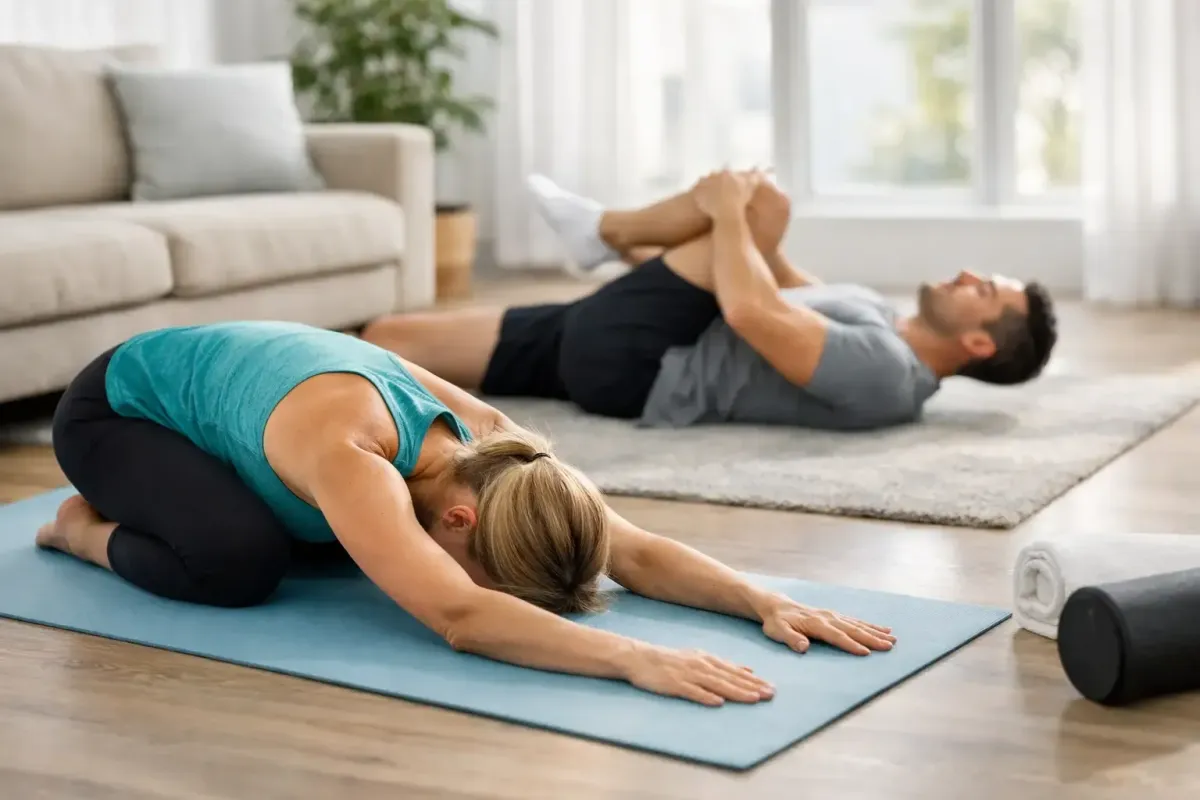
5. Supported Child's Pose
Start on your hands and knees, then slowly shift your hips back toward your heels while reaching your arms forward. Place a pillow under your chest or between your hips and heels if that makes the position more comfortable. Breathe into your sides and back for 20 to 30 seconds.
This position can relax the muscles along the spine and shoulders. It may not feel good if bending forward worsens your symptoms, so do not treat it as mandatory. Your body should feel calmer when you come out of the stretch, not more irritated.
6. Cat-Cow Mobility
On your hands and knees, gently round your back toward the ceiling as you exhale. Then allow your chest to move forward and your tailbone to lift slightly as you inhale. Keep both movements smooth and within a comfortable range.
Cat-cow is less about holding a stretch and more about restoring easy motion through the spine. Complete six to 10 slow cycles. If your wrists are sensitive, perform the motion while standing with your hands supported on a countertop.
7. Seated Hamstring Stretch
Sit near the front edge of a sturdy chair. Extend one heel forward with your toes pointing up and keep a soft bend in the knee. Hinge forward from your hips with a long spine until you feel a gentle pull behind the thigh.
Avoid rounding down and reaching for your toes. That often places unnecessary stress on an already sensitive back. Hold for 20 seconds on each side, then return upright slowly.
8. Prone Press-Up
Lie on your stomach with your hands beneath your shoulders. Keeping your hips relaxed on the floor, gently press your upper body up with your arms, stopping before discomfort begins. Your elbows can remain bent. Hold briefly, then lower with control.
This extension movement may help people whose pain feels better with standing or gentle backward bending, particularly after prolonged sitting. It may not be appropriate if extension increases your pain or if you have certain spinal conditions. The direction that reduces symptoms is generally more useful than the direction that simply looks like a bigger stretch.
How Often Should You Stretch?
For most people, a gentle routine once daily is a practical starting point. On particularly stiff days, brief movement breaks two or three times throughout the day may be more comfortable than one longer session. Hold relaxed stretches for about 20 to 30 seconds, and do not bounce.
Pay attention to the 24-hour response. Mild muscular soreness can happen when you begin moving again, but pain that lingers, spreads, or becomes more intense the next day is a sign to scale back. Stretching should support recovery, not become another source of strain.
When Stretching Is Not Enough
Lower back pain can be related to a muscle strain, joint irritation, disc involvement, poor movement patterns, arthritis, nerve compression, or a combination of factors. Stretching may offer relief, but it cannot always address the root cause on its own.
Seek prompt medical attention for new bowel or bladder changes, numbness in the groin area, significant leg weakness, fever, unexplained weight loss, or pain following a serious fall or accident. These symptoms need a medical evaluation rather than a home stretching plan.
For pain that keeps returning, travels down the leg, causes tingling or numbness, or limits work and sleep, a personalized assessment can make a meaningful difference. At Coastal Medical & Wellness, care begins by looking at how your spine, nerves, joints, posture, and daily habits may be contributing to the problem, then building a natural plan around your needs.
Your back does not need punishment to improve. Start with the movement that feels safe, repeat it consistently, and get professional guidance when your body is asking for more than a stretch.
