Best Treatments for Plantar Fasciitis That Work
That sharp first step out of bed can make a normal morning feel like a major obstacle. The best treatments for plantar fasciitis do more than temporarily quiet heel pain. They reduce irritation in the tissue under the foot, correct the strain that keeps aggravating it, and help you return to walking, working, and exercising with more confidence.
Plantar fasciitis occurs when the thick band of connective tissue running from the heel to the toes becomes irritated. It is common in people who spend long hours standing, increase activity too quickly, wear unsupportive shoes, or have tight calves and limited ankle mobility. It can also develop without one clear cause. The good news is that most cases improve with consistent, conservative care - but the right plan depends on what is driving the stress on your foot.
Why plantar fasciitis can linger
Heel pain is often treated like a foot-only problem. In reality, the plantar fascia works as part of a chain that includes the toes, ankle, calf, knees, hips, and low back. If your calves are tight, your ankle does not move well, or the way you walk repeatedly overloads one area of the heel, the tissue may not get the recovery time it needs.
Trying to push through pain can turn a manageable problem into a stubborn one. Complete rest is not always the answer either. The goal is usually to modify the activities that flare your symptoms while gradually rebuilding the foot and lower leg's ability to handle load.
Pain that is worst with the first few steps after resting, then eases somewhat as you move, is a classic pattern. Still, heel pain can have other causes, including a nerve issue, stress injury, arthritis, or tendon condition. A proper evaluation matters, particularly when symptoms are persistent or changing.
Best treatments for plantar fasciitis: Start with the basics
The strongest treatment plans typically combine several simple measures rather than relying on one quick fix. Consistency is more valuable than intensity. A few minutes of appropriate mobility work each day can be more useful than one aggressive stretching session that leaves the area sore.
Calm the irritation without becoming inactive
For a short period, reduce activities that reliably cause sharp pain, such as running hills, long walks on hard surfaces, or standing barefoot on tile floors. Choose lower-impact movement when appropriate, such as cycling or swimming, so your overall fitness does not have to stop.
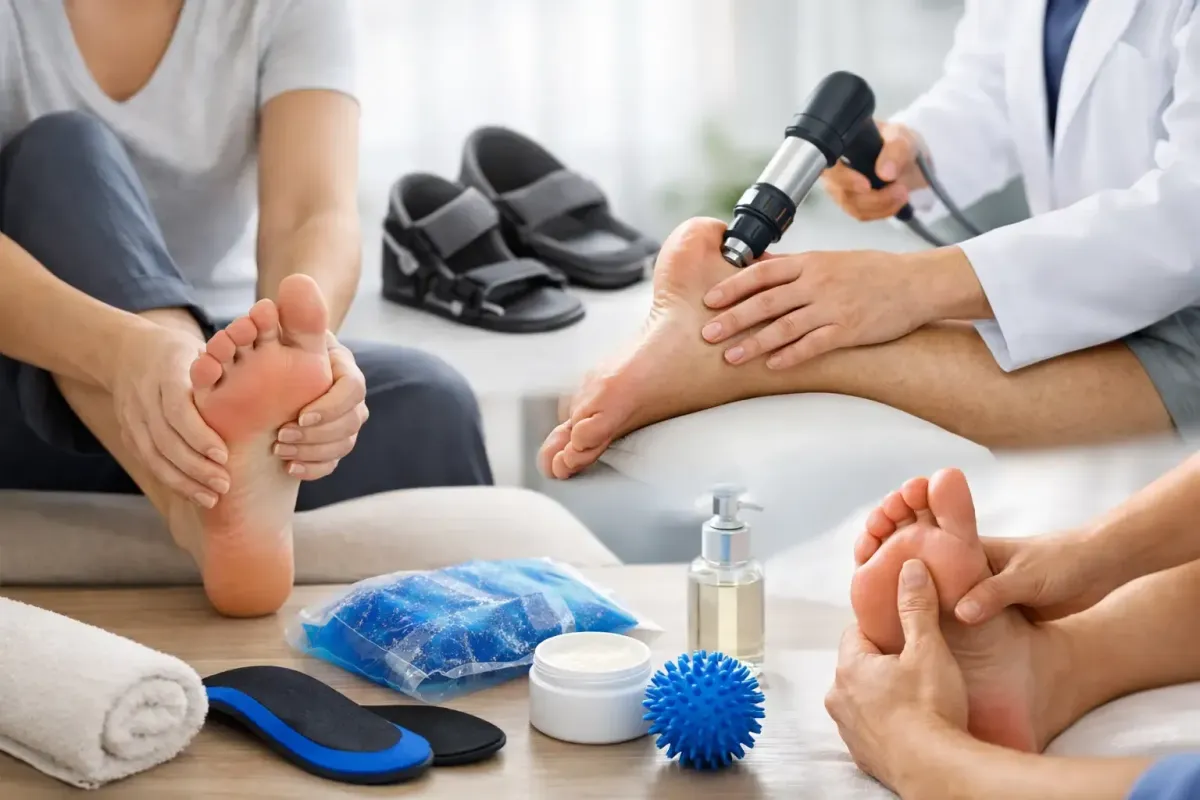
Cold therapy can provide short-term comfort after activity. Rolling the sole of the foot over a chilled water bottle for several minutes may ease soreness while giving the fascia a gentle massage. Avoid pressing so hard that pain increases afterward.
Over-the-counter anti-inflammatory medication may help some people, but it is not right for everyone and does not correct the mechanical strain behind the condition. If you have kidney disease, stomach ulcers, take blood thinners, or have other medical concerns, speak with a qualified provider before using medication.
Stretch the calf and plantar fascia correctly
Tight calf muscles are a frequent contributor to plantar fasciitis. A straightforward calf stretch, performed with the back knee straight and heel down, can improve flexibility in the gastrocnemius muscle. Repeating the stretch with the back knee slightly bent targets a deeper calf muscle that also affects ankle motion.
Plantar fascia-specific stretching can be helpful as well. While seated, cross the affected foot over the opposite knee, gently pull the toes back toward the shin, and massage the taut band along the sole of the foot. This is often especially useful before taking those first morning steps.
Stretching should feel like a mild, controlled pull, not stabbing heel pain. If an exercise worsens your symptoms for the rest of the day or the following morning, it may be too aggressive or not suited to the true cause of your pain.
Build strength, not just flexibility
The foot needs more than stretching to become resilient. Strengthening the small muscles of the feet, calves, and hips can improve support with each step. Exercises may include controlled heel raises, toe yoga, towel scrunches, and balance work, progressing only as pain allows.
A common mistake is returning to normal activity as soon as symptoms improve. The tissue may feel better before it is ready for long shifts, pickleball, golf, or regular runs. A gradual return, guided by how your heel feels during activity and the next morning, helps reduce the chance of a flare-up.
Footwear, support, and daily habits matter
Your shoes can either reduce stress on the heel or add to it. Supportive footwear with stable cushioning, a comfortable arch shape, and adequate room through the toe box can make a meaningful difference. A shoe does not need to be expensive to be helpful, but a worn-down sole or flexible, unsupportive sandal may keep the problem going.
Temporary over-the-counter arch supports or heel cups can reduce pulling on the plantar fascia for some patients. These are not a cure, and the best choice varies by foot shape, activity level, and the way you walk. If an insert creates numbness, pressure, or new pain, stop using it and have your fit assessed.
At home, avoid repeatedly walking barefoot on hard floors while your heel is irritated. Keep supportive slides or shoes nearby, especially for early mornings. For people whose jobs require standing, brief movement breaks and alternating positions can be just as valuable as what happens during a formal exercise session.
When professional treatment can help
If heel pain is not clearly improving after several weeks of consistent home care, or if it keeps returning, a personalized treatment plan can help identify what has been missed. An exam should look beyond the painful spot to assess ankle mobility, calf tension, foot mechanics, gait, hip stability, and possible nerve involvement.
Chiropractic care may be part of an integrated approach when restricted joints in the foot, ankle, knees, hips, or spine are affecting normal movement patterns. Gentle, targeted care can be combined with mobility and strengthening work rather than treated as a stand-alone solution.
Shockwave therapy for persistent heel pain
For chronic plantar fasciitis that has not responded to basic conservative care,shockwave therapy may be a useful non-surgical option. This treatment delivers focused acoustic waves to the affected area with the goal of stimulating the body's healing response and improving circulation in stubborn tissue.
It is not typically the first step for a new case of heel pain, and it is not appropriate for every patient. The number of sessions, expected response, and whether it fits your health history should be discussed during an evaluation. When paired with a plan to improve mobility, strength, and load management, it can be a valuable option for patients who have struggled to get lasting relief.
When heel pain needs prompt attention
Do not assume every heel problem is plantar fasciitis. Seek medical evaluation promptly if you cannot bear weight, have significant swelling or bruising after an injury, notice redness or warmth with fever, experience persistent numbness or burning, or have pain that wakes you at night. People with diabetes, circulation problems, or loss of sensation in the feet should be especially cautious with self-treatment.
A heel spur on an X-ray also does not automatically explain the pain. Many people have heel spurs without symptoms, while many painful cases improve without needing to address a spur directly. Treating the irritated tissue and the forces acting on it is usually more productive than focusing on the image alone.
A plan that fits your body and your routine
The most effective approach is the one you can follow consistently and that addresses your specific contributing factors. A teacher on hard classroom floors, a runner training for a race, and a retiree who wants to walk the neighborhood comfortably may all need different activity modifications and progressions.
At Coastal Medical & Wellness, care begins by looking for the source of strain behind your symptoms, then building a practical plan around your daily life and recovery goals. If heel pain is limiting your work, exercise, or time with family, schedule an evaluation rather than waiting for another flare-up to force the issue. The right support can help you take that first step with less fear and more comfort.
