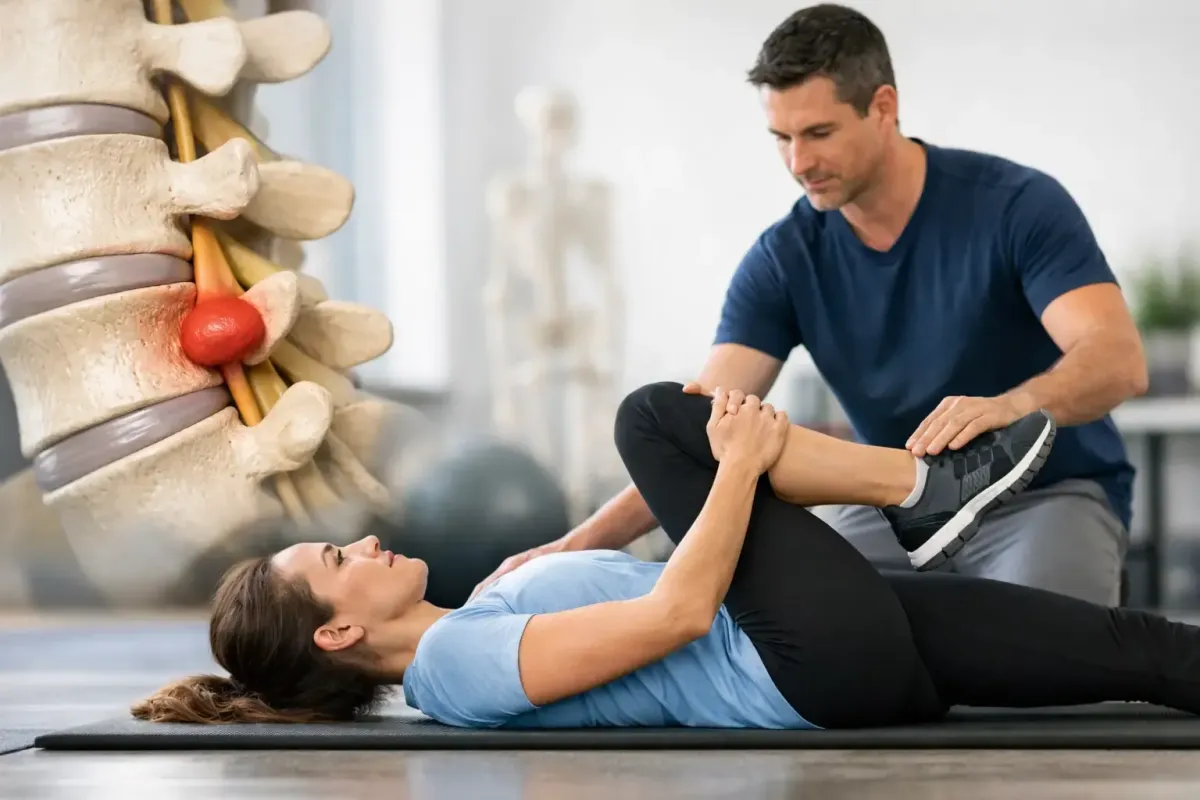
Bulging Disc Exercises for Safer Recovery
A bulging disc can make ordinary movements feel uncertain. Getting out of bed, sitting through a workday, loading groceries, or turning to check traffic can trigger back pain, leg pain, numbness, or tingling. The right bulging disc exercises may help you stay mobile and gradually rebuild confidence, but the wrong movement at the wrong time can increase irritation.
The goal is not to force a stretch or “push through” sharp pain. It is to use controlled movement to support circulation, improve tolerance for daily activity, and build stability around the spine. Because disc symptoms can vary significantly from person to person, a personalized plan is often safer and more effective than copying a routine from the internet.
When Bulging Disc Exercises Can Help
A bulging disc occurs when one of the cushioning discs between the spinal bones extends beyond its usual boundary. It may or may not irritate a nearby nerve. That distinction matters. Some people have a bulging disc on imaging and no symptoms at all, while others experience pain traveling into the buttock, leg, shoulder, or arm.
Exercise can be helpful when it is matched to your symptoms, your mobility, and the stage of recovery. Gentle movement often reduces the stiffness that comes from guarding an injured area. Over time, targeted strengthening can help the muscles of the hips, abdomen, and back share more of the load during walking, bending, and lifting.
Still, there is no single best exercise for every disc issue. One person may feel better with gentle extension, while another may be more comfortable with flexion-based movements or simple walking. A movement that causes pain to travel farther down the leg or arm is usually a sign to stop and get guidance.
Before You Start: Use Pain as Useful Feedback
Start with a calm, controlled approach. Mild muscle effort or temporary stiffness can be expected, especially if you have been less active. Sharp pain, worsening numbness, weakness, or symptoms that spread farther away from your spine are different signals.
A helpful rule is to notice what happens during the exercise and later that day. If your symptoms settle quickly and you feel the same or better afterward, that movement may be appropriate. If pain intensifies, lingers, or begins traveling farther into your hand, foot, arm, or leg, reduce the range of motion or stop altogether.
Move slowly, breathe normally, and avoid holding your breath during exercises. Begin with one short session daily or every other day rather than trying to make up for lost time. Consistency is more valuable than intensity during recovery.
A Safer Starting Routine for Bulging Disc Exercises
The following movements are commonly used as gentle starting points for many people with back-related disc discomfort. They should not replace an evaluation, especially if you have leg weakness, significant nerve symptoms, a recent injury, or pain that is getting worse.
Short, frequent walks
Walking is often one of the most practical ways to keep the body moving without placing high demand on the spine. Start on level ground at a comfortable pace. Even five to 10 minutes can be productive if longer walks increase symptoms.
Keep your stride natural and avoid carrying heavy bags while you are rebuilding tolerance. If you sit for work, a brief walk every hour can be more useful than one long walk at the end of the day. Gradually add a few minutes as your symptoms allow.
Gentle abdominal bracing
Abdominal bracing teaches your trunk muscles to support the spine without aggressively tightening or flattening your back. Lie on your back with your knees bent and feet resting on the floor. Let your shoulders relax.
Gently tighten your lower abdomen as though preparing for a light cough. You should still be able to breathe and speak. Hold for five to 10 seconds, then release. Start with five repetitions and build gradually.
The movement should feel subtle. Avoid pressing your back forcefully into the floor, holding your breath, or clenching your entire body. The purpose is controlled support, not maximum effort.
Pelvic tilts in a comfortable range
With the same supported position on your back, slowly tip your pelvis so your lower back moves gently toward the floor. Then return to a neutral, comfortable position. Keep the motion small and smooth.
This exercise can help you reconnect with movement in the low back and pelvis after a painful flare-up. If flattening the back aggravates your symptoms, do not force it. Your ideal range may be very small at first, and that is okay.
Supported hip mobility
Tight hips can make daily bending and walking feel harder on the low back. A simple option is a gentle single-knee-to-chest movement while lying on your back. Bring one knee toward your chest only as far as is comfortable, hold briefly, then switch sides.
Do not pull aggressively. If this position causes increased back pain, leg pain, or tingling, skip it. Some people with disc symptoms are sensitive to bending forward, particularly during an active flare-up.
Prone lying or gentle press-ups, if they centralize symptoms
For some people, lying on the stomach feels relieving. Begin by resting on your stomach with a pillow under your hips if needed. If that is comfortable, you may try propping onto your elbows for a few relaxed breaths.
A gentle press-up can be the next step: place your hands beneath your shoulders and slowly lift your chest while keeping your hips on the floor. Stop well before pain. This movement is only a good choice if symptoms improve or move out of the leg and closer to the back. If pain spreads farther down the leg, do not continue.
Movements to Modify During a Flare-Up
Recovery does not require avoiding all movement, but it does require smarter loading. During a painful phase, repeated bending, twisting, and heavy lifting can aggravate an already sensitive area. This is especially true when those motions happen together, such as lifting a laundry basket while turning.
Limit deep toe-touching stretches, high-impact exercise, heavy deadlifts or squats, forceful sit-ups, and rapid twisting movements until you can perform them without symptoms. Long periods of slouched sitting may also increase discomfort for some people. Try changing positions regularly and use support behind the lower back when needed.
This does not mean these activities are permanently off limits. With proper recovery and progressive strengthening, many people return to work, exercise, golf, gardening, and other activities they enjoy. The key is rebuilding capacity in stages rather than testing your limits during a flare-up.
When to Seek Professional Care Promptly
Do not rely on home exercises alone if you notice new or worsening weakness in an arm or leg, numbness in the groin or saddle area, loss of bowel or bladder control, fever with severe back pain, or pain following a significant fall or accident. These symptoms require prompt medical attention.
You should also schedule an evaluation if pain is severe, continues to disrupt sleep, keeps returning, or does not improve with reasonable activity modification. A thorough assessment can help identify whether your symptoms are disc-related, joint-related, muscular, or connected to another condition.
At Coastal Medical & Wellness, care begins by looking for the cause of your symptoms, not simply trying to cover them up. Depending on your needs, a personalized plan may include chiropractic care, spinal decompression, therapeutic movement, and other natural approaches designed to improve function and support long-term health.
The best exercise plan is the one your body can tolerate today and progress from tomorrow. Start gently, respect warning signs, and let improved movement - not forced movement - guide your recovery.
