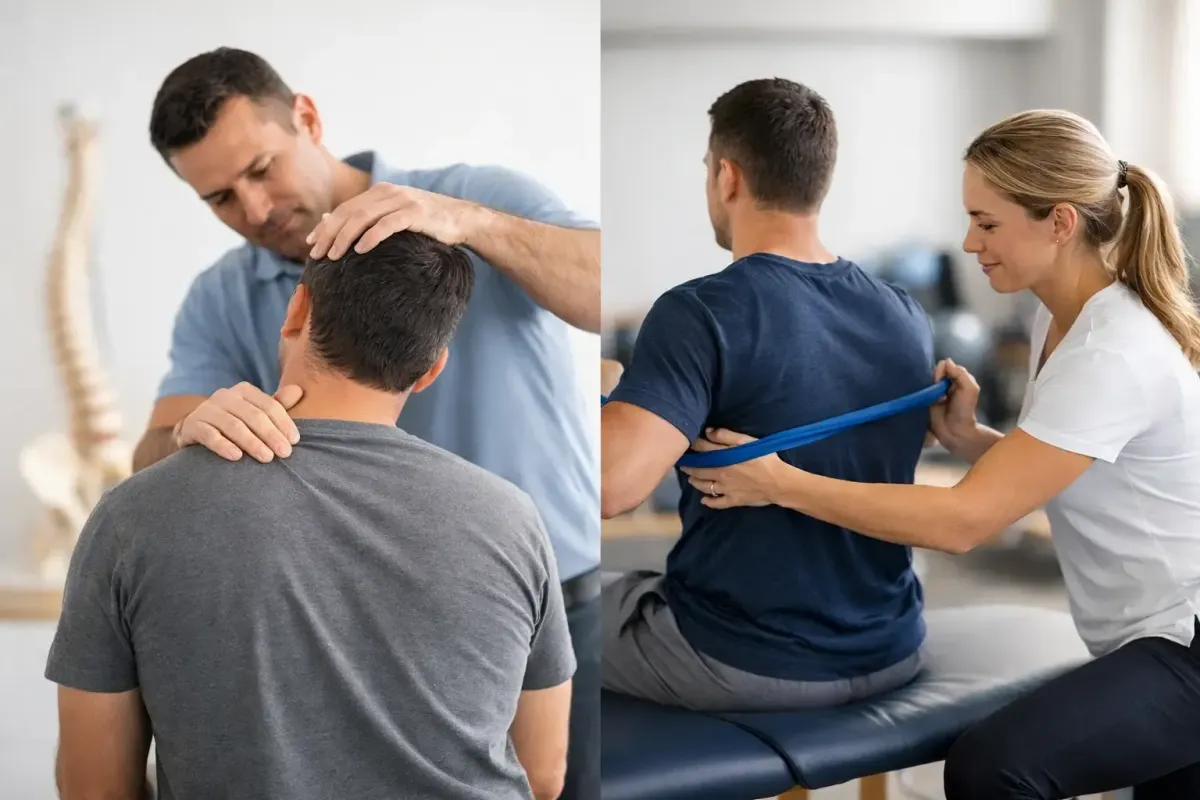
Chiropractor vs Physical Therapist for Back Pain
Back pain rarely waits for a convenient time. It shows up when you are trying to get through work, sleep through the night, pick up your child, or enjoy a round of golf on the Treasure Coast. When that happens, one of the most common questions people ask is this: chiropractor vs physical therapist back pain treatment - which one should you choose?
The honest answer is that it depends on why your back hurts, how long it has been going on, and what kind of result you need most right now. Both can help. But they help in different ways, and understanding that difference can save you time, money, and frustration.
Chiropractor vs physical therapist back pain care: what is the difference?
A chiropractor focuses on how the spine, joints, nerves, and surrounding structures are functioning together. In back pain cases, chiropractic care often centers on spinal alignment, joint motion, nerve irritation, posture, and mechanical stress patterns that may be driving pain. Treatment commonly includes chiropractic adjustments, hands-on therapies, mobility work, and recommendations that support healing without relying on medication.
A physical therapist typically focuses on movement quality, strength, flexibility, stability, and rehabilitation. For back pain, that often means identifying weak or tight muscle groups, improving body mechanics, rebuilding function after injury, and guiding exercise-based recovery. Physical therapy is especially known for structured rehab plans that help patients move better and tolerate daily activity again.
This is why the comparison is not really about which profession is better overall. It is about which approach best matches your condition.
When a chiropractor may be the better choice
If your back pain feels closely tied to spinal stiffness, joint restriction, poor posture, repetitive strain, or pain that seems to flare with certain movements, chiropractic care may be a strong fit. Many patients describe this kind of pain as a back that feels "out," locked up, tight, or hard to straighten.
Chiropractic treatment may be especially helpful when pain starts after sleeping wrong, lifting awkwardly, sitting too long, driving for hours, or dealing with wear and tear over time. It can also make sense when pain is associated with neck tension, headaches, sciatica-type symptoms, or reduced range of motion in the spine.
For some people, the biggest advantage is speed. A good chiropractic evaluation can often identify mechanical patterns quickly and begin hands-on treatment right away. If the main issue is restricted spinal movement or nerve irritation related to joint dysfunction, that can be a meaningful first step.
This approach also appeals to people looking for natural, non-surgical care. At a clinic like Coastal Medical & Wellness, that may include a broader plan built around the root cause, not just the pain itself.
Signs your back pain may respond well to chiropractic care
You may lean toward a chiropractor if your pain is sharp with certain movements, your back feels stiff after sitting, you have recurring flare-ups, or you feel better temporarily when stretching or twisting. Chiropractic care is also commonly considered after auto accidents, for disc-related discomfort, or when pain seems to travel into the hip or leg.
That said, chiropractic care is not a cure-all. If your pain is primarily driven by severe muscle weakness, post-surgical rehab needs, or a major loss of functional capacity, exercise-based rehabilitation may need to be the main focus.
When a physical therapist may be the better choice
If your back pain is linked to deconditioning, poor muscle control, balance issues, recovery after surgery, or a sports or work injury that clearly requires guided rehab, physical therapy may be the more appropriate starting point.
Physical therapists are especially valuable when the goal is to rebuild function over time. If you cannot bend, lift, walk, climb stairs, or return to exercise without pain, a structured rehab plan can help restore strength and confidence. They also play an important role when back pain is tied to movement habits that need retraining, not just symptom relief.
For example, someone with weak core stability, glute weakness, and poor lifting mechanics may continue to re-injure their back unless those patterns are corrected. A physical therapist can break that cycle through progressive exercise and supervised functional work.
Signs your back pain may respond well to physical therapy
Physical therapy may make more sense if your pain started after a clear injury, your endurance is poor, your back feels unstable rather than stuck, or you need help returning to sports, work tasks, or post-operative activity. It is also a common choice for patients who want a detailed home exercise program and measurable rehab milestones.
Still, physical therapy has trade-offs too. If your spine and joints are not moving well, exercise alone may feel frustrating at first. Some patients need hands-on care to reduce pain enough to participate fully in rehab.
The real question: pain relief, function, or both?
Many people compare chiropractor vs physical therapist back pain treatment as if they have to pick one lane forever. In real life, the best care often depends on what stage of recovery you are in.
If your back pain is acute and movement is very limited, hands-on treatment may help calm things down. If your pain is improving but keeps returning, strengthening and movement retraining may be the missing piece. If you have chronic pain, disc issues, nerve symptoms, or posture-related stress, a combined strategy often makes the most sense.
This is where patients can get stuck. They choose one type of provider expecting every answer from one tool. Back pain is usually more layered than that. Joint mechanics, muscle weakness, inflammation, posture, work habits, old injuries, weight, and stress can all contribute at the same time.
What to consider before choosing care
Start with the pattern of your symptoms. Is your main problem pain and stiffness, or weakness and reduced function? Did it begin suddenly, or has it built up over months? Is pain local to the low back, or does it radiate into the leg? Do you feel locked up, or do you feel unstable?
Then think about your goals. Some people need immediate relief so they can work, drive, or sleep. Others are less concerned with quick relief and more focused on rebuilding strength and preventing future episodes. The right provider should be able to explain not just what they will do, but why it fits your case.
You should also pay attention to red flags. If back pain comes with loss of bladder or bowel control, significant leg weakness, numbness in the groin area, fever, unexplained weight loss, or severe trauma, it needs prompt medical evaluation.
Why integrated care often gets the best results
For many back pain cases, this is not an either-or decision. It is a sequencing decision.
A patient with low back pain and sciatica may first need spinal decompression, chiropractic care, or other non-drug treatments to reduce pressure and irritation. Once pain settles, they may benefit from strengthening, posture correction, and guided exercise to keep the problem from returning. Someone recovering from an auto accident may need both joint-focused treatment and rehab support. An older adult with chronic stiffness may need mobility care plus stability work.
That is why integrated, personalized care matters. The best treatment plan is the one that matches your body, your history, and your goals, then adjusts as you improve.
If you are comparing providers, look for someone who evaluates the whole picture instead of pushing a one-size-fits-all plan. Back pain treatment should not feel like guesswork. It should feel targeted, practical, and built around long-term results.
So, who should you see first?
If your pain feels mechanical, movement-related, stiff, or nerve-driven, starting with a chiropractor is often reasonable. If your pain is tied more to weakness, rehab, post-surgical recovery, or reconditioning, starting with a physical therapist may be the better move.
If you are not sure, that uncertainty is common. The right first step is often a thorough evaluation by a provider who can identify the likely cause and tell you whether chiropractic care, rehabilitation, or a combination makes the most sense.
Back pain has a way of shrinking your world a little at a time. The good news is that the right care can start expanding it again. Choose the path that looks beyond temporary relief and aims to help you move better, heal naturally, and stay healthy longer.
