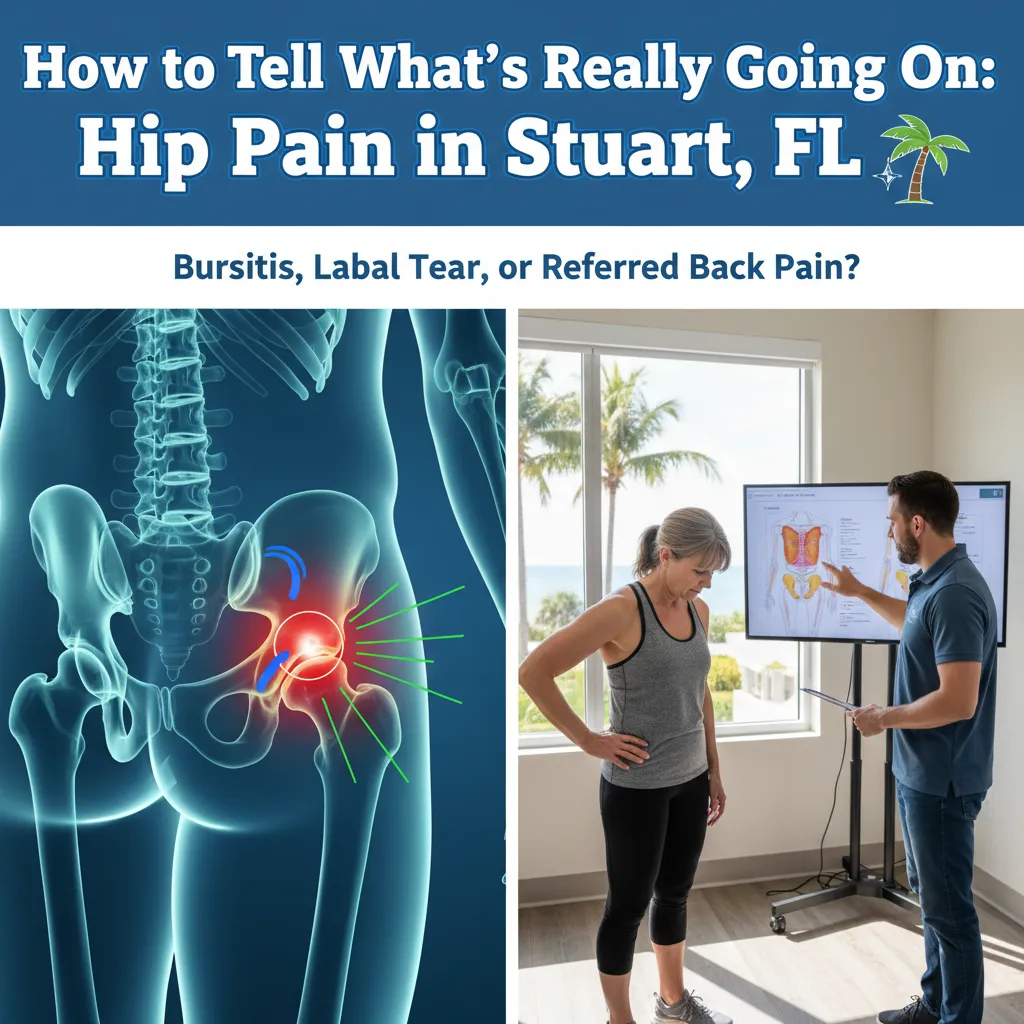
How to Tell What's Really Going On: Hip Pain in Stuart, FL—Bursitis, Labral Tear, or Referred Back Pain?
How to Tell What's Really Going On: Hip Pain in Stuart, FL—Bursitis, Labral Tear, or Referred Back Pain?
Have you ever felt a deep ache in your hip that just won't go away? Perhaps it’s a sharp, pinching sensation when you move a certain way, or maybe a persistent stiffness that makes getting out of a chair a challenge. Hip pain can be incredibly disruptive, affecting everything from your morning walk in Stuart, FL, to a good night's sleep. But here's the crucial question: what exactly is causing it?
Many people automatically assume hip pain means arthritis or a simple muscle strain. However, the hip is a complex joint, and pain can originate from various sources, making accurate identification essential for effective relief. Without understanding the root cause, treatments can fall short, leaving you frustrated and still in discomfort. This article will help you understand the common culprits behind hip pain – bursitis, labral tears, and referred pain from your back – and clarify how they often feel different.
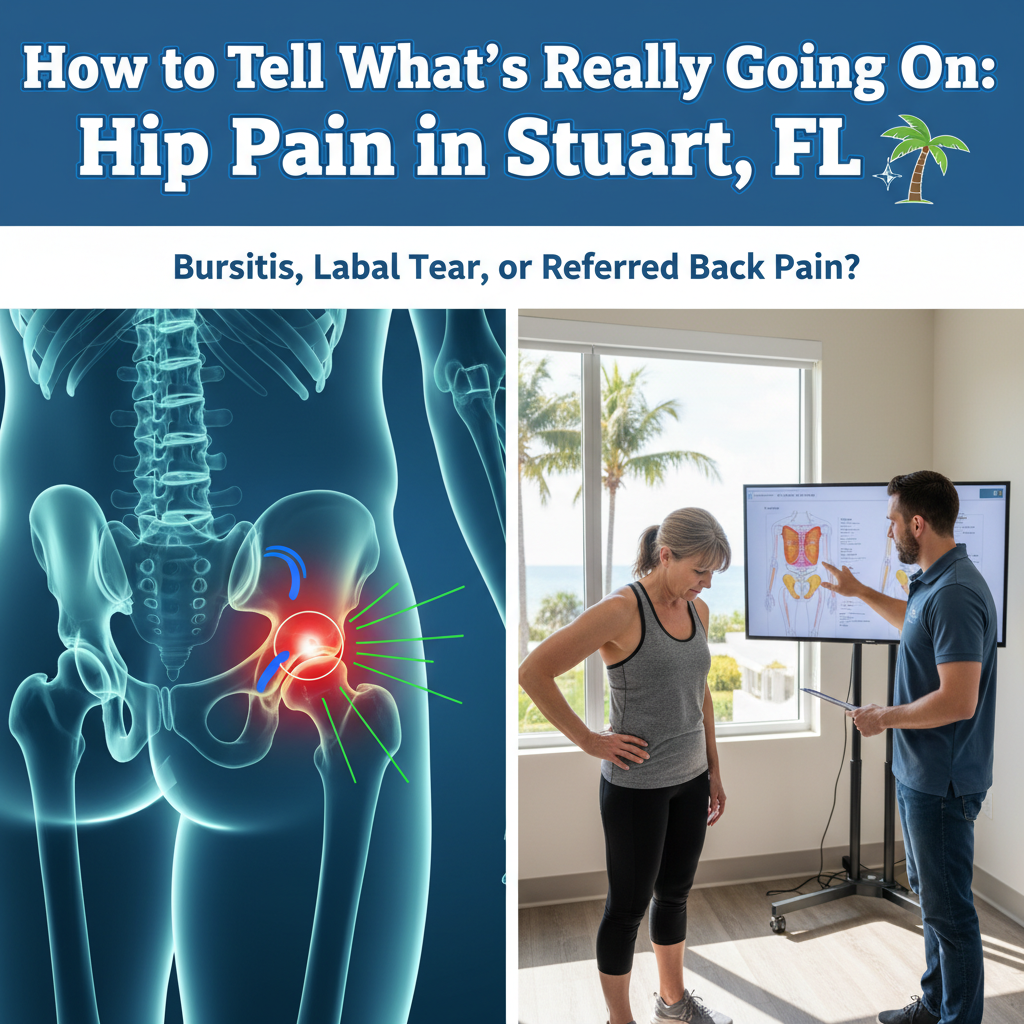
What's the direct answer for how to identify hip pain?
Identifying the specific cause of hip pain, whether it's bursitis, a labral tear, or referred back pain, requires a thorough evaluation of symptoms, physical examination, and understanding movement patterns. Each condition often presents with distinct characteristics regarding pain location, type, and aggravating factors.
Myth vs. Fact: Understanding Your Hip Pain
It’s easy to get confused when experiencing hip pain, especially with so much conflicting information available. Let's separate common misconceptions from what we know to be true.
Myth 1: All outer hip pain is bursitis.
Fact: Outer hip pain is often not bursitis, but rather gluteal tendinopathy.
For years, if you had pain on the outside of your hip—especially near the bony prominence called the greater trochanter—it was almost certainly diagnosed as "trochanteric bursitis." We now understand that while bursitis (inflammation of a bursa, a fluid-filled sac) can occur, the primary source of outer hip pain, often called Greater Trochanteric Pain Syndrome (GTPS), is more commonly related to issues with the gluteal tendons that attach to the outer hip bone. This is known as gluteal tendinopathy.
What it feels like:
Pain on the side of the hip, often worse when lying on that side, standing for long periods, or climbing stairs.
Pain can sometimes radiate down the side of the thigh.
Tenderness when pressing on the bony prominence on the side of your hip.
Weakness in hip abduction (moving the leg out to the side) can sometimes be present.
What contributes to it: Overuse, sudden increases in activity, weakness in hip muscles, poor biomechanics, and certain postures.
Myth 2: A sudden "catch" or "click" in the hip means you're aging.
Fact: A catching or clicking sensation in the hip, especially with deep pain, could indicate a labral tear.
The hip joint is a ball-and-socket joint, and the rim of this socket (the acetabulum) is lined with a ring of cartilage called the labrum. The labrum deepens the socket, provides stability, and helps seal the joint. A labral tear occurs when this cartilage is damaged. This isn't just a sign of aging; it can happen due to trauma, repetitive motion, or structural issues.
What it feels like:
Deep, aching pain in the groin area (the front of the hip). This is the most common location.
Sometimes pain can be felt in the buttock or side of the hip.
A catching, clicking, locking, or giving-way sensation in the hip joint, especially with certain movements like rotating the leg.
Stiffness or limited range of motion.
Pain often worsens with prolonged sitting, standing, or walking.
What contributes to it: Sports injuries, car accidents, hip impingement (where the bones of the hip joint abnormally rub against each other), or repetitive twisting motions.
Myth 3: If your hip hurts, the problem must be in your hip joint.
Fact: Pain felt in the hip can often originate from your lower back, even without back pain.
This phenomenon is known as referred pain. The nerves that supply your lower back also travel down and supply the hip and leg. If there's irritation or compression of these nerves in your lumbar spine, you can feel symptoms in your hip, buttock, or leg, even if your back itself doesn't hurt. This is a common occurrence, and it's why a comprehensive evaluation often includes examining the lower back, even for primary hip complaints.
What it feels like:
Pain that can vary widely in location and intensity – often felt in the buttock, outer hip, or even radiating down the leg.
Sensations like numbness, tingling, or weakness in the leg or foot might accompany the hip pain.
Pain that changes with different back positions or movements (e.g., bending forward, twisting).
Often, there's no specific trigger for the hip pain, and it can be inconsistent.
What contributes to it: Disc issues, nerve impingement (like sciatica), facet joint irritation, or muscle imbalances in the lower back and pelvis.

How Do I Know If This Is My Issue? Symptom-Based Guidance
Distinguishing between these conditions on your own can be challenging because their symptoms can sometimes overlap. However, paying close attention to when,where, and how your pain manifests can offer valuable clues.
For Gluteal Tendinopathy/Outer Hip Pain: If your pain is consistently on the side of your hip, worsens when you lie on that side or put direct pressure on it, and improves with rest from weight-bearing activities, tendinopathy is a strong possibility.
For Labral Tears: If your pain is deep in the groin or front of the hip, accompanied by clicking, catching, or a feeling of instability, especially during rotational movements, a labral issue might be at play.
For Referred Back Pain: If your hip pain comes and goes, varies significantly with your back posture, and is sometimes accompanied by tingling, numbness, or weakness in your leg, even without obvious back pain, it’s worth considering your lower back as the source.
Remember, this symptom-based guidance is for informational purposes and not a substitute for professional evaluation.
What Typically Helps (and What Doesn't)
When dealing with hip pain, there are general approaches that often provide relief and others that may be less effective or even counterproductive without a proper diagnosis.
What Often Helps:
Activity Modification: Temporarily reducing activities that aggravate your pain (e.g., specific exercises, prolonged standing, sitting in certain positions).
Targeted Exercises: Gentle, specific exercises designed to strengthen surrounding muscles, improve hip mobility, and stabilize the core and pelvis.
Good Posture and Body Mechanics: Being mindful of how you sit, stand, and move, especially when lifting or twisting.
Cold or Heat Therapy: Applying ice packs to acute, inflamed areas, or heat to stiff, achy muscles can offer temporary relief.
Supportive Footwear: Proper shoes can influence your entire kinetic chain, from your feet up to your hips and back.
What Often Doesn't Help (or can make it worse):
"Pushing Through" the Pain: Ignoring pain signals can worsen the underlying issue and prolong recovery.
Generic Stretches: Stretching without knowing the cause of your pain can sometimes irritate the area further, especially in cases of tendinopathy or labral tears.
Prolonged Inactivity: While rest is important, complete inactivity can lead to stiffness and weakness, hindering recovery. Finding the right balance is key.
Self-Diagnosing and Self-Treating Based on Limited Information: Relying solely on internet searches without professional guidance can lead to misdiagnosis and inappropriate treatments.
Our Personalized Approach at Coastal Medical and Wellness Center, Stuart FL

At Coastal Medical and Wellness Center, we understand that effective hip pain relief begins with an accurate understanding of its source. That's why we take a personalized approach to every patient who walks through our doors from Stuart and the surrounding areas. We don't believe in one-size-fits-all solutions because your body, your pain, and your lifestyle are unique.
When you visit us for hip pain, our experienced team will conduct a thorough evaluation. We’ll listen carefully to your history, assess your movement patterns, and perform a detailed physical examination to pinpoint the true cause of your discomfort. This comprehensive assessment allows us to develop a customized treatment plan tailored specifically to your needs.
Our approach often incorporates a combination of evidence-based therapies, such as:
Chiropractic Adjustments/Spinal Manipulation: For hip pain that has a component of referred pain from the lower back, or for imbalances in the pelvis and spine that impact hip function, gentle and precise chiropractic adjustments can help restore proper alignment and reduce nerve irritation. This can alleviate pressure and improve communication between your nervous system and your hip muscles.
Shockwave Therapy (Extracorporeal Shockwave Therapy/ESWT): For conditions like gluteal tendinopathy or chronic soft tissue issues around the hip, shockwave therapy can be a highly effective treatment. It works by delivering acoustic waves to the affected tissue, stimulating natural healing processes, increasing blood flow, and reducing pain. This non-invasive therapy can accelerate recovery and improve function.
Personalized Rehabilitation Exercises: Beyond in-office treatments, we guide you through specific exercises designed to strengthen weak muscles, improve flexibility, and correct movement imbalances that contribute to your hip pain.
Our commitment extends beyond just treatment. We pride ourselves on providing "Disney-wow" customer service, ensuring you feel heard, cared for, and supported throughout your healing journey. We're dedicated to educating you about your condition and empowering you with the tools to manage and prevent future issues.
When to Seek Urgent Care for Hip Pain
While most hip pain is not an emergency, certain symptoms warrant immediate medical attention. Please seek urgent care or go to the nearest emergency room if you experience any of the following with your hip pain:
Sudden, severe hip pain after a fall or injury, especially if you cannot bear weight.
Hip pain accompanied by fever, chills, or redness and warmth around the joint.
Any signs of significant trauma, such as a deformed joint.
Loss of bladder or bowel control, or new onset saddle anesthesia (numbness in the groin/genital area).
Sudden weakness or inability to move your leg.
Frequently Asked Questions (FAQ)
Q: Can hip pain really come from my back?
A: Yes, absolutely. Nerves that originate in your lower back travel down into your hip and leg. Issues like disc irritation or nerve compression in the lumbar spine can cause pain to be felt in the hip area, even if your back itself doesn't hurt.
Q: Is surgery the only option for a labral tear?
A: Not necessarily. While some severe labral tears may eventually require surgery, many individuals with labral tears can find significant relief and improved function through conservative treatments like physical therapy, activity modification, and other non-invasive therapies.
Q: What is the difference between bursitis and tendinopathy in the hip?
A: Bursitis refers to the inflammation of a bursa, a fluid-filled sac that cushions joints. Tendinopathy, on the other hand, involves irritation or degeneration of tendons. While both can cause similar-feeling pain on the outside of the hip, current understanding suggests tendinopathy of the gluteal muscles is far more common in lateral hip pain.
Q: How long does hip pain usually last?
A: The duration of hip pain varies greatly depending on the underlying cause, the severity of the condition, and how consistently it is addressed. Acute injuries might resolve in weeks, while chronic conditions can take longer to manage and require ongoing care.
Q: Can lifestyle changes help with hip pain?
A: Yes, lifestyle factors such as maintaining a healthy weight, engaging in appropriate exercise, avoiding prolonged static positions, and ensuring proper biomechanics during daily activities can significantly impact hip health and aid in pain management.
Q: What exactly is shockwave therapy for hip pain?
A: Shockwave therapy, or ESWT, is a non-invasive treatment that uses high-energy acoustic waves to stimulate healing in injured tissues. For hip conditions like gluteal tendinopathy, it can promote regeneration, reduce pain, and improve function by encouraging blood flow and metabolic activity.
Conclusion
Understanding the true source of your hip pain is the first critical step toward finding lasting relief. Whether it's the specific inflammation of a bursa, a tear in your hip's labrum, or pain referred from your lower back, each condition requires a thoughtful and targeted approach. At Coastal Medical and Wellness Center, we are committed to providing Stuart, FL, and surrounding communities with clear, evidence-based insights and personalized care. Our goal is to help you navigate your hip pain journey with confidence, bringing you closer to a life of greater comfort and mobility.
This information is for educational purposes only and should not be considered medical advice. Always consult with a qualified healthcare professional for diagnosis and treatment of any medical condition.
Ready to uncover the root cause of your hip pain and explore personalized solutions?
Call 772-286-5277 to schedule a consult or visit.
References / Sources
Mayo Clinic — Hip pain: Symptoms & causes
https://www.mayoclinic.org/symptoms/hip-pain/basics/causes/sym-20050684Cleveland Clinic — Hip Labral Tear: Symptoms, Causes & Treatment
https://my.clevelandclinic.org/health/diseases/hip-labral-tearCleveland Clinic — Greater Trochanteric Pain Syndrome (GTPS)
https://my.clevelandclinic.org/health/diseases/21585-greater-trochanteric-pain-syndromeAmerican Academy of Orthopaedic Surgeons (AAOS) — Hip Bursitis
https://orthoinfo.aaos.org/en/diseases--conditions/hip-bursitis/NIH / National Library of Medicine (MedlinePlus) — Low back pain
https://medlineplus.gov/lowbackpain.html
