How Shockwave Therapy Works for Pain Relief
A stubborn heel that hurts on the first steps of the morning, a tender elbow that makes lifting difficult, or a painful shoulder that limits sleep can wear down far more than your mobility. When rest, stretching, and over-the-counter remedies have not brought enough progress, many patients ask how shockwave therapy works and whether it may be a natural next step.
Shockwave therapy is a noninvasive treatment that uses targeted acoustic pressure waves to stimulate the body’s healing response in injured or chronically irritated tissue. It does not involve surgery, injections, or medication. Instead, it is designed to encourage circulation, tissue repair, and improved function in areas that have struggled to heal fully on their own.
At Coastal Medical & Wellness, shockwave therapy is considered in the context of the whole person. Pain can be influenced by movement patterns, spinal alignment, old injuries, inflammation, nerve irritation, and daily demands. The goal is not simply to chase a painful spot. It is to identify what may be keeping that area under stress and build a personalized plan to help you move and feel better.
How Shockwave Therapy Works in the Body
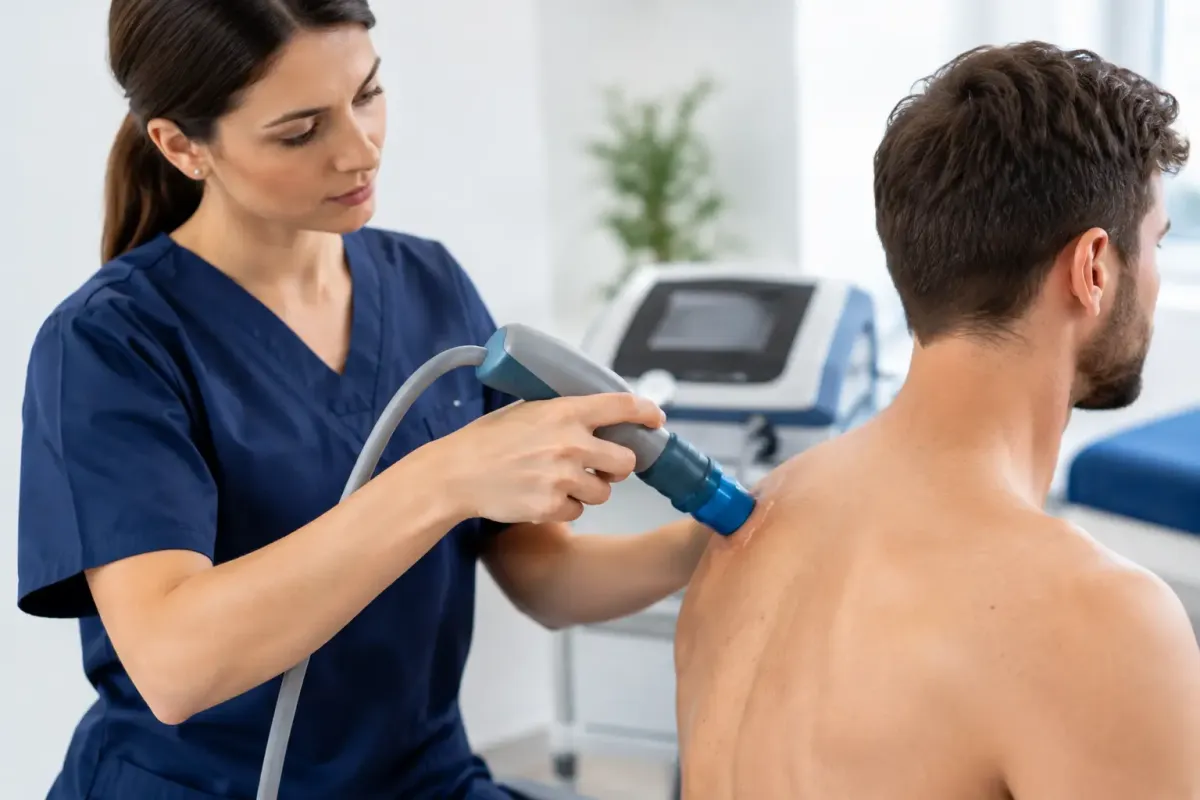
Despite its name, shockwave therapy does not use electric shocks. The treatment delivers controlled acoustic waves through the skin and into the targeted tissues. A provider applies gel to the treatment area, then moves a handheld device over the skin to direct those waves where they are needed.
The mechanical energy creates a controlled stimulus within the tissue. This can increase local blood flow and trigger biological processes involved in tissue remodeling and repair. In some chronic conditions, tissue may have limited circulation or may be stuck in a prolonged cycle of irritation and incomplete healing. Shockwave therapy aims to help restart a more active healing response.
The treatment may also influence pain signaling. For some patients, reducing sensitivity in the treated area can make it easier to begin moving normally again. That matters because guarded movement, limping, or avoiding a painful motion can create new stress on nearby muscles and joints.
The response is not instant for everyone. Some people feel changes early, while others improve more gradually over several weeks as the body responds to treatment and supportive care. Results depend on the condition, how long it has been present, the health of the tissue, activity level, and whether the source of the problem is being addressed.
Focused and Radial Shockwave Therapy
Shockwave systems can deliver energy in different ways. Focused shockwave therapy is designed to concentrate energy deeper within a specific target area. Radial pressure-wave therapy spreads energy across a broader, more superficial area.
Neither approach is automatically better. The right option depends on the location and nature of the problem. A careful evaluation helps determine whether shockwave therapy is appropriate, which area should be treated, and how it may fit alongside chiropractic care, rehabilitative movement, or other conservative therapies.
Conditions That May Respond to Shockwave Therapy
Shockwave therapy is often used for musculoskeletal conditions involving chronic tendon irritation, fascia problems, or soft-tissue pain. It may be considered when symptoms have continued despite rest or basic self-care, especially when pain is interfering with work, exercise, sleep, or everyday movement.
Common areas of treatment include the heel and plantar fascia, Achilles tendon, elbow tendons, shoulder tendons, hip region, knee region, and certain areas of the back. Patients may seek care for concerns such as plantar fasciitis, tennis elbow, Achilles tendinopathy, calcific shoulder pain, or other persistent tendon-related discomfort.
A diagnosis matters. Heel pain, for example, is not always plantar fasciitis. Tingling, numbness, weakness, swelling, an acute tear, or pain that follows a significant injury may require a different type of evaluation or treatment. That is why a personalized assessment is more valuable than choosing a therapy based only on a symptom name found online.
What a Shockwave Therapy Session Feels Like
A typical session is relatively quick. After identifying the treatment area, your provider applies gel and uses the device to deliver acoustic waves in a controlled pattern. You may hear clicking sounds and feel a tapping, pulsing, or pressure-like sensation.
Intensity is adjusted based on the area being treated and your comfort level. Some tenderness during the session is possible, particularly when the tissue is already sensitive. Treatment should be tolerable, and communication with your provider helps ensure the settings are appropriate.
It is common to have temporary soreness afterward, much like the feeling after a challenging workout. Some patients experience mild redness or sensitivity in the treated area. Your provider may recommend limiting high-impact activity for a short period, but complete inactivity is not always necessary. The best guidance depends on your condition and the demands of your daily routine.
Many care plans involve a series of sessions rather than a single appointment. The number and spacing of treatments vary. Chronic conditions may need more time than recent injuries, and a patient who continues to overload the affected tissue may progress differently than someone who can modify activity while healing.
Why Shockwave Therapy Often Works Best as Part of a Plan
A painful tendon or fascia is rarely just an isolated problem. Foot pain may be affected by gait, footwear, calf tightness, hip weakness, or lower-back mechanics. Shoulder discomfort may be connected to posture, repetitive work, reduced mobility, or strain in the neck and upper back.
That is why a root-cause approach can be so helpful. Shockwave therapy may support healing in the painful tissue, but long-term improvement often also requires restoring motion, improving strength, addressing joint restrictions, and changing the habits that placed excess strain on the area in the first place.
For a patient with plantar fasciitis, a care plan might include shockwave therapy along with mobility work, guidance on activity modification, and evaluation of foot and lower-body mechanics. For someone with elbow pain, treatment may also address grip demands, shoulder function, and repetitive movements at work or during sports.
This approach respects the body’s ability to heal while recognizing that lasting results usually require more than temporary symptom relief. The right plan should fit your diagnosis, health history, goals, and tolerance for activity.
Who Should Be Cautious About Shockwave Therapy?
Shockwave therapy is not the right choice for every person or every type of pain. Your provider should review your medical history before recommending treatment. Certain situations, such as pregnancy, an active infection, a suspected fracture, bleeding disorders, use of some blood-thinning medications, cancer in the treatment area, or significant loss of sensation may require caution or a different approach.
If you have severe pain after a traumatic injury, sudden weakness, unexplained swelling, fever, color changes in a limb, or progressive numbness, do not assume it is a routine overuse problem. These symptoms deserve prompt medical evaluation.
It is also wise to have realistic expectations. Shockwave therapy is not a cure-all, and it cannot reverse every type of tissue damage. It may be most useful when the diagnosis is accurate, treatment is properly targeted, and you follow a plan that supports healing between visits.
Is It Time to Explore Shockwave Therapy?
If pain has kept you from walking comfortably, exercising, working, or enjoying life around the Treasure Coast, you do not have to settle for masking the symptoms. A focused evaluation can help determine whether shockwave therapy, chiropractic care, spinal decompression, or another natural treatment option may fit your needs.
To discuss your symptoms and personalized treatment options, call Coastal Medical & Wellness at (772) 286-5277. The next step is not guessing which treatment you need. It is finding the cause and creating a practical plan that helps you move toward feeling great again.
