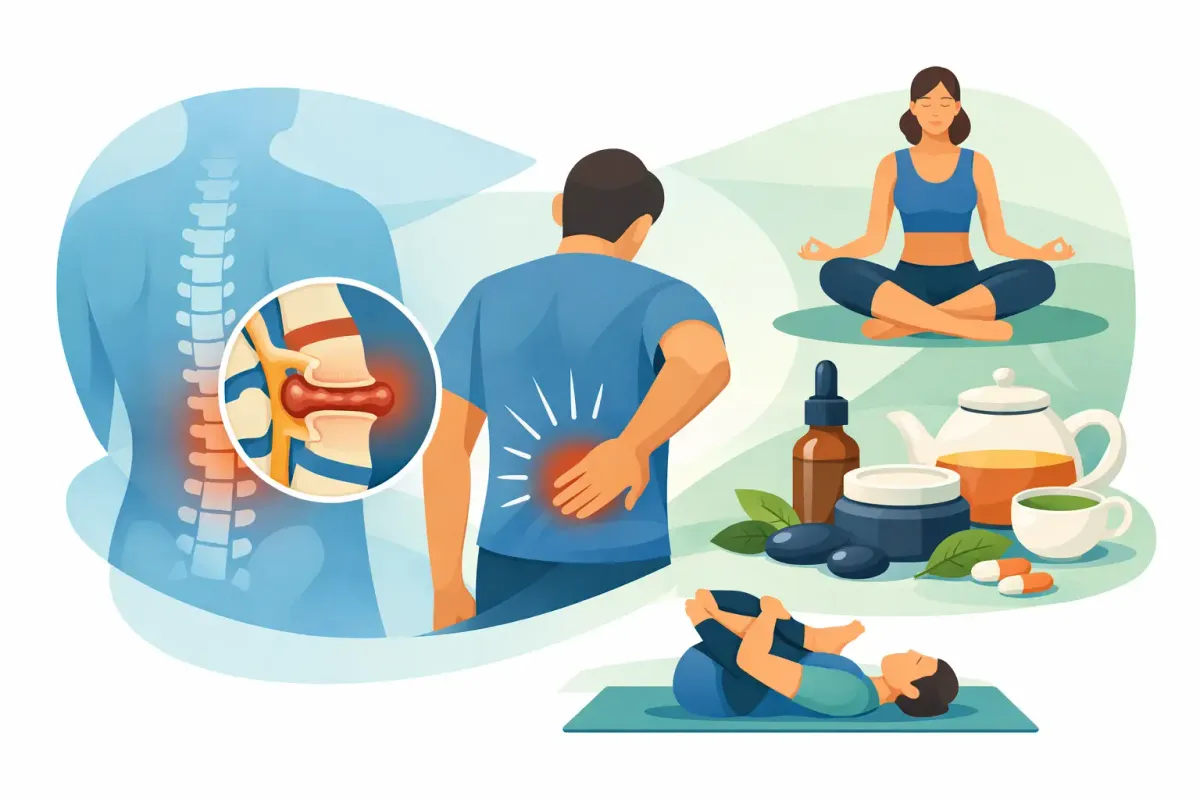
How to Treat Bulging Disc Naturally
That sharp catch in your lower back when you stand up, the ache that travels into your hip, or the tingling down your leg can make everyday life feel smaller fast. If you are searching for how to treat bulging disc naturally, the goal is not just to calm pain for a day or two. It is to reduce pressure on the irritated area, support healing, and help your spine move better without jumping straight to medication or surgery.
A bulging disc happens when one of the spinal discs starts pushing outward beyond its usual boundary. It is not always a medical emergency, and it does not always cause severe pain. But when that bulge irritates nearby nerves or adds stress to surrounding joints and muscles, you may feel stiffness, numbness, weakness, burning, or pain that flares with sitting, bending, lifting, or twisting.
The natural approach works best when it is targeted. Rest alone is usually not enough, and pushing through pain is rarely the answer either. Most people do better with a combination of smart movement, inflammation control, posture changes, and hands-on care that addresses the root cause.
How to treat bulging disc naturally at home
Natural treatment starts with reducing aggravation. In the first phase, that usually means avoiding movements that increase pressure on the disc, especially repeated bending forward, heavy lifting, long periods of sitting, and twisting while carrying weight. You do not need to stay in bed. In fact, too much inactivity can make the spine stiffer and the supporting muscles weaker.
Gentle walking is often one of the best places to start. It promotes circulation, keeps the body from locking up, and can reduce the feeling of compression that builds up after sitting still. Short walks several times a day are usually better than one long session that leaves you sore.
Ice can help during a sharp flare, especially if the area feels inflamed or recently irritated. Later, some people respond better to heat because it helps relax protective muscle tension around the spine. It depends on what your body is doing. If heat makes the area throb more, go back to ice. If ice makes everything tighten up, try heat for short intervals.
Sleep position matters more than many people realize. If you sleep on your back, placing a pillow under your knees can reduce low back strain. If you sleep on your side, a pillow between your knees may keep the pelvis and spine in a better position. Stomach sleeping often increases spinal stress, especially in the lower back and neck.
Movement is medicine, but only the right kind
One of the biggest mistakes people make is assuming all stretching is helpful. With a bulging disc, aggressive forward bends, toe touches, or deep twisting stretches can make symptoms worse, especially when nerve irritation is involved. The right movement should reduce pain over time, not spread it further down the leg or arm.
That is why evaluation matters. Some people improve with extension-based exercises that gently encourage disc material away from sensitive nerve tissue. Others need core stability work first because the spine is moving too much and not being supported well enough. There is no one-size-fits-all exercise plan.
In general, the safest early focus is controlled movement. Gentle walking, supported core activation, light mobility work, and position changes throughout the day usually help more than long stretching sessions. If an exercise causes pain to travel farther from the spine, stop. If it brings symptoms more centrally into the back and reduces leg pain, that can be a positive sign.
Posture and daily habits can keep a disc irritated
If your disc bulge is being aggravated all day, treatment only has so much room to work. Sitting slumped over a desk, driving for long periods, looking down at a phone, or lifting with poor mechanics can keep reloading the same tissue.
Good posture is not about sitting rigidly straight every second. It is about reducing sustained stress. Keep screens at eye level when possible. Use back support when sitting for longer periods. Stand up and move every 30 to 45 minutes. When lifting, hinge at the hips, keep the object close to your body, and avoid twisting as you rise.
This matters even more for people with desk jobs, long commutes, or physically demanding work. Small changes repeated every day can either slow recovery or support it.
Reducing inflammation naturally
When a bulging disc becomes painful, the issue is not always the size of the bulge alone. Inflammation around the disc and nearby nerves often drives symptoms. A natural care plan usually includes ways to calm that inflammatory response.
Hydration helps the soft tissues of the spine function better, and anti-inflammatory food choices can support recovery. Many people do well when they cut back on ultra-processed foods, excess sugar, and heavy alcohol use while increasing whole foods such as vegetables, berries, healthy fats, lean protein, and mineral-rich foods. This does not replace treatment, but it can improve the body’s healing environment.
Body weight can also affect spinal stress. Extra weight, especially through the midsection, may increase load on the lower back. Even modest weight loss can reduce strain and improve mobility for some patients. The key is not chasing fast results. It is creating habits that lower mechanical stress over time.
Natural care often works better with professional guidance
Home care can help, but ongoing pain, nerve symptoms, or repeated flare-ups usually need a more structured plan. That is where conservative, non-surgical care can make a real difference.
Chiropractic care may help when the spine and surrounding joints are not moving well and that dysfunction is contributing to pressure, muscle guarding, and irritation. The goal is not to force the disc back into place with one adjustment. The goal is to improve spinal mechanics, reduce stress on the affected area, and help the body heal in a more stable pattern.
Spinal decompression can also be useful for some bulging disc cases. This therapy is designed to gently reduce pressure in the spine and create a better environment for disc recovery. It is not right for every patient, but when used appropriately, it can be a strong option for people who want to avoid injections or surgery.
Other supportive therapies may help depending on the case. Soft tissue work, guided corrective exercise, red light therapy, and targeted wellness strategies can improve circulation, reduce tension, and support tissue recovery. At Coastal Medical & Wellness, that kind of integrated approach is often what helps patients move from short-term relief to long-term function.
When natural treatment is enough, and when it is not
A lot of bulging discs improve with conservative care, especially when treatment starts early and the plan fits the person. But there are times when self-treatment is not enough.
If you have worsening weakness, loss of balance, numbness that keeps spreading, severe pain that does not improve, or changes in bowel or bladder control, you need prompt medical evaluation. Those symptoms can signal a more serious nerve issue.
There is also a middle ground where pain is not dangerous, but it is not getting better. If you have been trying to manage it on your own for a few weeks with little progress, that is a sign to get assessed. The longer abnormal movement and nerve irritation continue, the harder they can be to unwind.
What recovery usually looks like
Natural healing is rarely instant. Many people start by noticing less frequent flare-ups, easier transitions from sitting to standing, better sleep, and less pain traveling down the arm or leg. Strength and confidence often return after that.
Recovery is also not perfectly linear. You may feel better for several days, overdo it on the weekend, and feel sore again. That does not always mean you are back at the beginning. It often means the tissue is improving but not fully resilient yet. This is where consistency matters.
The real goal is not simply getting through the current flare. It is building a spine that tolerates daily life better through movement, support, and habits that reduce repeat injury.
A practical mindset for long-term relief
If you want to know how to treat bulging disc naturally, think beyond one remedy. The most effective plan usually combines symptom relief with root-cause correction. That may include changing how you sit, move, lift, sleep, exercise, eat, and recover.
Natural care is not passive. It asks you to pay attention to patterns, make smarter choices during the day, and get help when your body is not improving on its own. The good news is that many people can avoid more invasive treatment when they address the problem early and follow a personalized plan.
Your body has a strong ability to heal when pressure is reduced, inflammation is managed, and the spine is supported the right way. Sometimes the next step is not doing more. It is doing what actually helps, consistently enough for healing to take hold.
