Natural Pain Management for Primary Care: A Complete Guide
Last Updated: November 1, 2026
Quick Summary
Natural pain management for primary care starts with non-drug options such as movement, physical therapy, heat and cold, and mind-body practices. Medication or specialist referral is added only when those fall short. A primary care provider reviews your history, rules out red flags, and builds a plan you can monitor over time.
- Exercise and graded movement are the most consistently recommended non-drug options for chronic pain.
- Acupuncture has its strongest support for chronic low back pain, neck pain, knee osteoarthritis, and headache prevention.
- Fish oil, curcumin, ginger, and garlic can increase bleeding risk, especially with anticoagulants or antiplatelet drugs.
- Track pain on a 0 to 10 scale and review progress with your provider every four to six weeks.
- Seek prompt evaluation for numbness, weakness, bladder or bowel changes, fever with pain, or unexplained weight loss.
Table of Contents
- Why Natural Pain Management Belongs in Primary Care
- Non-Drug Pain Management Options Your Provider Can Recommend
- Complementary Therapies for Pain: Acupuncture, Mind-Body Practices and Supplements
- Chronic Pain Management in Primary Care: Diagnosis, Red Flags and Referral Thresholds
- Safety, Medication Interactions and Evidence Grading
- Pain Management Without Medication: Building a Plan You Can Measure
- Booking Your Pain Evaluation at Coastal Medical and Wellness Center
- Frequently Asked Questions
Why Natural Pain Management Belongs in Primary Care
Chronic pain affects a large share of American adults, and for many of them the first stop is primary care.
Many patients arrive after months of medications that helped only partly, or after being told surgery is the only option left.
Non-drug care is not a substitute for medical evaluation. It works best when it is part of a plan your provider understands and monitors.
Non-Drug Pain Management Options Your Provider Can Recommend
Most primary care providers can recommend a range of non-drug options. The right mix depends on where the pain is, how long it has lasted, and what you can do day to day.
Exercise, Movement and Physical Therapy
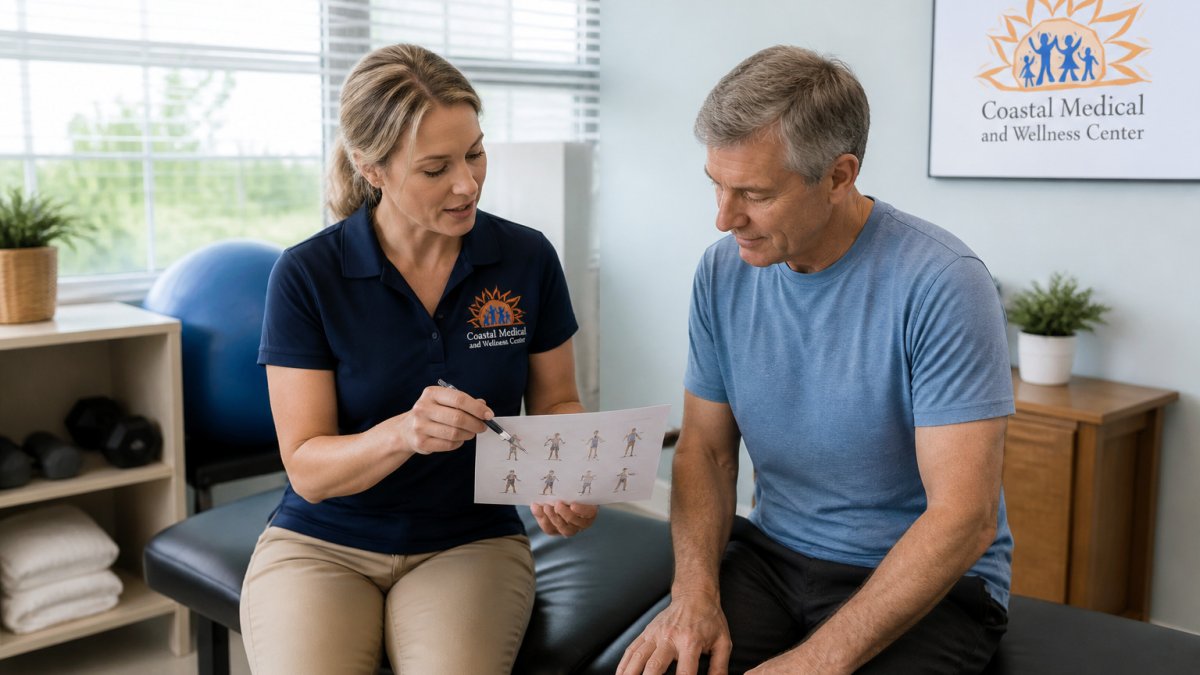
Movement is the most consistently recommended non-drug option for chronic pain. Gentle, progressive activity is better tolerated than rest, and graded walking, strengthening, and stretching often reduce stiffness over several weeks. A licensed physical therapist can design a program around your limits, since doing too much too soon often flares symptoms.
A common mistake is treating exercise as all-or-nothing. Start with a duration you can finish comfortably and increase it gradually rather than pushing through sharp pain.
Heat, Cold and Massage
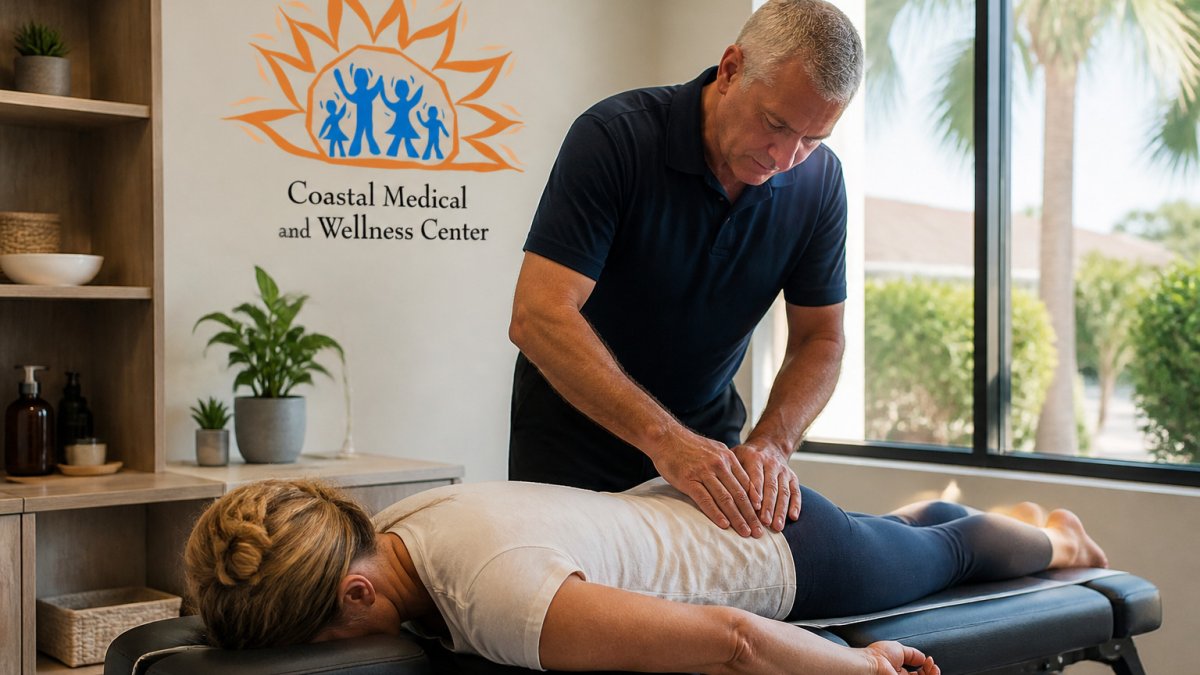
Heat is often used to ease muscle tightness and stiffness, while cold can help with acute swelling or a recent flare. Many patients alternate the two, though the right choice depends on the type of pain, so ask your provider which applies to you. Therapeutic massage can relieve muscle tension and support circulation, and it is commonly used alongside other treatments rather than alone.
Complementary Therapies for Pain: Acupuncture, Mind-Body Practices and Supplements
Complementary therapies are used alongside, not instead of, core treatment. In primary care, the practical question is whether a therapy is safe for this patient, whether the evidence supports it for this pain type, and whether it fits their preferences and budget. The table below summarizes common categories.
| Therapy | Best-supported uses | Typical practical detail | Key safety notes |
|---|---|---|---|
| Acupuncture | Chronic low back pain, neck pain, knee osteoarthritis, tension-type headache and migraine prophylaxis | A course is usually several sessions over 4-8 weeks; ask whether the practitioner uses single-use sterile needles | Serious adverse events are uncommon with sterile technique; avoid or get clearance if you take anticoagulants, have a bleeding disorder, or are pregnant (some points are avoided) |
| Acupressure | Muscle tension, nausea, relaxation; often self-administered | Can be taught in a visit and done at home with no equipment | Low risk; avoid pressing directly on inflamed, injured, or infected skin |
| Mindfulness, meditation, breathing, biofeedback | Chronic pain coping, stress amplification, insomnia, headache | 10-20 minutes daily; app-based or group programs work; biofeedback requires a trained practitioner and equipment | Low risk; patients with trauma histories may prefer trauma-informed instruction |
| Supplements (fish oil, curcumin, ginger, others) | Preliminary or condition-specific evidence only; not a substitute for proven care | Quality varies by product; third-party testing (USP, NSF) helps confirm label accuracy | Bleeding risk with fish oil, curcumin, ginger, and garlic, especially with warfarin, DOACs, or antiplatelets; curcumin can affect iron absorption and liver enzymes; stop several days before surgery if your provider advises |
Acupuncture and Acupressure
Acupuncture inserts thin, single-use sterile needles at defined points; acupressure applies pressure to similar points without needles. Evidence is strongest for chronic low back pain, neck pain, knee osteoarthritis, and headache prevention, with modest benefit over usual care or sham for some patients. It is not a cure, and response varies. Acupuncture is generally considered as an adjunct when medication is partially effective, poorly tolerated, or the patient prefers to limit drug exposure.
Mind-Body Practices and Biofeedback
Mindfulness, paced breathing, progressive muscle relaxation, and biofeedback target the stress and central sensitization that amplify chronic pain. They do not remove the source of pain, but many patients find they raise the threshold at which pain becomes disabling and improve sleep. Biofeedback uses sensors to teach control of heart rate, breathing, or muscle tension and requires a trained practitioner and equipment, so availability and coverage vary.
Supplements: What Primary Care Should Screen For
Supplements are a higher-risk category because their quality varies and they are often not fully disclosed to clinicians. Fish oil, curcumin (from turmeric), and ginger draw the most patient interest, but the evidence for them is preliminary or condition-specific. The clinical priorities are:
- Bleeding risk. Fish oil, curcumin, ginger, garlic, ginkgo, and high-dose vitamin E can increase bleeding. This matters for patients on warfarin, direct oral anticoagulants, antiplatelets, or with bleeding disorders. Stop before surgery only on your provider's instruction.
- Drug interactions. St. John's wort induces liver enzymes and can reduce the effectiveness of many drugs, including some contraceptives and immunosuppressants; it can also interact with antidepressants. Curcumin may affect iron absorption and liver enzymes at high doses.
- Pregnancy and lactation. Many herbs are not established as safe; review before use.
Matching the Therapy to the Pain
A useful rule is to match the intervention to the mechanism. Mechanical low back and neck pain often respond to movement and manual therapy first, with acupuncture as an adjunct. Headache prevention may combine mind-body practice, sleep regularity, and, for some patients, acupuncture. Widespread or centralized pain (fibromyalgia-type patterns) tends to benefit most from graded movement, sleep, stress reduction, and patient education, with supplements treated as optional and evidence-limited.
Chronic Pain Management in Primary Care: Diagnosis, Red Flags and Referral Thresholds
A thorough primary care evaluation begins with a diagnosis, not a treatment. Your provider will look for the source of the pain, check for conditions that need urgent attention, and decide whether a specialist should be involved.
Red flags warranting prompt evaluation include new numbness or weakness in the legs or arms, loss of bladder or bowel control, unexplained weight loss, fever with pain, and pain that wakes you at night and does not improve with rest. For patients whose pain is tied to spinal or joint mechanics, a provider may also discuss options such as Cox Spinal Decompression Therapy once the diagnosis is clear.
Safety, Medication Interactions and Evidence Grading
Non-drug approaches are generally low risk but not risk-free, and the evidence behind them is uneven. A primary-care plan should separate what is well supported from what is preliminary and screen for situations where a low-risk option becomes higher-risk.
A Practical Evidence Hierarchy
Evidence strength varies by therapy and by condition. A useful way to think about it:
- Stronger support (multiple trials, consistent direction): exercise and graded activity for chronic low back pain and knee osteoarthritis; physical therapy for many musculoskeletal conditions; cognitive behavioral approaches and mindfulness-based programs for chronic pain coping; acupuncture for chronic low back pain, neck pain, and headache prevention (modest benefit).
- Moderate or condition-specific: massage for short-term low back and neck pain; biofeedback for headache and some chronic pain; heat for muscle stiffness; cold for acute swelling.
- Preliminary or patient-reported: most supplements, including fish oil, curcumin, and ginger for pain; red light therapy for pain; many "wellness" services marketed for pain.
Evidence also depends on the condition. An intervention with good evidence for knee osteoarthritis may have little support for nerve pain or widespread centralized pain. Ask your provider: what is the evidence for this option in my specific condition, and how large is the expected benefit?
Safety and Contraindications by Category
- Exercise and movement. Generally safe, but start below your limit and progress gradually. Get clearance first if you have known heart disease, uncontrolled blood pressure, recent surgery, or osteoporosis with prior fracture. Sharp, escalating pain during activity is a reason to stop and check in.
- Manual therapy and chiropractic care. Avoid high-velocity manipulation in patients with severe osteoporosis, known fracture, spinal infection or tumor, or unstable spine conditions; use caution with anticoagulation. Neck manipulation carries a rare but serious risk of vertebral artery injury, discuss alternatives if you have neck pain with neurological symptoms.
- Heat and cold. Avoid heat over areas with reduced sensation (for example, diabetic neuropathy) and over acute inflammation; avoid prolonged cold in patients with poor circulation or Raynaud's phenomenon.
Medication Interactions Worth Knowing
Patients often assume natural means compatible with prescriptions. Several common combinations deserve attention:
- Anticoagulants and antiplatelets (warfarin, apixaban, rivaroxaban, aspirin, clopidogrel): fish oil, curcumin, ginger, garlic, ginkgo, and high-dose vitamin E can add bleeding risk.
- Antidepressants: St. John's wort can interact with SSRIs and other serotonergic drugs; discuss before use.
- Diabetes and blood pressure medications: some supplements and herbs can lower glucose or blood pressure additively; monitor if you start them.
When Evidence Is Weak, Say So
A trustworthy primary-care plan is honest about uncertainty. If the evidence for an option is preliminary, the plan should say so, set a defined trial period (for example, 4-6 weeks), and define what improvement would look like, better function, less pain interference, improved sleep, before continuing to spend time or money. That protects patients from open-ended spending on unproven services and keeps the focus on interventions with the best support for their specific pain.
Pain Management Without Medication: Building a Plan You Can Measure
A useful pain plan has measurable goals. Track pain on a simple 0 to 10 scale, note daily function (sleep, walking distance, work tasks), and review progress with your provider every four to six weeks. If a component is not helping after a fair trial, change it rather than adding more.
Functional medicine and red light therapy are sometimes discussed as part of a non-medication plan. Functional Medicine is one approach that looks at underlying contributors to symptoms, and Red Light Therapy and Weight Health is a service offered at the clinic. You can learn more about the New Patient Special at Coastal Medical and Wellness Center by calling 772-286-5277.
Keep in mind that outcomes vary, and no approach is guaranteed to work for every patient.
Booking Your Pain Evaluation at Coastal Medical and Wellness Center
If you are considering a non-drug plan for chronic pain, a primary care evaluation is a practical first step. Our primary care page provides an overview of primary care services, and the clinic's homepage has general contact details.
Call (772) 286-5277 or visit 3257 SE Salerno Rd #3, Stuart, FL 34997 to schedule. Your provider will review your history and discuss which options fit your situation.
Frequently Asked Questions
What natural pain management options can primary care providers recommend?
Primary care providers commonly recommend a combination of exercise and physical activity, heat or cold packs, massage therapy, stress-reduction practices such as mindfulness and meditation, and dietary changes aimed at reducing inflammation. The right mix depends on the type and location of pain, how long it has lasted, and the patient's other health conditions. A provider can help sequence these options, track progress over several weeks, and decide when a referral to a physical therapist, chiropractor or pain specialist makes sense.
How can I manage chronic pain without medication?
Managing chronic pain without medication usually relies on several strategies used together: regular, targeted movement; sleep and stress management; heat and cold therapy; manual therapies such as massage; and cognitive approaches like mindfulness that change how pain is experienced. Many people also use pacing to avoid both overdoing and underdoing activity. Set one or two measurable goals, such as walking a certain distance or sleeping through the night more often, and review them with your provider every few weeks.
Are complementary therapies safe to use alongside pain medication?
Some complementary therapies are low risk, while others can interact with prescription drugs or cause problems for people with certain conditions. Herbal products and dietary supplements such as fish oil, ginger, curcumin or white willow bark can affect bleeding risk, blood pressure or how the body processes medication. Tell your primary care provider about every supplement and therapy you use so they can check for interactions and contraindications before you combine them with any pain medication.
What should I ask my primary care provider about natural pain relief?
Useful questions include: what is most likely causing the pain, which non-drug options fit my situation, what the evidence says for each option, what risks or interactions I should know about, how we will measure whether it is working, and when I should be referred to a specialist. Ask what a realistic timeline looks like and what warning signs mean you should be seen sooner. Bringing a pain diary with timing, triggers and what helped can make these conversations more productive.

