Neck Ache Treatment: What Actually Gives Relief?
Quick Summary
Most neck ache treatment starts with gentle self-care: stop the aggravating activity, apply ice for the first 48 hours, then switch to heat, and keep moving slowly. Pain that is getting worse, spreads down the arm, or follows a crash needs a medical evaluation.
- Most everyday neck pain comes from muscle strain or muscle spasm.
- Apply ice wrapped in a towel for 15 to 20 minutes a few times a day during the first 48 hours.
- After two days, use a warm towel or heating pad for 15 to 20 minutes to ease stiffness.
- Chin tucks: hold five seconds and repeat ten times.
- Numbness, tingling, or arm weakness means you should seek prompt medical attention.
Table of Contents
Why Your Neck Aches and What Usually Causes It
A stiff, sore neck is one of the most common complaints in the United States. Most neck ache treatment starts with understanding the cause, because the right fix depends on what is behind the pain. Many people feel it after a long day at a desk, a night spent sleeping at a bad angle, or a sudden jerk from a fall or car accident. (Source: muscle strain or muscle spasm)
Most everyday neck pain comes from muscle strain or muscle spasm. The muscles that hold up your head can tighten after repetitive use or a poor posture.
Common triggers include:
- Poor posture: Leaning forward over a phone or laptop for hours
- Sleep position: Waking up with the head twisted or propped on too many pillows
- Stress: Clenching the jaw and raising the shoulders without noticing
- Minor injury: A sudden twist during exercise or lifting
- Whiplash: A neck snap from a car accident, even at low speed
Pain that comes on after a crash deserves prompt medical attention, even when it feels mild at first.
Your First 24 to 72 Hours: A Safe Step-by-Step Plan
For most acute neck pain, the first few days matter most. Gentle care usually helps more than rest alone, and it avoids making the strain worse.
Follow these steps in the first 24 to 72 hours:
- Stop the aggravating activity. Pause long screen sessions and heavy lifting.
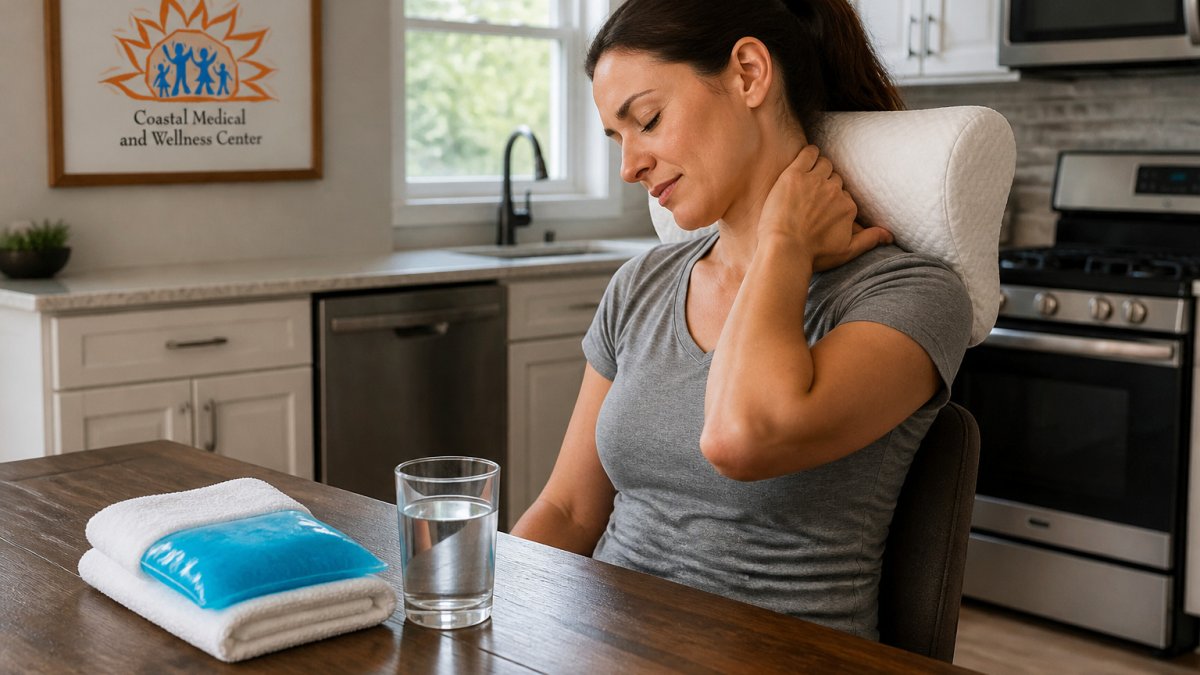
- Apply cold first (Ice and heat treatment). Use an ice pack wrapped in a towel for 15 to 20 minutes, a few times a day, during the first 48 hours.
- Switch to heat. After the first two days, a warm towel or heating pad for 15 to 20 minutes can ease stiff muscles.
- Keep moving gently. Short walks and slow head turns help more than complete stillness.
- Support your sleep. Use a pillow that keeps your head level with your spine.
- Check your symptoms daily. If the pain is getting worse rather than better, book an evaluation.
Watch out: Do not push through sharp pain. Stop any movement that sends pain down the arm or causes numbness.
Using Ice, Heat, and Over-the-Counter Medication Safely
Ice and heat are low-risk options for most people. Use each one for short periods, and keep a towel between the skin and the cold pack or heating pad to prevent burns and frostbite.
Over-the-counter pain relievers can also help. Many adults in the United States use ibuprofen or acetaminophen for short-term neck pain. Read the label, follow the dosing directions, and check with a pharmacist or doctor if you take blood thinners, have kidney or liver problems, or take other medications. Topical creams containing menthol or lidocaine may offer local relief for some people.
Medication eases symptoms but does not fix the underlying cause. If pain lasts beyond a few days, a clinician can help find out why.
Neck Pain Relief Exercises and Stretches to Try
Once the worst pain settles, neck pain relief exercises can restore motion and reduce stiffness. Move slowly, stop at any sharp pain, and avoid bouncing or forcing a stretch.
Try these gentle movements:
- Chin tucks: Sit tall, gently draw your chin straight back, hold five seconds, and repeat ten times.
- Side neck stretch: Tilt your ear toward your shoulder and hold for 20 to 30 seconds per side.
- Shoulder rolls: Roll both shoulders backward ten times to release tension.
- Gentle rotation: Turn your head slowly to each side, holding briefly at the end of your comfortable range.
These moves support range of motion and posture. They are most helpful as part of a regular routine rather than a one-time fix.
How Long Does Neck Pain Last?
Most acute neck strains improve within a few days to a few weeks with self-care. Mild cases often feel better within one to two weeks, while stiffness that lingers longer may need professional review.
Chronic neck pain lasts three months or more and often needs a structured plan. Persistent symptoms, pain that wakes you at night, or pain that keeps returning deserve a medical evaluation rather than waiting it out.
Chiropractic Care for Neck Pain: When It Helps
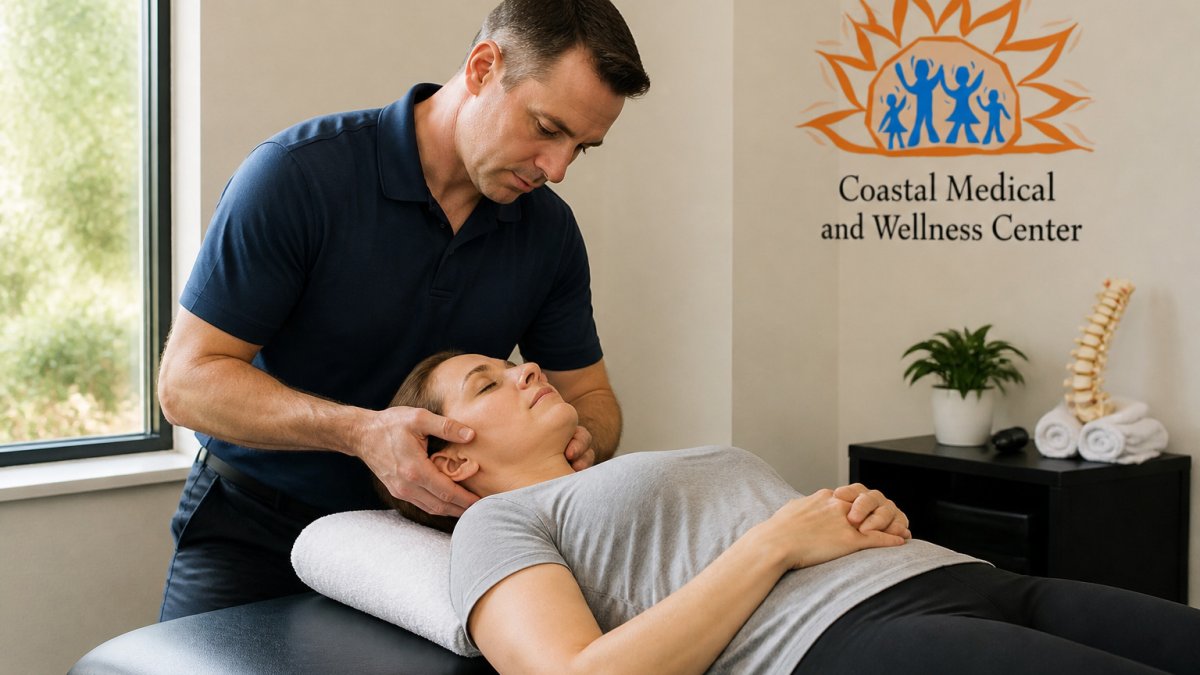
Chiropractic care is a common, drug-free option for many types of neck pain. Chiropractors focus on the spine and muscles, often using hands-on adjustments and guided exercises to improve movement.
Chiropractic care is often considered for muscle-related neck pain, stiffness, or pain tied to posture. It is also commonly used after car accidents for whiplash-related symptoms. Coastal Medical and Wellness Center combines chiropractic care with functional medicine to look at the whole picture, including the root cause.
Results vary from person to person. A clinician should assess whether chiropractic care fits your situation.
Red Flags That Mean You Should Book a Medical Evaluation Now
Most neck pain is not dangerous. However, some warning signs need prompt medical attention. Seek care right away if you notice any of these:
- Numbness, tingling, or weakness in the arms or hands
- Pain that spreads down an arm or into the chest
- Fever, unexplained weight loss, or feeling generally unwell with neck pain
- Severe headache, confusion, or trouble with balance or vision
- Trouble swallowing or breathing
- Neck pain following a fall, crash, or serious injury
- Stiffness with a high fever, especially in the presence of a rash or sensitivity to light
Call 911 or go to an emergency room if symptoms are severe or sudden.
Scheduling Your Neck Evaluation at Coastal Medical and Wellness Center
If your neck ache treatment is not bringing relief, or if you have any warning signs above, a professional evaluation can clarify the cause and next steps. Learn what the neck pain evaluation involves before your visit.
To learn more or ask about a visit, call 772-286-5277 or stop by 3257 SE Salerno Rd #3, Stuart, FL 34997. You can also book a non-invasive whiplash and neck pain evaluation online.
Frequently Asked Questions
What are some ways to relieve neck pain?
Several low-risk options can ease a sore neck. Gentle movement within a comfortable range keeps stiff muscles from locking up, while short periods of ice in the first two days or heat afterward can reduce soreness. Adjusting your workstation so the screen sits at eye level, taking breaks from looking down at phones, and using over-the-counter pain relievers as the label directs may also help. If pain persists beyond a few weeks or worsens, a clinician can evaluate the cause and recommend next steps.
What is the best sleeping position for neck pain?
Many people with neck ache sleep best on their back or side with a pillow that keeps the head level with the spine, rather than tilted forward or to one side. Stomach sleeping usually twists the neck and tends to aggravate symptoms. A pillow that is too high or too flat can strain the muscles overnight. Experiment with pillow height and firmness for a few nights, and note whether morning stiffness improves. If you wake with numbness, tingling, or arm weakness, get a medical evaluation rather than changing pillows alone.
When should I seek professional medical care for a stiff neck?
Seek prompt medical care if neck pain follows an injury such as a fall or car accident, or if you have fever, severe headache, neck stiffness with confusion, or trouble swallowing or breathing. Numbness, tingling, or weakness in an arm or hand, pain that radiates down the arm, or pain that does not improve after several weeks also warrants an evaluation. Anyone with a history of cancer, immune conditions, or recent unexplained weight loss should be assessed sooner. Coastal Medical and Wellness Center can help you schedule a consultation; current pricing and availability are best confirmed on the center's website.
What natural remedies are effective for nerve-related neck pain?
Natural approaches such as gentle range-of-motion work, posture adjustments, heat applied for short periods, and rest from aggravating activities can help some people with mild nerve irritation. Evidence for specific supplements is limited, so discuss any supplement with your clinician before use. Symptoms like burning, shooting pain, numbness, or weakness can signal nerve involvement that needs professional diagnosis, because the right treatment depends on the underlying cause. Treatment outcomes vary, and no approach can be guaranteed to resolve nerve symptoms.

