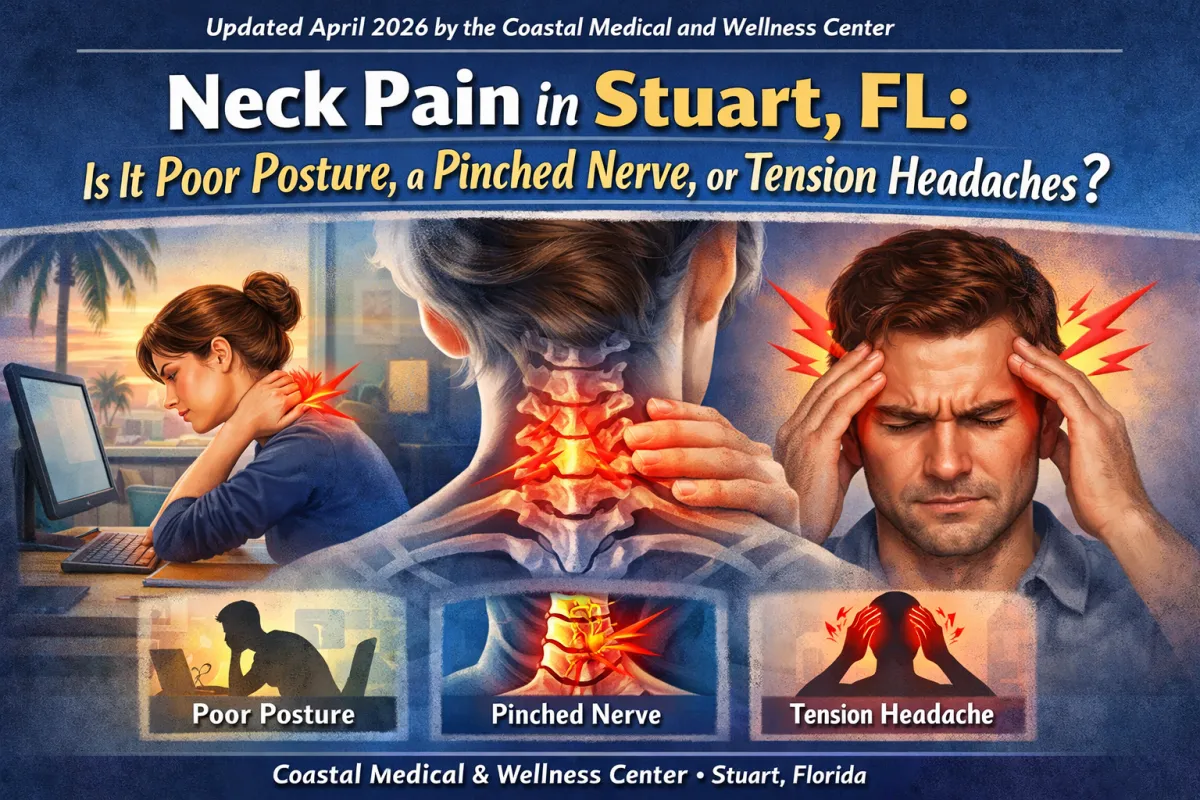
Neck Pain in Stuart, FL: Is It Poor Posture, a Pinched Nerve, or Tension Headaches?
Neck Pain in Stuart, FL: Is It Poor Posture, a Pinched Nerve, or Tension Headaches?
Updated April 2026 by the Coastal Medical and Wellness Center team in Stuart, FL
If you’ve been rubbing the base of your neck, stretching your shoulders, or wondering why your headaches keep showing up at the end of the day, you’re not alone. A lot of people in Stuart, FL assume neck pain is “just stress” or “just posture.” Sometimes that’s partly true. Sometimes it isn’t.
The confusing part is that poor posture, a pinched nerve, and tension headaches can overlap. They can also feed into each other. What starts as tight muscles from long hours at a desk can irritate joints, change how you move, and eventually create symptoms that feel sharper, heavier, or more persistent.
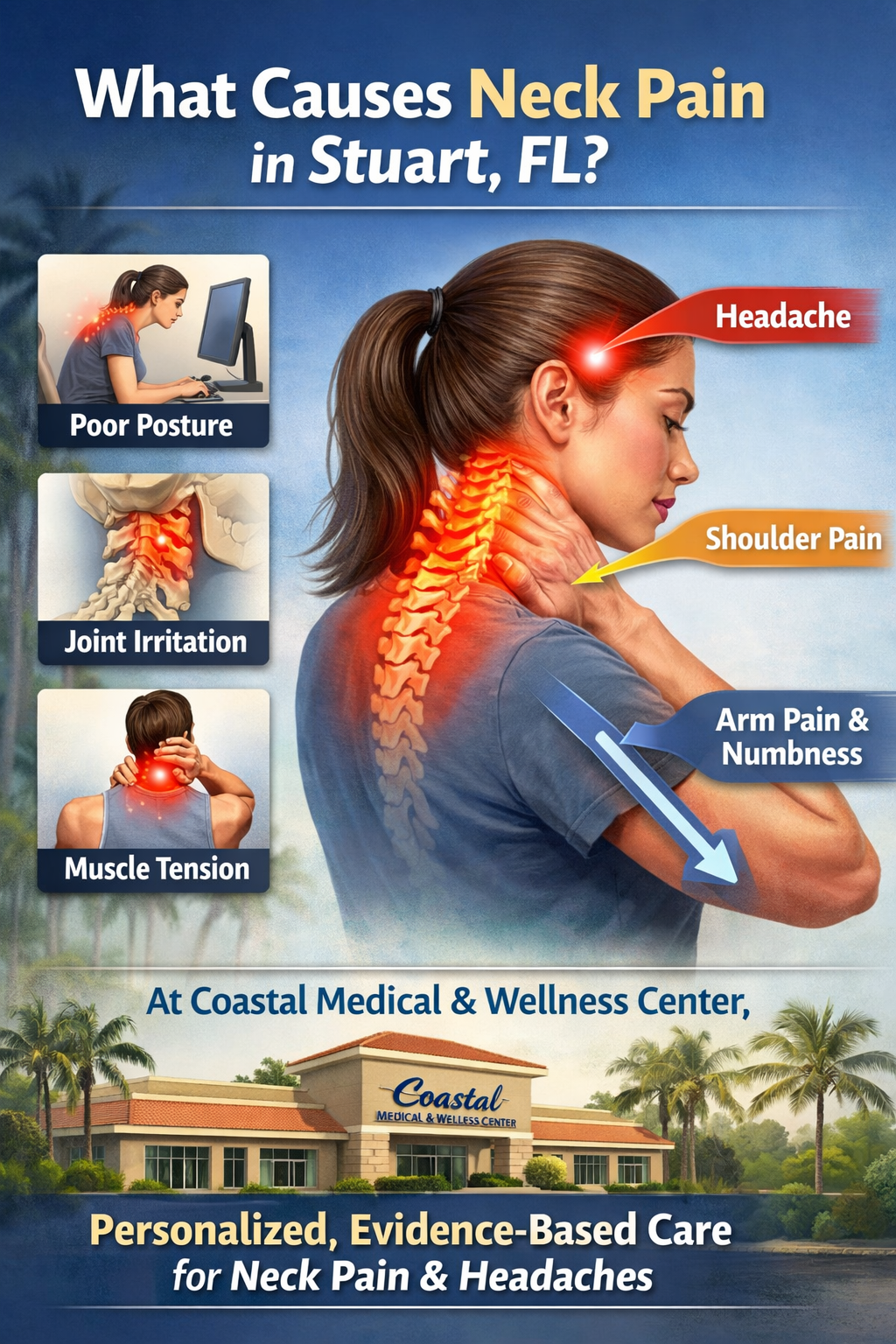
What causes neck pain in Stuart, FL?
Neck pain is commonly linked to postural strain, irritated joints, muscle tension, and sometimes nerve involvement. In some people, the pain mainly feels stiff and achy. In others, it can refer into the head, shoulder, or arm. The key is not guessing from one symptom alone, but looking at the full pattern.
At Coastal Medical and Wellness Center, we take a personalized, evidence-informed approach to neck pain, tension-related headaches, and related movement problems. Our goal is to understand what may be driving your symptoms and build a care plan around you, not around a one-size-fits-all template.
Is neck pain always caused by poor posture?
No. Poor posture is common, but it is not the only reason people develop neck pain. Posture can contribute to muscle overload and joint irritation, but symptoms may also involve referred pain, stress-related muscle tension, or nerve irritation.
Myth #1: “If my neck hurts, it must just be my posture.”
Fact: Posture matters, but it is rarely the whole story.
Many adults spend hours looking down at phones, working on laptops, or driving. That sustained position can load the muscles of the neck and upper back. According to trusted medical sources, neck pain is often associated with musculoskeletal strain, stiffness, reduced mobility, and headache patterns that can develop gradually rather than suddenly.
But posture is not a diagnosis. Two people can sit the same way all day and have very different symptoms. One may only feel mild stiffness. Another may develop recurring headaches or pain radiating toward the shoulder blade.
What matters more is:
how long you stay in one position
how your muscles and joints are tolerating that load
whether the pain stays local or begins traveling
whether symptoms are becoming more frequent or disruptive
Could a pinched nerve cause neck pain and arm symptoms?
Yes. A pinched or irritated nerve in the neck can cause pain, tingling, numbness, or weakness that may travel into the shoulder, arm, or hand. Neck pain that radiates is often evaluated differently than pain that stays local.
Myth #2: “A pinched nerve always causes extreme pain.”
Fact: Nerve irritation can feel sharp, burning, tingling, numb, or even oddly vague.
When people hear “pinched nerve,” they often imagine severe, unbearable pain. In reality, nerve-related symptoms can vary. Some people describe:
burning pain into the shoulder or arm
tingling in the fingers
numb patches
weakness when lifting or gripping
pain that worsens with certain neck movements
If your symptoms are traveling below the shoulder, that pattern deserves attention. It doesn’t automatically mean something severe is happening, but it does suggest the problem may involve more than muscle tightness alone.
Are tension headaches really coming from the neck?
Sometimes, yes. Tension-type headaches and cervicogenic headaches can both involve the neck, upper shoulders, and base of the skull. In some cases, what feels like a “headache problem” is closely tied to neck mechanics and muscle tension.
Myth #3: “A headache is separate from neck pain.”
Fact: The neck and head often influence each other.
A stiff neck can contribute to headache symptoms, especially when pain begins at the base of the skull and wraps upward. Tight muscles, irritated joints, and persistent strain can all play a role. Some people notice:
pressure at the base of the skull
forehead or temple discomfort later in the day
headaches after computer work
neck stiffness before the headache starts
pain that worsens with prolonged sitting
The Cleveland Clinic and Mayo Clinic both describe how tension-related headaches can involve a band-like pressure sensation and muscle tightness around the neck and shoulders.
How do I know if this is my issue?
You cannot self-diagnose from an article, but symptom patterns can offer useful clues. The goal is not to label yourself. The goal is to notice what your body is doing.
Neck pain from postural strain often feels like:
dull, achy, or tight discomfort
stiffness after desk work or phone use
soreness between the shoulder blades
symptoms that improve when you move around
headaches later in the day
Nerve-related neck symptoms may feel like:
pain shooting into the shoulder or arm
tingling or numbness
burning, electric, or zapping sensations
symptoms that change with head or neck position
weakness in the arm or hand
Tension-related headache patterns often feel like:
pressure or tightness around the head
pain starting in the neck or upper shoulders
tenderness at the base of the skull
headaches linked with stress, long workdays, or poor sleep
limited neck motion along with headache symptoms
These patterns are not perfect, but they are clinically useful. If symptoms are persistent, changing, or starting to affect work, sleep, workouts, or driving, it’s reasonable to get evaluated.

What typically helps with neck pain, and what doesn’t?
In general, neck pain tends to respond better to a combination of movement, activity modification, and personalized care than to total rest or repeated self-guessing.
What typically helps
Changing positions more often
Long periods in one posture can keep symptoms going. Small movement breaks can matter.Improving workstation and phone habits
Bringing screens closer to eye level and reducing prolonged head-forward posture may reduce strain.Gentle mobility and guided exercise
The right movements can support better function and reduce stiffness over time.Hands-on care when appropriate
Some patients may benefit from chiropractic adjustments, soft tissue work, or other manual therapies as part of a broader plan.A personalized treatment plan
This matters because not all neck pain is the same. Someone with tension headaches may need a different strategy than someone with arm tingling.
What often doesn’t help
ignoring symptoms for months
staying completely inactive
stretching aggressively into pain
trying random online exercises without context
assuming every headache or neck ache has the same cause
According to the National Institute of Neurological Disorders and Stroke, neck pain is common and can arise from muscles, nerves, joints, and other structures, which is one reason individualized evaluation matters.
Our Personalized Approach at Coastal Medical and Wellness Center, Stuart FL
We focus on understanding the pattern behind your symptoms and building a care plan around your goals, lifestyle, and exam findings.
At Coastal Medical and Wellness Center, patients from Stuart, FL and surrounding areas often come in saying some version of: “I’m not sure what’s causing this, but it keeps coming back.” That’s exactly where a personalized approach matters.
A visit may include:
a detailed conversation about when your symptoms started
what movements or activities trigger them
whether pain stays local or travels
how symptoms affect sleep, work, workouts, or driving
a movement and orthopedic assessment
Based on that clinical picture, your customized plan may include:
chiropractic adjustments
spinal manipulation
mobility-based care
soft tissue strategies
posture and movement education
home recommendations tailored to your routine
in some cases, shockwave therapy or extracorporeal shockwave therapy (ESWT) when soft tissue dysfunction is part of the bigger picture
Not every neck pain case is a shockwave therapy case, and not every patient needs the same frequency or type of care. That transparency matters. Our role is to explain what we’re seeing, why we are recommending a specific plan, and what progress markers we’re watching.
Just as important, we aim to pair clinical clarity with the kind of patient experience people remember. Our team values personalized attention, thoughtful communication, and the kind of “Disney-Wow” service that helps patients feel genuinely cared for from the first call forward.
When should neck pain be treated as urgent?
Some symptoms should not wait for a routine appointment. Seek urgent care or ER attention immediately if neck pain or headache happens with any of the following:
stroke symptoms
a sudden severe headache
severe shortness of breath
loss of bladder or bowel control
saddle anesthesia
fever with neck or back pain
new major weakness
confusion, fainting, or trouble speaking
you are currently undergoing cancer treatment and develop new unexplained pain
If something feels dramatically different, rapidly worsening, or neurologic, it is safer to be evaluated right away.
The CDC provides a helpful overview of stroke warning signs, and the National Institute of Arthritis and Musculoskeletal and Skin Diseases outlines additional red-flag symptoms for spine-related conditions.

What questions should I ask if I have neck pain in Stuart, FL?
Good questions can speed up clarity. Consider asking:
Does my pain pattern sound more muscular, joint-related, or nerve-related?
Why do my headaches seem to start in my neck?
What movements should I avoid for now?
What activities are safe to continue?
Would chiropractic care fit my symptom pattern?
Is shockwave therapy relevant for my case, or not really?
These questions help move the conversation away from guessing and toward a practical plan.
FAQ: Neck Pain, Headaches, and Pinched Nerves
Can poor posture really cause neck pain and headaches?
Yes, prolonged head-forward posture and sustained sitting can contribute to muscle tension and joint irritation, which may trigger neck pain and headache patterns in some people.
How do I know if my neck pain is a pinched nerve?
Pain that travels into the shoulder or arm, especially with tingling, numbness, or weakness, can suggest nerve irritation. That does not confirm a diagnosis, but it is a good reason to get evaluated.
Can chiropractic adjustments help neck pain?
For some patients, chiropractic adjustments or spinal manipulation may be part of a broader treatment plan for neck pain and reduced mobility. The right plan depends on your symptom pattern, exam findings, and overall health history.
Can neck problems cause headaches behind the eyes or at the base of the skull?
They can. Some headaches are linked to neck tension, upper cervical joint irritation, or muscle tightness that refers pain upward.
What is the best sleeping position for neck pain?
There is no single perfect position for everyone, but many people do better when the neck is kept in a more neutral position rather than sharply bent or twisted for long periods.
Should I rest or exercise if my neck hurts?
Usually, gentle movement is more helpful than complete rest, but the right type of movement matters. Pushing through sharp, radiating, or worsening symptoms is generally not the goal.
Is shockwave therapy used for neck pain?
Sometimes, but not in every case. Shockwave therapy may be considered when soft tissue dysfunction is a relevant part of the clinical picture, but it is not a one-size-fits-all answer.
Final thoughts
Neck pain is easy to dismiss when it starts small. But when stiffness becomes frequent, headaches become routine, or pain starts traveling into the shoulder or arm, it makes sense to look closer. Poor posture, nerve irritation, and tension-related headaches can feel similar on the surface, yet require different strategies.
That is why individualized care matters.
At Coastal Medical and Wellness Center in Stuart, FL, we focus on evidence-informed care, customized treatment plans, and a patient experience designed to make people feel informed, respected, and supported. If your neck pain has been lingering, changing, or interfering with daily life, a thoughtful evaluation may help you better understand what is driving it.
Call 772-286-5277 to schedule a consult or visit.
References
National Institute of Neurological Disorders and Stroke: Neck Pain
https://www.ninds.nih.gov/health-information/disorders/neck-painMayo Clinic: Tension headache
https://www.mayoclinic.org/diseases-conditions/tension-headache/symptoms-causes/syc-20353977Cleveland Clinic: Tension Headache
https://my.clevelandclinic.org/health/diseases/9639-tension-headacheCDC: Stroke Signs and Symptoms
https://www.cdc.gov/stroke/signs_symptoms.htmNational Institute of Arthritis and Musculoskeletal and Skin Diseases
https://www.niams.nih.gov/health-topics/back-pain
Medical disclaimer
This content is for informational purposes only and is not medical advice, diagnosis, or treatment. If you are experiencing severe, sudden, or worsening symptoms, seek immediate medical attention.
