Neuropathy Treatment Without Medication
Tingling in your feet should not be something you simply learn to live with. Neither should burning pain, numbness, weakness, or the feeling that your balance is getting less reliable by the month. For many people, the search for neuropathy treatment without medication starts after they realize symptom-masking is not the same as getting better.
Neuropathy can interfere with walking, sleeping, driving, exercise, and even basic daily tasks. It can also be frustrating because the cause is not always obvious at first. The good news is that drug-free care may help reduce symptoms, support nerve function, and improve quality of life, especially when treatment is built around the underlying reason the nerve is irritated in the first place.
What neuropathy really means
Peripheral neuropathy is a general term for nerve damage or nerve irritation, usually affecting the hands, feet, legs, or arms. Some people feel sharp pain. Others describe buzzing, pins and needles, burning, cold sensitivity, cramping, or numbness. In more advanced cases, neuropathy can affect coordination and muscle control.
There is no single reason it happens. Diabetes is a common cause, but it is not the only one. Neuropathy may also be linked to spinal problems, poor circulation, chronic inflammation, injury, nutritional deficiencies, repetitive stress, infections, autoimmune conditions, or toxin exposure. That is why a one-size-fits-all approach often falls short.
If the goal is lasting improvement, the first question should not be, "What can cover this up?" It should be, "Why is this nerve under stress?"
Why neuropathy treatment without medication appeals to so many patients
Many adults want relief, but they also want to stay clear-headed, active, and in control of their day. Medication may play a role in some cases, especially when symptoms are severe, but it can come with trade-offs like drowsiness, dizziness, digestive upset, or limited long-term benefit. For people who want a more natural path, neuropathy treatment without medication offers a different focus.
Instead of only trying to dull pain signals, drug-free care looks at circulation, nerve irritation, inflammation, spinal mechanics, movement patterns, and overall health support. That does not mean every non-medication option works for every person. It means a personalized plan can be built around what is driving your symptoms and what your body needs to function better.
For some patients, the biggest issue is pressure on nerves coming from the spine. For others, it is inflammation, poor tissue healing, blood sugar imbalance, or a mix of factors. The right plan depends on the full picture.
Non-medication options that may help
A thoughtful care plan usually combines more than one strategy. Neuropathy rarely improves because of a single quick fix.
Chiropractic care and spinal evaluation
When nerves are irritated or compressed near the spine, alignment and joint function matter.Chiropractic care may help reduce mechanical stress on the nervous system, improve mobility, and support better communication between the brain and body. This is especially relevant when neuropathy-like symptoms are tied to low back or neck problems.
That said, not every case of neuropathy starts in the spine. A proper evaluation helps determine whether structural issues are contributing to your symptoms or whether another root cause needs more attention.
Spinal decompression for nerve-related pain
If disc issues or spinal compression are part of the problem, spinal decompression may be recommended. This therapy is designed to gently reduce pressure in affected areas of the spine, which can help when nerve irritation is linked to bulging discs or degenerative changes.
This approach tends to be most helpful when symptoms follow a pattern connected to the back or neck, such as radiating pain, numbness, or weakness. It is less likely to be the main answer if neuropathy is driven by metabolic or systemic causes, which is why diagnosis comes first.
Shockwave therapy and tissue healing support
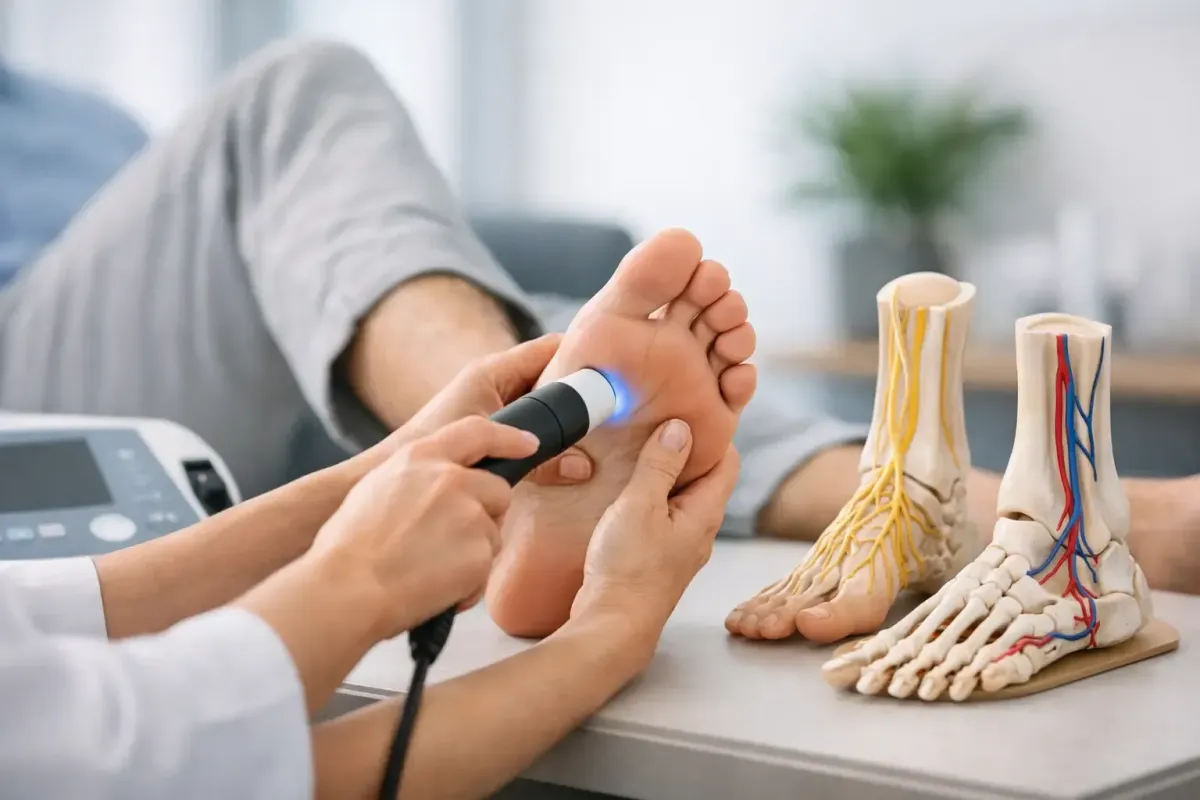
Shockwave therapy is often associated with chronic musculoskeletal pain, but in the right case it may also support tissue healing and circulation in areas that are not recovering well. Better blood flow and tissue response can matter when nerves are irritated by surrounding dysfunction.
It is not a blanket solution for all neuropathy. Still, when poor healing, chronic inflammation, or soft tissue involvement is part of the bigger pattern, it may have value as part of a broader plan.
Red light therapy and circulation support
Red light therapy is used in many wellness settings to support cellular energy, circulation, and tissue recovery. For some patients with nerve discomfort, this can be a useful addition because irritated nerves and surrounding tissues often benefit from improved healing support.
Results vary. Some people notice reduced pain and better comfort over time, while others need additional therapies to see meaningful change. The key is using it as part of an individualized strategy, not as a stand-alone promise.
Movement, balance, and functional rehab
When neuropathy affects the feet or legs, people often change how they walk without realizing it. Over time, that can create new strain in the knees, hips, and lower back. Gentle rehab exercises can help improve balance, coordination, strength, and stability.
This part of care is easy to underestimate, but it matters. Better movement can reduce fall risk, improve confidence, and help you stay active while other treatments address the source of nerve irritation.
Lifestyle factors that influence nerve health
Natural care should also look at the environment your nerves are living in. Blood sugar control, inflammatory diet patterns, hydration, sleep, weight, and nutrient status can all affect nerve function. If those factors are ignored, symptom relief may be limited.
This does not mean every patient needs a major life overhaul. It means practical changes, done consistently, can support better results. In a clinic that takes a root-cause approach, these conversations are part of treatment, not an afterthought.
What good care should include
The best neuropathy treatment without medication starts with a careful workup. Symptoms may seem similar on the surface, but numb toes from diabetic nerve damage are not the same as leg tingling from lumbar disc pressure. Burning pain in the feet may also overlap with circulation problems or other conditions that need medical attention.
A strong care plan should include a review of your symptoms, health history, movement patterns, spinal and nerve function, and any warning signs that point to a more serious issue. In some cases, co-management or medical testing may be appropriate. Natural treatment works best when it is guided by clarity, not guesswork.
At Coastal Medical & Wellness, that kind of whole-picture thinking fits the goal many patients are looking for - find the cause, then build a plan that supports real improvement.
What results can you realistically expect?
This is where honesty matters. Some people respond quickly when the source of nerve irritation is mechanical and caught early. Others improve gradually over weeks or months, especially if symptoms have been present for a long time. And in cases where nerve damage is advanced, the goal may be reducing pain, improving function, and slowing progression rather than fully reversing symptoms.
Age, overall health, diagnosis, severity, and consistency all matter. So does timing. The longer a nerve has been under stress, the more recovery may require patience.
What you should look for is progress you can feel in daily life. Less burning at night. Better balance on uneven ground. Fewer episodes of numbness. More confidence walking, standing, or exercising. Those changes are meaningful because they point to improved function, not just temporary symptom control.
When to seek help sooner
If neuropathy symptoms are worsening, spreading, or starting to affect strength and coordination, it is smart to get evaluated sooner rather than later. Sudden weakness, major balance changes, loss of bladder or bowel control, or rapidly progressing symptoms should never be brushed off.
Even milder symptoms deserve attention if they are becoming frequent. Numbness in the feet can increase fall risk. Reduced sensation can also make it harder to notice cuts, pressure points, or injuries. Early care gives you more options and may improve the chances of a better outcome.
A better question than "What can I take?"
If you are dealing with tingling, burning, numbness, or nerve pain, it makes sense to want relief fast. But the more helpful question is not just what can take the edge off. It is what is causing the problem, and what can help your body function better without adding another layer of side effects.
Neuropathy treatment without medication is not about doing less. It is about doing care more intelligently - evaluating the source, improving support for the nervous system, and creating a plan that matches your body, your symptoms, and your goals. When treatment is personalized and focused on the root cause, there is a real path forward, and it often starts with finally being heard.
