Plantar Fasciitis and Shockwave Therapy: What Stuart, FL Patients Need to Know
Plantar Fasciitis and Shockwave Therapy: What Stuart, FL Patients Need to Know
You've been dealing with that stabbing heel pain for weeks—maybe months. You've tried rest, ice, new shoes, even those inserts from the drugstore. Some mornings, that first step out of bed feels like walking on broken glass. You've probably Googled "heel pain treatment" more times than you'd like to admit, and you're wondering if there's actually something that works, or if you're just supposed to live with this.
Here's what most people don't realize: plantar fasciitis isn't just about your foot. And the treatment approach that's gaining significant attention in evidence-based medical literature—shockwave therapy—works in a completely different way than most people expect.
Let's clear up the confusion and look at what the research actually shows.
Myth vs. Fact: Understanding Plantar Fasciitis Treatment

Myth #1: Plantar Fasciitis Is Just Inflammation That Will Go Away on Its Own
The Fact: For years, we called it plantar fasciitis because we assumed it was primarily an inflammatory condition (the "-itis" suffix means inflammation). But research published in the Journal of Bone and Joint Surgery has shown that chronic plantar fasciitis is actually more of a degenerative condition—meaning the tissue has started to break down rather than just becoming inflamed1.
This distinction matters because it changes how we approach treatment. According to the National Institutes of Health, approximately 10% of the population will experience plantar fasciitis at some point, and while some cases resolve with conservative care, many become chronic precisely because the underlying tissue degeneration isn't being addressed2.
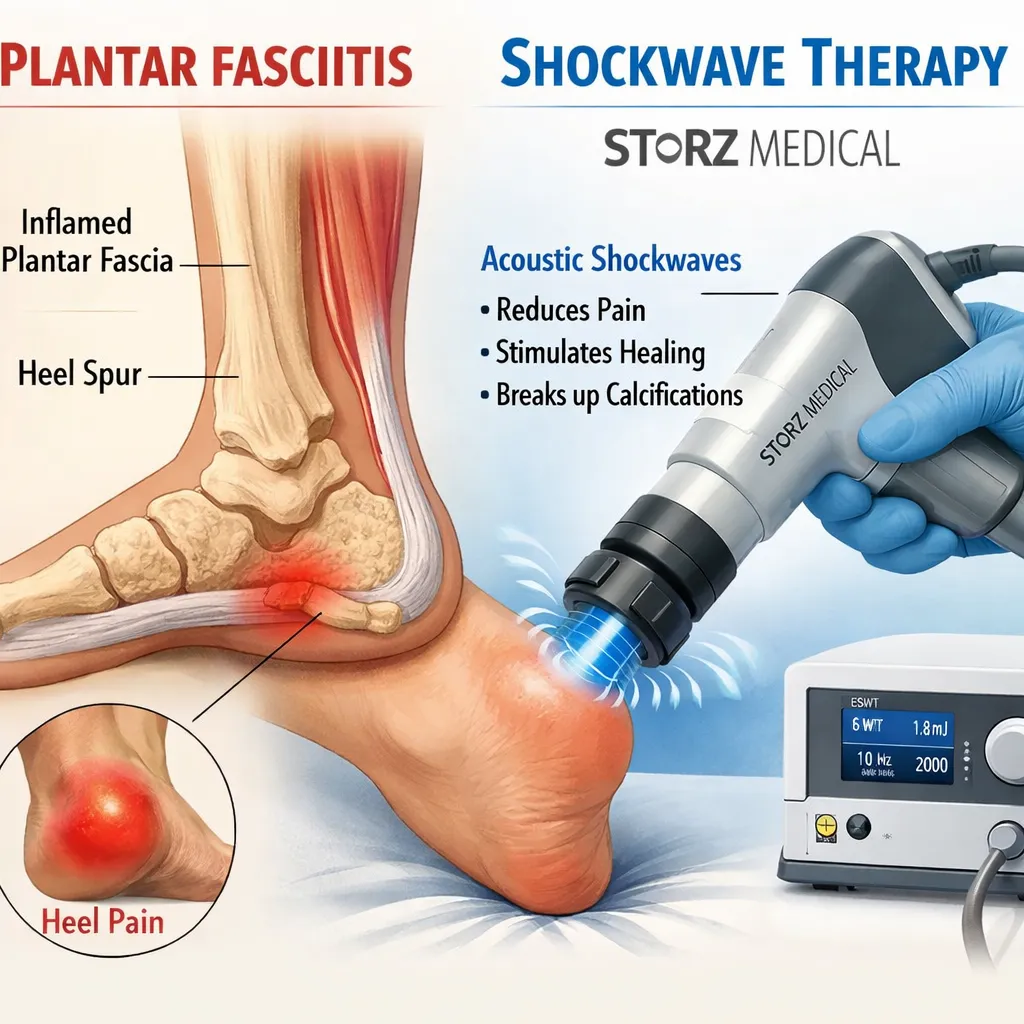
The plantar fascia—that thick band of tissue connecting your heel to your toes—develops microscopic tears and degenerative changes when it's repeatedly stressed beyond its capacity to heal. Your body tries to repair it, but when the damage happens faster than the healing, you get stuck in a cycle.
Myth #2: Rest Is the Best Medicine for Heel Pain
The Fact: This one surprises people. While acute rest can help during severe flare-ups, prolonged rest often doesn't resolve chronic plantar fasciitis. In fact, complete rest can sometimes make the tissue stiffer and weaker.
A study in the British Journal of Sports Medicine found that controlled loading and tissue regeneration strategies were more effective than rest alone for chronic cases3. The key word here is "controlled"—you're not being told to run a marathon on painful feet, but complete avoidance of activity isn't the solution either.
This is where treatment approaches that stimulate actual tissue healing—rather than just reducing symptoms temporarily—become important.
Myth #3: Shockwave Therapy Is Experimental or Unproven
The Fact: Extracorporeal shockwave therapy (ESWT) has been studied extensively for plantar fasciitis treatment, with research dating back decades. The Cleveland Clinic and Mayo Clinic both recognize ESWT as a legitimate treatment option for chronic plantar fasciitis that hasn't responded to conservative measures4.
Here's how it works: Shockwave therapy delivers acoustic waves—pulses of mechanical energy—to the affected tissue. These waves create a controlled microtrauma that stimulates your body's natural healing response. It increases blood flow to the area, promotes the formation of new blood vessels (neovascularization), and activates cellular repair mechanisms.
Multiple systematic reviews and meta-analyses have demonstrated that shockwave therapy can reduce pain and improve function in patients with chronic plantar fasciitis. A 2020 review in the Journal of Orthopaedic Surgery and Research analyzed multiple randomized controlled trials and found significant pain reduction and functional improvement with ESWT compared to placebo treatments5.
The treatment isn't instantaneous magic—it's triggering your body's own repair processes, which take time. Most protocols involve multiple sessions over several weeks.
Myth #4: If Orthotics and Stretching Haven't Worked, Surgery Is Your Only Option
The Fact: There's actually a significant middle ground between conservative care (stretching, orthotics, NSAIDs) and surgical intervention. Shockwave therapy occupies this space as a non-invasive option for cases that haven't responded to initial conservative treatment.
Surgery for plantar fasciitis—typically a plantar fascia release—comes with inherent risks, recovery time, and no guarantee of success. While it may be appropriate in some cases, many patients find relief with shockwave therapy before considering surgical options.
How Do I Know If This Is My Issue?

Plantar fasciitis typically presents with specific characteristics:
Sharp, stabbing pain in the bottom of your foot near the heel, though it can radiate along the arch
Pain that's worst with the first steps in the morning or after sitting for extended periods
Pain that improves with movement as the tissue "warms up," but may return after long periods of standing or at the end of the day
Increased pain after exercise, not necessarily during it
Tenderness when pressing on the inside of your heel bone
The pattern matters here. If your pain doesn't fit this description—for example, if it's accompanied by numbness, tingling radiating down from your back, or if your foot is red, hot, and swollen—you may be dealing with something else entirely.
Plantar fasciitis doesn't typically cause:
Numbness or tingling in the foot
Visible swelling or redness
Pain that wakes you from sleep (though early morning pain upon standing is classic)
Fever or systemic symptoms
What Typically Helps (and What Doesn't)
Approaches That Often Provide Some Benefit:
Stretching and strengthening exercises targeting the plantar fascia, Achilles tendon, and calf muscles
Proper footwear with adequate arch support and cushioning (worn-out shoes are a common culprit)
Gradual activity modification rather than complete rest
Ice application after activities that aggravate symptoms
Maintaining a healthy weight to reduce stress on the plantar fascia
Night splints in some cases, which maintain a gentle stretch while you sleep
Approaches That Often Don't Work Long-Term:
Over-the-counter inserts without addressing the underlying tissue degeneration
Complete rest and avoidance of all activity
Continuing to wear unsupportive footwear
Ignoring the problem and hoping it resolves while continuing aggravating activities
Focusing solely on symptom management without addressing tissue healing
Our Personalized Approach at Coastal Medical and Wellness Center, Stuart FL
When you come to Coastal Medical and Wellness Center in Stuart, you're not getting a one-size-fits-all protocol pulled from a manual. We start with understanding your specific situation: How long have you been dealing with this? What have you already tried? What does your typical day look like? What activities matter most to you?
Our shockwave therapy protocols are tailored to your tissue response. Some patients need more intensive treatment; others respond well to a gentler approach. We combine shockwave therapy with education about activity modification, footwear, and tissue loading strategies that make sense for your lifestyle.
The "Disney-Wow" service we're known for in the Stuart area means you're not just another appointment on the schedule. You get time, attention, and answers. You understand what's happening in your body and why we're recommending specific approaches.
Treatment sessions typically occur over several weeks. During each session, we're applying controlled acoustic waves to stimulate your body's healing response in the affected tissue. You may experience some discomfort during treatment—this isn't a massage—but most patients tolerate it well, and any discomfort is brief.
We track your progress, adjust the treatment plan as needed, and make sure you understand what to expect realistically. Some patients notice improvement after a few sessions; others take longer. Individual responses vary, and we're transparent about that from the beginning.

FAQ: Common Questions About Plantar Fasciitis and Shockwave Therapy
Q: How long does plantar fasciitis usually last?
A: The duration varies significantly. Some cases resolve within a few months with conservative care, while others become chronic and last a year or longer. Research suggests that about 90% of cases improve with non-surgical treatment within 6-12 months, but that timeline can be shortened with appropriate intervention.
Q: Does shockwave therapy hurt?
A: Many patients describe it as uncomfortable but tolerable. The sensation is a series of pulses or tapping on the affected area. Any discomfort during treatment is brief, and most patients find it manageable. The treatment itself typically lasts only a few minutes.
Q: How many shockwave therapy sessions will I need?
A: This varies based on individual factors and tissue response. Many protocols involve 3-6 sessions spaced about a week apart. Your provider will develop a personalized treatment plan and adjust based on your progress.
Q: Can I continue my normal activities during treatment?
A: Generally, you can maintain most activities, though your provider may recommend modifications to avoid overloading the healing tissue. The goal is controlled loading, not complete rest.
Q: Will my insurance cover shockwave therapy for plantar fasciitis?
A: Insurance coverage varies by plan and provider. We recommend contacting your insurance company directly to verify coverage, and our office in Stuart can provide information about costs and payment options during your consultation.
Q: What makes someone a good candidate for shockwave therapy?
A: Shockwave therapy is typically considered for patients with chronic plantar fasciitis (symptoms lasting longer than 6 months) that hasn't adequately responded to conservative measures like stretching, orthotics, and activity modification. Your provider will assess your specific situation.
Q: Are there any side effects of shockwave therapy?
A: Side effects are generally mild and temporary. Some patients experience redness, minor swelling, or discomfort in the treated area for a day or two after treatment. Serious complications are rare.
Q: How is shockwave therapy different from other treatments I've tried?
A: Unlike approaches that primarily manage symptoms (like ice or pain medications), shockwave therapy aims to stimulate actual tissue regeneration and healing at the cellular level. It's working to address the underlying degenerative changes in the tissue.
When to Seek Immediate Medical Attention
While plantar fasciitis is typically not a medical emergency, certain symptoms require prompt evaluation:
Severe pain, swelling, or redness in your foot accompanied by fever(could indicate infection)
Sudden inability to bear weight on your foot following an injury
Heel pain accompanied by numbness, tingling, or weakness that radiates from your back down your leg
Loss of bladder or bowel control along with foot or leg symptoms
Signs of circulation problems such as coldness, color changes, or absent pulses in your foot
If you're currently undergoing cancer treatment and experience new bone pain
These symptoms may indicate conditions other than plantar fasciitis that require immediate attention.
The Bottom Line
Plantar fasciitis is frustrating precisely because it interferes with basic daily activities we take for granted—walking, standing, moving through our day without thinking about every step. The good news is that chronic plantar fasciitis doesn't have to be permanent, and there are evidence-based treatment options beyond just "wait and see" or surgery.
Shockwave therapy represents a non-invasive approach that works with your body's natural healing mechanisms to address the underlying tissue degeneration. It's not a miracle cure, but the research supporting its effectiveness continues to grow, and many patients who haven't found relief with other approaches have benefited from it.
If you're in Stuart, FL or the surrounding areas and you've been dealing with persistent heel pain that's impacting your quality of life, it may be time to explore whether shockwave therapy is appropriate for your situation. A personalized evaluation can help you understand your options and develop a treatment plan that makes sense for your specific needs.
Ready to take the next step toward addressing your heel pain?
Call 772-286-5277 to schedule a consult at Coastal Medical and Wellness Center in Stuart, FL.
Our team will take the time to understand your situation, answer your questions, and help you determine whether shockwave therapy is a good fit for your needs. You don't have to keep living with heel pain—let's explore what's possible.
Medical Disclaimer:This content is for informational and educational purposes only and is not intended as medical advice, diagnosis, or treatment. Always seek the advice of a qualified healthcare provider with any questions you may have regarding a medical condition. Never disregard professional medical advice or delay seeking it because of something you have read here.
References:
Journal of Bone and Joint Surgery - Research on plantar fasciosis and degenerative tissue changes↩
National Institutes of Health - Epidemiology and prevalence of plantar fasciitis↩
British Journal of Sports Medicine - Controlled loading strategies for plantar fasciitis↩
Cleveland Clinic and Mayo Clinic - Extracorporeal shockwave therapy for plantar fasciitis↩
Journal of Orthopaedic Surgery and Research (2020) - Systematic review and meta-analysis of ESWT for plantar fasciitis↩
