Pulled Lower Back Muscle: What to Do Step by Step
Table of Contents
- What a Pulled Lower Back Muscle Actually Is
- Step 1: Calm the Injury in the First 48 Hours
- Ice or Heat for Lower Back Strain: Which and When
- How Long Does a Pulled Back Muscle Take to Heal?
- The Best Sleeping Position for Lower Back Pain
- Gentle Movement, Stretching, and Returning to Activity
- When to See a Doctor for Lower Back Pain
- Conclusion
- Frequently Asked Questions
Last Updated: October 19, 2026
What a Pulled Lower Back Muscle Actually Is
A pulled lower back muscle is a strain: an overstretched or partially torn muscle or tendon in the soft tissue that supports your spine. It is one of the most common back injuries, and most people recover with home care. (Source: the National Institute of Neurological Disorders and Stroke)
Here is the reassuring part. A pulled lower back muscle usually involves small tears in muscle fibers, not damage to the spine itself. We see these strains often, and the vast majority settle down with careful, gradual care.
Strain vs. Something More Serious
A strain is a soft tissue injury. A more serious problem involves the discs, nerves, or bones. The difference matters because the care is different.
Watch for these signs that point beyond a simple strain:
- Pain that shoots down a leg, past the knee
- Numbness, tingling, or weakness in a leg or foot
- Loss of bladder or bowel control
- Numbness in the groin area
- Fever, chills, or unexplained weight loss
The last four are emergency signs. Seek care right away if they appear.
Step 1: Calm the Injury in the First 48 Hours
The goal in the first two days is simple: reduce inflammation, protect the area, and avoid anything that re-tears healing fibers. Do not push through pain.
Follow these steps:
- Stop the activity that caused it. Get off your feet and find a comfortable position. If you felt a sudden pull while lifting, twisting, or bending, do not try to "stretch it out" right away.
- Apply an ice pack for 15 to 20 minutes, several times a day. Wrap it in a thin towel first. A bag of frozen peas works as well as a commercial cold pack.
- Rest, but do not stay in bed. Relative rest means avoiding what hurts, not lying still for days. Short walks around the house every hour or two are fine if they do not sharpen the pain.
- Use over-the-counter pain relievers as directed on the label, if your doctor says they are safe for you.
- Avoid lifting, bending, and twisting for now. That includes laundry baskets, groceries, and pets.
Safe Over-the-Counter Pain Relief
Two common OTC options are nonsteroidal anti-inflammatory drugs (NSAIDs) such as ibuprofen or naproxen, and acetaminophen. NSAIDs reduce both pain and inflammation; acetaminophen reduces pain but not swelling.
Before you take either, check the label and talk to a pharmacist or clinician if any of these apply:
- You take a blood thinner, have kidney disease, stomach ulcers, or heart disease (NSAIDs may not be safe).
- You drink alcohol regularly or have liver disease (acetaminophen carries a liver risk at high doses).
- You are pregnant, breastfeeding, or managing another chronic condition.
- You already take a prescription pain reliever or a combination cold or flu product that contains acetaminophen.
Never combine two products that contain the same active ingredient, and never exceed the label dose. If you are unsure which option fits you, a pharmacist can answer that question in minutes without an appointment.
Positions That Take Pressure Off the Lower Back
- On your back with a pillow under your knees, feet flat.
- On your side with knees bent and a pillow between them.
- Standing with one foot propped on a low stool to flatten the lower-back curve.
Change positions every 20 to 30 minutes rather than holding one for long stretches.
Ice or Heat for Lower Back Strain: Which and When
Use ice first, then heat later. Ice calms new inflammation in the first 48 hours. Heat relaxes tight muscles and eases stiffness after that window.
Here is the simple rule:
Timing | What to Use | Why |
|---|---|---|
First 48 hours | Ice pack, 15 to 20 minutes | Reduces swelling and numbs pain |
After 48 hours | Heat, 15 to 20 minutes | Relaxes muscle spasm and stiffness |
Ongoing | Alternate as comfort allows | Ice for flare-ups, heat for stiffness |
Never put ice or heat directly on bare skin. Always use a towel in between.
How Long Does a Pulled Back Muscle Take to Heal?
Most pulled back muscles improve within two to four weeks. Minor strains can feel better in a few days. More significant tears take longer.
Healing time depends on a few things:
- How severe the strain is
- Whether you keep moving gently
- Whether you return to heavy activity too soon
The Best Sleeping Position for Lower Back Pain
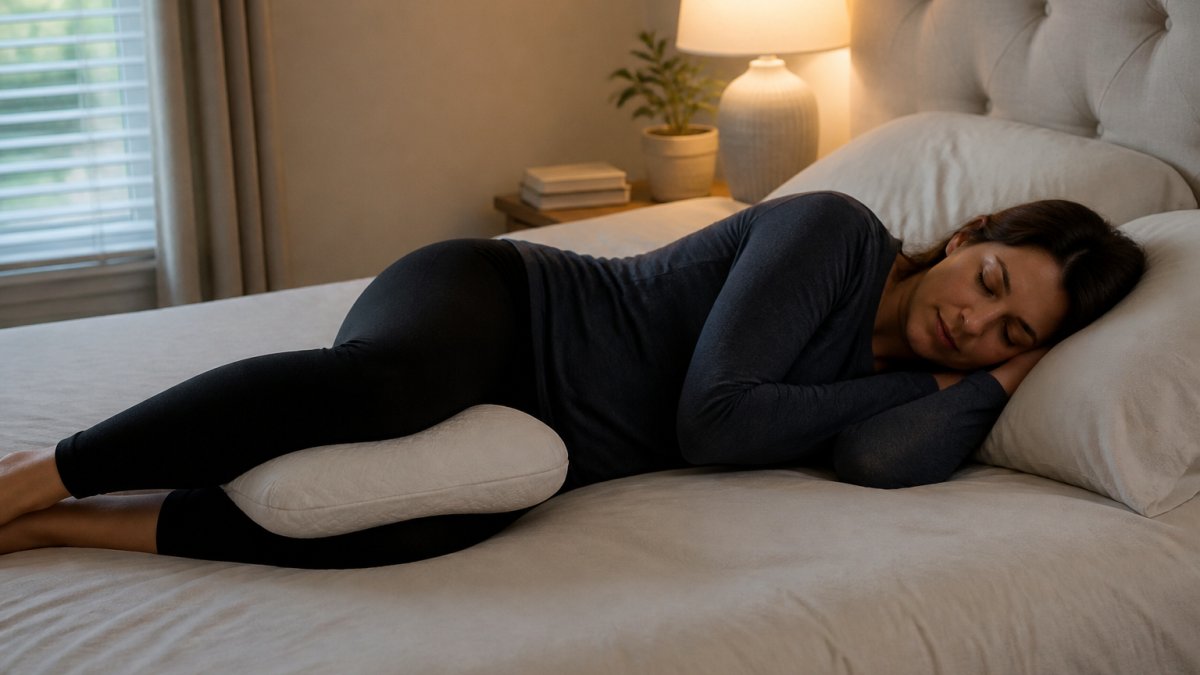
The best sleeping position for lower back pain is on your side with a pillow between your knees. This keeps your spine neutral and takes pressure off the lower back.
Other positions that help:
- On your back with a pillow under your knees
- On your side with knees slightly bent and a pillow between them
Avoid sleeping on your stomach. It arches the lower back and can worsen stiffness.
A firm mattress helps too. If yours sags, a mattress topper can add support while you heal.
Gentle Movement, Stretching, and Returning to Activity
Start moving gently as soon as the sharp pain settles. Gentle movement brings blood flow to the area and helps muscles heal.
Begin with light activity:
- Short walks on flat ground
- Slow, easy stretches that do not cause sharp pain
- Simple daily tasks within comfort
Then progress to light stretching. Move slowly and stop if pain sharpens. As you improve, add gentle strengthening exercises for the core and back.
Ease back into activities in this order:
- Walking and daily tasks
- Light stretching
- Core and back strengthening
- Lifting, bending, and twisting
When to See a Doctor for Lower Back Pain
Most pulled lower back muscles can be managed at home, but some symptoms mean the problem is not a simple strain. Use this three-tier framework to decide how fast to act.
Call 911 or Go to an Emergency Department Now
Seek emergency care immediately if you have any of these:
- Loss of bladder or bowel control, or you cannot urinate.
- Numbness in the groin or saddle area (the region that would touch a saddle).
- New or worsening weakness in one or both legs, such as difficulty lifting a foot or standing from a chair.
- Fever with back pain, especially with chills or feeling generally unwell.
- Back pain after a major fall, car crash, or other trauma, or back pain with a known cancer history or unexplained weight loss.
These signs can point to nerve compression, infection, fracture, or another condition that needs urgent assessment, not home care.
Call Your Doctor Within a Day or Two
Book a prompt visit if you notice:
- Pain that shoots down a leg past the knee, with or without tingling.
- Numbness or weakness in a leg or foot that is new.
- Pain that wakes you at night or does not ease with rest.
- Pain that is severe or steadily worsening despite ice, relative rest, and OTC relief.
- A history of osteoporosis, long-term steroid use, or a previous back fracture.
Book a Routine Visit If Home Care Is Not Working
See a clinician if the pain has not improved after two weeks of home care, keeps you from normal activity, or keeps coming back. A focused evaluation can distinguish a muscle strain from nerve, disc, or joint problems and guide the next step.
Our team looks for the cause of your pain, not just the symptom. We combine chiropractic care with functional medicine to build a plan that fits you. If your strain does not settle or keeps coming back, a personalized evaluation can help you get to the root of it. Our approach focuses on natural pain management and safe, non-surgical care.
Conclusion
A pulled lower back is painful, but most cases heal with patience and the right steps. Calm the injury early, use ice then heat, keep moving gently, and give it time.
If the pain lingers or returns, do not ignore it. We can help you find the cause and build a plan for lasting relief, with natural, drug-free care under one roof. Book your appointment and take the next step toward feeling better.
Frequently Asked Questions
How do I know if I pulled a muscle in my lower back?
A pulled lower back muscle usually shows up as a sudden sharp pain during lifting, bending, or twisting, followed by stiffness and tenderness on one side of the spine. Muscle spasm and limited range of motion are common in the first day or two. Pain that shoots down the leg, causes numbness, or comes with weakness is different and points to nerve irritation rather than a simple strain, so it deserves a medical evaluation.
Should I rest or keep moving with a lower back strain?
Relative rest beats bed rest. Spend the first day or two avoiding what hurts, then start gentle movement such as short walks and easy daily tasks. Prolonged bed rest weakens the muscles that support your spine and slows recovery. Avoid heavy lifting, bending, and twisting until the pain settles, and ease back into activity gradually rather than all at once.
Should I use ice or heat for a pulled lower back muscle?
Use an ice pack for the first 48 hours to reduce inflammation and calm muscle spasm, applying it for 15 to 20 minutes at a time, several times a day, with a cloth between the pack and your skin. After the first two days, heat therapy can help loosen stiffness and ease soreness. Skip either one if it makes the pain worse, and never sleep on a heating pad.
When should I see a doctor for lower back pain?
Seek care if pain lasts more than a week or two without improving, keeps you from sleeping or working, or comes with leg symptoms like radiating pain, numbness, or weakness. Get urgent help for loss of bladder or bowel control, numbness in the groin area, fever, unexplained weight loss, or pain after a fall. A clinician can rule out disc injury and nerve irritation and guide your recovery.
