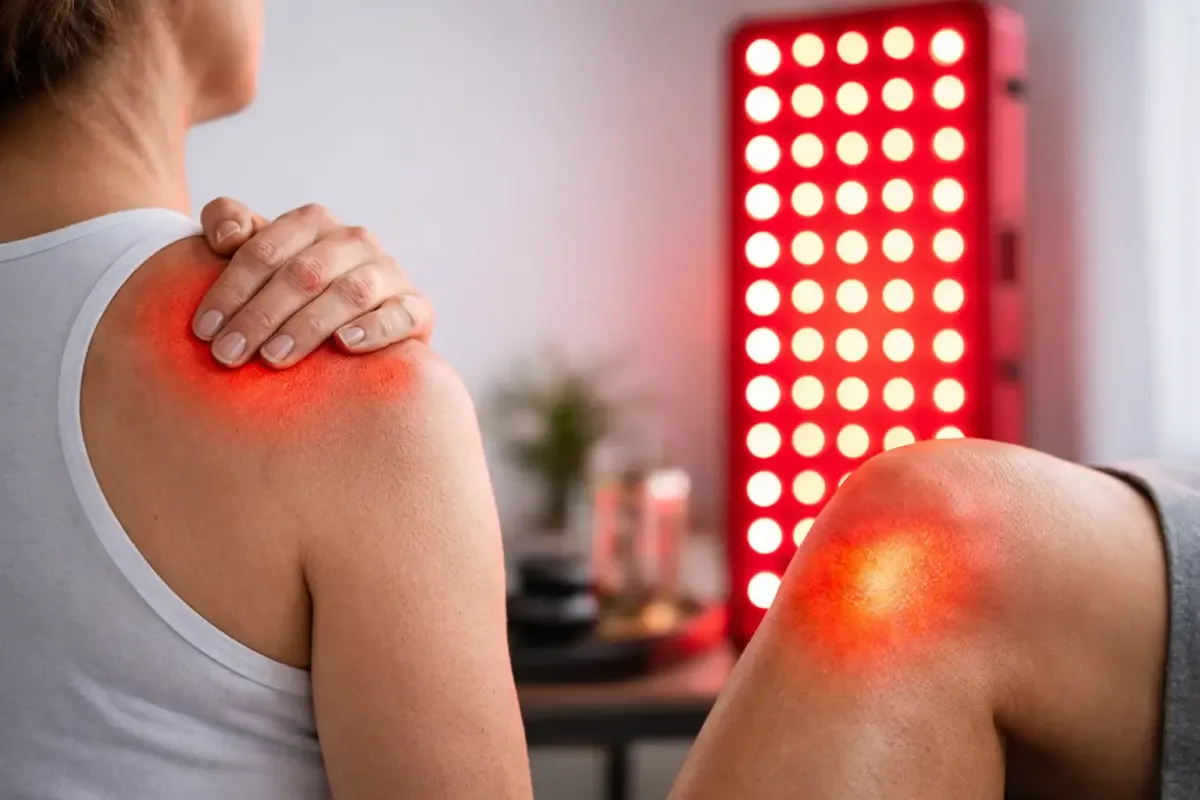
Red Light Therapy Benefits for Inflammation
When inflammation keeps showing up in the same places - your low back, knees, shoulders, feet, or hands - it starts to affect more than comfort. It changes how you move, how well you sleep, and how much you can get done in a day. That is why so many people ask about red light therapy benefits for inflammation, especially when they want a natural option that does not rely on medication alone.
Red light therapy has gained attention for a simple reason: it may help calm inflammatory activity while supporting the body’s repair process. For people dealing with chronic joint irritation, soft tissue strain, overuse injuries, or lingering pain after an accident, that matters. The goal is not to cover up symptoms. The goal is to help the body recover more effectively.
How red light therapy works
Red light therapy uses specific wavelengths of light that reach the skin and underlying tissues. Those wavelengths are thought to support cellular energy production, which may improve how cells repair and respond to stress. In plain terms, the tissue gets a better environment for healing.
Inflammation itself is not always the enemy. It is part of how the body protects and repairs damaged tissue. The problem starts when inflammation becomes excessive, prolonged, or tied to an injury that never fully resolves. That is when pain, stiffness, swelling, and reduced mobility can stick around much longer than they should.
Red light therapy may help by influencing the inflammatory response rather than shutting it down completely. That distinction matters. You want enough inflammation for healing, but not so much that it slows recovery and keeps you uncomfortable.
Red light therapy benefits for inflammation and pain
One of the most talked-about red light therapy benefits for inflammation is pain reduction. When irritated tissue begins to calm down, pain often follows. Patients commonly seek this therapy for sore muscles, joint discomfort, tendon irritation, neck tension, and back pain because those issues are frequently linked to ongoing inflammation.
Another benefit is improved circulation in the treated area. Better blood flow can help deliver oxygen and nutrients to stressed tissue while assisting with normal waste removal. That does not mean every painful area is an instant fix. It does mean the tissue may have more support for recovery than it had before.
Many people also notice less stiffness. That can be especially useful first thing in the morning or after long periods of sitting. If inflammation is making joints or muscles feel tight and guarded, reducing that irritation may help restore more comfortable movement.
There is also the recovery factor. Athletes, active adults, and people returning to exercise after time off often deal with inflammation from overuse or minor strain. Red light therapy may help shorten the window between irritation and recovery, which can make it easier to stay consistent with movement and rehab.
Where it may help most
Inflammation can show up in different ways, so results depend on the condition being treated. Red light therapy is often used for localized musculoskeletal complaints rather than broad systemic inflammation. In a clinical setting, that usually means areas such as the neck, lower back, shoulders, hips, knees, elbows, feet, and hands.
It may be helpful for arthritis-related joint irritation, tendonitis, muscle strain, sprains, repetitive stress problems, and post-workout soreness. Some patients also use it as part of a broader recovery plan after an auto accident or flare-up of a chronic spinal condition. If swelling and tenderness are tied to soft tissue stress, red light therapy may have a role.
That said, it depends on what is actually causing the inflammation. If pain is being driven by severe structural damage, nerve compression, autoimmune disease, infection, or an untreated medical condition, light therapy alone is not enough. In those situations, the best results come from identifying the source and building a treatment plan around it.
What treatment feels like
Most people are surprised by how simple red light therapy feels. Treatments are typically comfortable, noninvasive, and quick. You sit or lie in a position that exposes the target area, and the device delivers light energy for a set period of time. There is no forceful manipulation, no needles, and usually no downtime afterward.
You should not expect a dramatic sensation during the session. Red light therapy is not the kind of treatment that needs to feel intense to be working. Some patients notice gradual improvement over a series of visits rather than a sudden change after one session.
That is important for setting expectations. If your inflammation has been building for months or years, one treatment is unlikely to reverse it overnight. Consistency usually matters more than intensity.
Why inflammation often needs a bigger plan
This is where many people get stuck. They find a therapy that helps, but they do not address the reason the inflammation started in the first place. If a knee keeps getting overloaded because of poor movement mechanics, or if back inflammation is tied to spinal stress and weak support muscles, temporary relief will only go so far.
Red light therapy works best when it is part of a broader strategy. That may include chiropractic care, mobility work, soft tissue treatment,spinal decompression, exercise changes, weight management, or lifestyle changes that reduce mechanical stress on the body. The right combination depends on the person.
For example, someone with shoulder inflammation from repetitive work may benefit from red light therapy plus joint evaluation and movement correction. Someone with chronic low back pain may need both inflammation support and a plan to reduce pressure on the spine. A patient with foot or knee pain may need gait changes, strengthening, and targeted care instead of light therapy alone.
At Coastal Medical & Wellness, that root-cause approach matters because inflammation is often the visible symptom of a deeper problem. Treating the irritated tissue is helpful. Finding out why it keeps getting irritated is what leads to longer-term results.
Who may be a good candidate
Adults looking for natural, drug-free support are often good candidates for red light therapy, especially if they are dealing with mild to moderate inflammatory pain in muscles, joints, or soft tissue. It can be a practical option for people who want to stay active, recover from flare-ups, or add a low-risk therapy to their care plan.
It may also appeal to patients who are not ready for more aggressive interventions or who want supportive treatment alongside chiropractic and wellness care. For some, it becomes a useful part of maintenance after the worst pain has already improved.
Still, good candidacy is not just about wanting a natural option. It is also about making sure the problem fits the treatment. If symptoms are severe, worsening, or accompanied by numbness, major weakness, unexplained swelling, fever, or loss of function, a proper medical evaluation should come first.
What kind of results are realistic
The most realistic expectation is improvement, not perfection. Some patients notice less soreness, better mobility, and quicker recovery. Others notice that flare-ups become easier to manage. A few feel a clear difference quickly, while others need several sessions before they can tell whether it is helping.
Age, overall health, activity level, the duration of the problem, and the cause of the inflammation all matter. So does consistency. A person with fresh muscle irritation may respond differently than someone with long-standing joint degeneration and years of compensation patterns.
That does not make the therapy less valuable. It just means results should be judged in context. The best question is not whether red light therapy is a miracle. It is whether it helps your body move in the right direction.
Red light therapy benefits for inflammation in real-world care
For many patients, the value of red light therapy is not just that it may reduce inflammation. It is that lower inflammation can create room for progress. When pain settles down, movement becomes easier. When movement improves, strength and stability become easier to build. When that happens, long-term healing has a better chance.
If you are tired of short-term fixes and looking for a natural way to support recovery, red light therapy may be worth considering as part of a personalized care plan. The right next step is not guessing. It is getting the problem evaluated so treatment matches the cause, not just the symptom.
Your body heals best when it gets the right kind of support at the right time.
