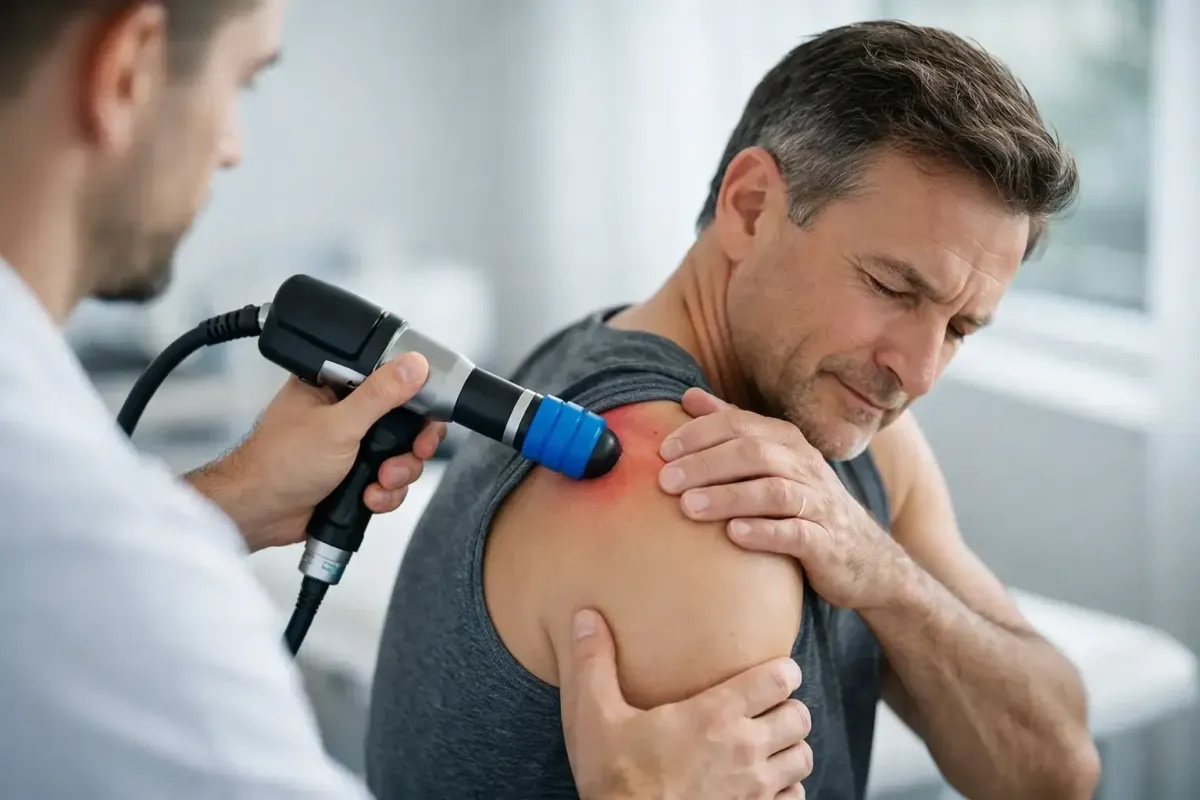
Shockwave Therapy for Shoulder Pain
Shoulder pain has a way of taking over the small parts of your day. Reaching into the back seat, lifting groceries, getting dressed, or trying to sleep on your side can suddenly feel like a problem you have to work around. For many people, shockwave therapy for shoulder pain offers a non-surgical, drug-free option when rest, ice, and time have not done enough.
The reason shoulder pain can be so frustrating is simple - the shoulder is built for movement. It gives you a wide range of motion, but that also makes it more vulnerable to strain, irritation, and overuse. When tissues become inflamed or damaged, the pain often lingers because you keep using the joint all day, even when you are trying to be careful.
Why shoulder pain often sticks around
Not all shoulder pain has the same cause. Some people are dealing with rotator cuff irritation. Others have calcific tendinitis, bursitis, impingement, or lingering pain after an old injury. In some cases, stiffness and weakness develop because pain has changed the way the shoulder moves.
This matters because treatment should match the source of the problem. A quick fix that only dulls symptoms may help for a short time, but it does not always improve tissue healing or restore function. If the underlying issue is irritated soft tissue, poor mechanics, or chronic inflammation, a more targeted approach usually makes more sense.
That is where shockwave therapy enters the conversation. It is often considered for shoulder pain that has become persistent, especially when patients want to avoid injections, limit medication, or put off surgery unless it is truly necessary.
How shockwave therapy for shoulder pain works
Shockwave therapy uses acoustic waves delivered to the affected area. Despite the name, there is no electrical shock involved. The treatment is designed to stimulate the body’s natural healing response in tissue that has become slow to recover.
In practical terms, the therapy may help improve circulation, reduce pain signaling, and encourage repair in damaged or chronically irritated tissue. For some shoulder conditions, it can also help break down calcific deposits that contribute to pain and restricted movement.
The goal is not just to quiet symptoms for a few hours. The goal is to create a better healing environment so the shoulder can move and function more normally over time.
What a session usually feels like
Most patients describe the treatment as intense but manageable. The provider applies a handheld device to the painful area, and the sensation can feel like rapid tapping or pressure pulses. If the tissue is very irritated, some discomfort is expected, especially during the first session.
That said, treatment should be appropriate to your condition and tolerance. The right settings, the right location, and the right treatment plan all matter. After a session, some people feel sore for a day or two, similar to how tissue can feel after deep work or exercise.
Who may benefit most
Shockwave therapy is not for every type of shoulder problem, but it can be a strong option for the right patient. It is often used when shoulder pain has lasted for weeks or months and has not fully responded to basic conservative care.
People with tendinopathy, rotator cuff irritation, calcific tendinitis, or chronic soft tissue inflammation may be good candidates. It can also fit well for active adults who want to stay moving, older adults who want to avoid more invasive care, and working professionals who need practical relief without a long recovery period.
There are also cases where it may not be the first step. If shoulder pain is caused by a complete tear, severe instability, fracture, or a condition outside the joint itself, a broader evaluation is needed first. That is why a proper exam matters. Good care starts with identifying the problem, not forcing every patient into the same treatment.
The real advantages of shockwave therapy for shoulder pain
One of the biggest advantages is that it supports healing without relying on medication. Many patients are looking for a natural approach because they are tired of cycling through anti-inflammatories or adjusting their life around pain.
Another benefit is that treatment is typically quick and performed in the office. There is no surgical downtime, and most people can return to normal daily activity with only minor temporary soreness. For busy adults in Stuart and the surrounding area, that convenience matters.
It also works well as part of a bigger plan. Shoulder pain is often influenced by posture, spine mechanics, muscle imbalance, and repetitive movement patterns. When treatment addresses both the irritated tissue and the reason that tissue has stayed irritated, results tend to be more meaningful.
It is effective, but not magic
This is where honest expectations matter. Some patients feel improvement quickly. Others need several visits before pain and motion begin to change in a noticeable way. Chronic conditions usually take more time than recent injuries.
It also depends on what else is contributing to the problem. If you continue overloading the shoulder, sleeping in positions that aggravate it, or moving with poor mechanics, progress may be slower. Shockwave therapy can be powerful, but it works best when it is part of a personalized care plan rather than a stand-alone shortcut.
What treatment may be combined with
Shoulder pain rarely exists in isolation. Tightness in the upper back, reduced neck mobility, poor scapular movement, or compensation patterns can keep the shoulder under stress. That is why a comprehensive clinic may combine shockwave therapy with other services based on your exam findings.
For some patients,chiropractic care may help improve spinal and shoulder girdle mechanics. Others may need mobility work, stretching, soft tissue support, or guidance on activity modification. The point is not to pile on treatments. The point is to use the right combination to help the body heal and move better.
At Coastal Medical & Wellness, that root-cause mindset is central. The focus is not simply on getting through today with less pain. It is on helping patients recover function, prevent recurrence, and return to daily life with more confidence.
What to expect after starting care
Most treatment plans involve a series of sessions rather than a one-time visit. The number depends on the condition, how long symptoms have been present, and how your body responds. During that time, your provider should also track what is changing - pain levels, range of motion, strength, sleep, and daily activity.
You may notice certain improvements before others. Some patients sleep better before they notice full strength returning. Others find they can reach overhead with less pain, even if the shoulder still feels stiff. Those small changes matter because they show the tissue is moving in the right direction.
You should also expect some guidance outside the treatment room. That may include simple exercises, movement advice, or tips for avoiding activities that keep flaring the area up. Lasting improvement usually comes from a combination of in-office treatment and better day-to-day support for the joint.
When it is time to get evaluated
If shoulder pain is affecting your sleep, limiting your movement, or making routine tasks harder than they should be, it is worth getting checked. The longer pain changes the way you move, the easier it is for stiffness and compensation to become part of the problem.
Early evaluation does not mean jumping to an aggressive treatment plan. Often, it means finding a more precise answer and choosing the least invasive path that has a real chance of helping. For many patients, that is exactly why shockwave therapy stands out.
You do not have to wait until shoulder pain becomes severe to take it seriously. A shoulder that hurts every day is already telling you something. Listening early can make recovery simpler.
The best next step is not guessing whether your shoulder will eventually calm down on its own. It is finding out why it still hurts and choosing care that helps your body do what it was built to do - heal, move, and feel strong again.
