Spinal Decompression for Herniated Disc
That sharp pain shooting down your leg when you stand up, bend over, or sit too long is not something you should have to just live with. For many people, spinal decompression for herniated disc pain offers a non-surgical path to relief by reducing pressure on irritated nerves and giving the injured disc a better environment to heal.
A herniated disc can turn normal daily movement into a constant reminder that something is wrong. Getting dressed, driving, working, and sleeping can all become harder than they should be. If you are looking for a drug-free option that focuses on the source of the problem rather than covering up symptoms, it helps to understand what spinal decompression does, who it may help, and when it makes sense as part of a larger treatment plan.
What a herniated disc actually does
Your spinal discs act like cushions between the bones of your spine. Each disc has a tougher outer layer and a softer inner center. When part of that inner material pushes outward through a weakened or damaged area, the disc can bulge or herniate. If that disc material irritates or compresses a nearby nerve, pain can travel beyond the back or neck and into the arm, hip, or leg.
That is why a disc problem does not always feel like simple back pain. In the lower back, a herniated disc may cause sciatica, tingling, numbness, or weakness down one leg. In the neck, it may create pain, burning, or numbness into the shoulder, arm, or hand. Some people feel deep aching. Others feel electric, sharp, or stabbing pain.
The symptoms depend on where the disc is affected, how much inflammation is present, and whether the nerve is under constant pressure or only in certain positions. This is also why treatment should be individualized. Two people can both have a herniated disc and need different approaches.
How spinal decompression for herniated disc pain works
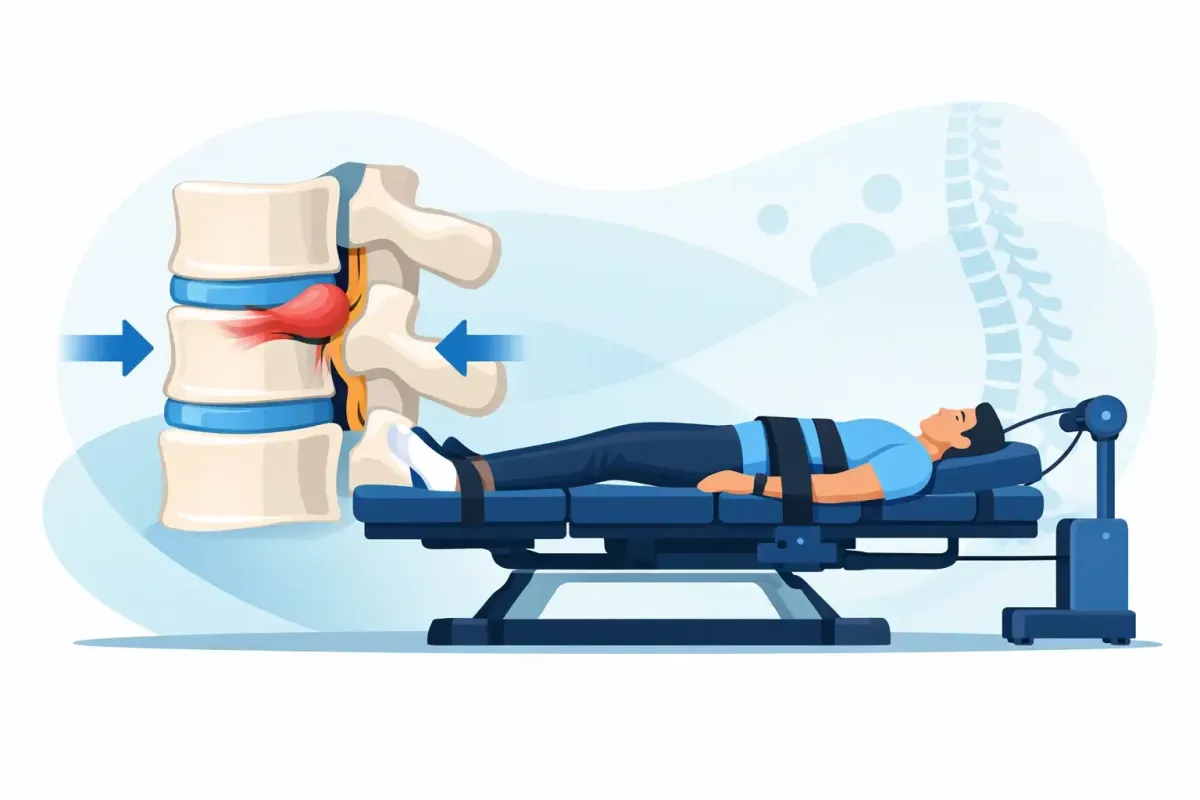
Spinal decompression is a gentle, controlled therapy designed to reduce pressure within the spine. In a clinical setting, the spine is carefully stretched in a way that creates negative pressure within the affected disc space. That change in pressure may help reduce stress on the disc and relieve pressure on compressed nerves.
For a herniated disc, the goal is not to force the body into a dramatic correction. The goal is to create conditions that support healing. When pressure is reduced, disc material may retract slightly, inflammation may calm down, and nutrients and fluid can move more effectively into the disc. Since discs have limited blood supply, that mechanical support can matter.
Many patients describe decompression as gentle and relaxing rather than painful. Treatment is typically done over a series of visits because disc injuries rarely improve from a single session. Healing usually takes consistency, especially if the disc has been irritated for weeks or months.
Why spinal decompression can be a good non-surgical option
Surgery has an important place in some cases, but many people want to avoid it if they can. That is especially true when symptoms are moderate, activity is limited, and they have not responded well to rest, pain medication, or basic home care.
Spinal decompression for herniated disc conditions is appealing because it is non-invasive and drug-free. It does not simply aim to numb pain. It addresses one of the core mechanical issues behind the symptoms - pressure. For patients who want a more natural treatment path, that can make a real difference.
It is also useful to think in terms of function, not just pain. Relief matters, but so does being able to walk comfortably, get through the workday, sleep better, and move without fear. A good decompression plan is built around those outcomes.
That said, decompression is not magic and it is not right for everyone. The effectiveness depends on the type of disc problem, the severity of nerve involvement, the patient’s overall health, and whether the treatment plan also addresses posture, spinal alignment, inflammation, and muscle support.
Who may benefit from spinal decompression
People who often respond well are those with disc-related neck or low back pain, sciatica, radiating nerve pain, and symptoms that worsen with compression-based activities like sitting, lifting, or prolonged standing. It can also help patients who are trying to avoid injections or surgery and want a more conservative starting point.
Many adults in Stuart and the Treasure Coast first seek care after weeks of trying to push through the pain. By that point, the body has often developed compensation patterns. Muscles tighten, movement changes, and inflammation becomes part of the problem. In those cases, decompression can be most effective when paired with chiropractic care or other supportive therapies that improve spinal mechanics and recovery.
Age alone does not rule someone in or out. Some younger adults develop herniated discs from sports, lifting injuries, or car accidents. Middle-aged and older adults may have disc problems related to wear, repetitive strain, or degeneration. What matters most is a proper evaluation.
When spinal decompression may not be appropriate
This is where honest guidance matters. Not every patient with back pain is a decompression candidate. If symptoms involve severe weakness, loss of bowel or bladder control, major spinal instability, fracture, infection, or certain advanced structural conditions, more urgent or different medical care may be needed.
There are also cases where the disc is only part of the issue. Some patients have arthritis, stenosis, muscle injury, postural stress, or multiple overlapping causes of pain. Decompression may still be helpful, but it may not be the whole answer.
That is why an exam, health history, and when needed, imaging review are so important. The best treatment plan starts with finding the actual cause.
What treatment usually feels like
Most people are relieved to learn that spinal decompression is not a forceful or aggressive treatment. You are positioned on a specialized table, and the therapy is delivered in a precise, controlled way. The settings are adjusted to the area being treated and your tolerance level.
During the session, you may feel a gentle stretching sensation in the spine. It should not feel sharp or alarming. Some patients notice improvement quickly. Others feel better gradually over several treatments as inflammation settles and pressure decreases.
A short-term flare-up can happen in some cases, especially when tissues are irritated to begin with, but treatment should be monitored closely and adjusted based on your response. Good care is never one-size-fits-all.
Why a combined approach often works best
Disc injuries usually respond better when care does more than one thing. Reducing pressure is important, but so is improving joint movement, supporting alignment, calming inflammation, and helping the body move correctly again.
That is one reason an integrated clinic model makes sense. At Coastal Medical & Wellness, decompression can be part of a personalized plan that also includes chiropractic care and other non-surgical therapies based on the patient’s condition and goals. That kind of approach is especially valuable when pain has started to affect work, sleep, exercise, or overall quality of life.
The right plan may also include activity modifications, hydration support, stretching, and guidance on posture and lifting habits. These small changes are not glamorous, but they matter. If the spine keeps returning to the same daily stress patterns, relief can be temporary.
How long it takes to see results
This depends on the severity of the herniation, how long symptoms have been present, and how the body responds to care. Some people notice reduced leg pain or improved mobility within the first few visits. Others need several weeks before the change becomes clear.
In general, acute cases tend to improve faster than long-standing cases. If a disc has been irritating a nerve for months, healing often takes longer. Patients who follow through with the full treatment plan usually do better than those who stop as soon as the pain starts to ease.
That may sound obvious, but it matters. Pain relief is one stage of recovery. Stability and prevention are the next stages.
What to look for in care for a herniated disc
If you are considering spinal decompression for herniated disc symptoms, look for a provider who starts with a thorough evaluation and explains why the treatment fits your case. You want a plan that is specific, measurable, and realistic. Promises that sound too good usually are.
You should also feel heard. The right provider will pay attention to where the pain travels, what movements aggravate it, how long it has been going on, and whether your daily life is being affected. Those details shape better decisions.
Most of all, choose care that focuses on helping you heal, function, and stay active. A herniated disc can feel overwhelming when every movement reminds you of it, but many people improve with the right conservative treatment and the right support.
If your back or neck pain is starting to control your routine, it may be time to stop waiting for it to settle down on its own and start addressing the pressure at the source.
