Spinal Decompression Treatment Review: Is It Safe?
A spinal decompression treatment review should answer more than one question: Can it ease your pain? It should also help you understand whether the treatment fits the cause of your symptoms, your health history, and your goals for getting back to normal movement. For people in Stuart and across the Treasure Coast dealing with persistent back pain, sciatica, leg numbness, or a stiff neck that will not settle down, non-surgical spinal decompression can be a meaningful option to discuss.
It is not a cure-all, and it is not right for every spine. But when it is recommended after a careful exam, it may help reduce pressure on irritated spinal structures without medication, injections, or surgery.
What Is Non-Surgical Spinal Decompression?
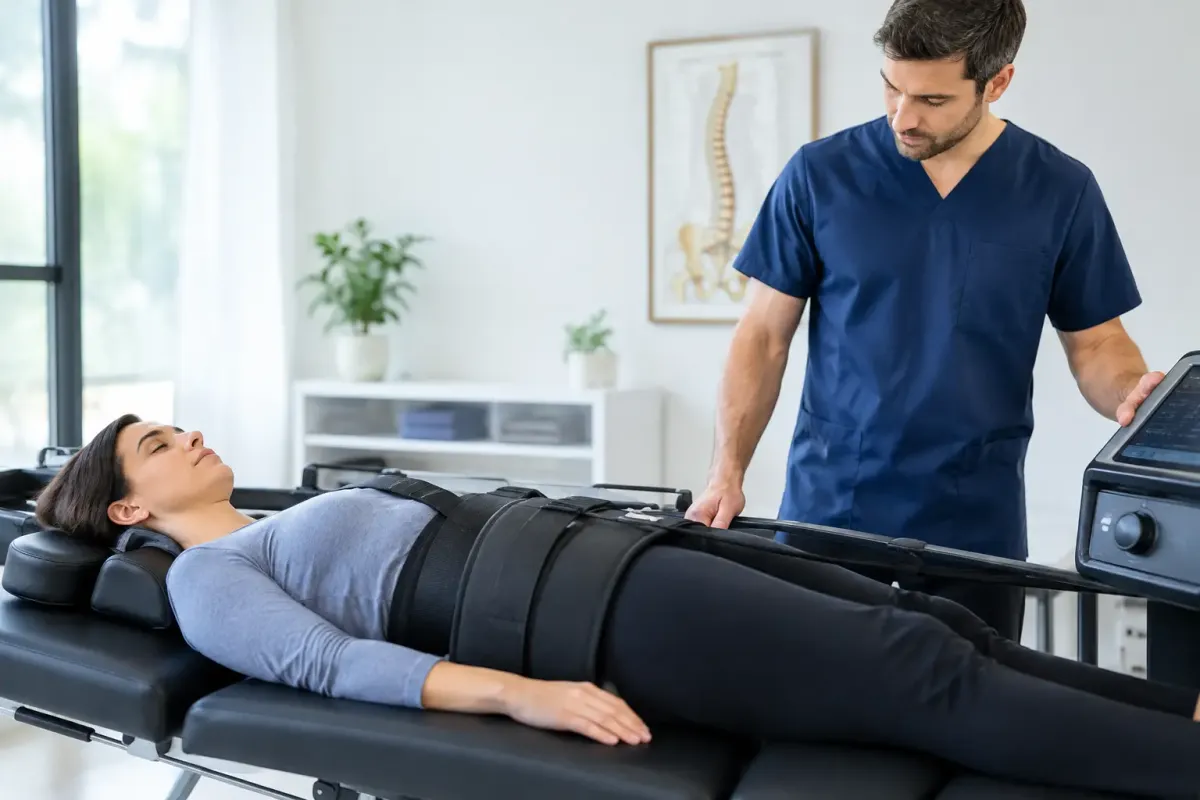
Non-surgical spinal decompression is a form of controlled traction. You lie comfortably on a specialized table while a provider uses gentle, computerized pulling and releasing forces to create space between targeted spinal segments.
The goal is to reduce mechanical pressure on spinal discs, joints, and nerves. In many cases, that pressure is part of the reason a person feels pain traveling from the low back into the hip, buttock, or leg. The changing traction cycles are designed to avoid the body simply tightening against a constant pull.
A disc is a cushion between the vertebrae. When a disc bulges, herniates, or loses healthy hydration over time, it can irritate nearby nerve tissue. Decompression may help improve the environment around that disc by lowering pressure and supporting the movement of fluids and nutrients. That does not mean it can reverse every disc problem. It means it may be a conservative way to help the spine function with less irritation.
Spinal decompression is different from hanging upside down on an inversion table or receiving a standard chiropractic adjustment. Those approaches may have a place for some people, but a decompression program uses measured traction based on the area being treated and the patient’s tolerance.
Spinal Decompression Treatment Review: What Results Are Realistic?
The most useful reviews are not just five-star ratings. They describe what changed: fewer sharp flare-ups, less tingling down the leg, greater walking tolerance, better sleep, or the ability to sit through work without constantly shifting position.
Many patients seek decompression because ordinary daily activities have become difficult. They may be avoiding golf, long drives, lifting grandchildren, gardening, or exercise because bending, standing, or sitting triggers pain. When treatment is a good fit, progress often looks practical before it looks dramatic. A patient may first notice they can get out of bed more easily or go longer between pain episodes.
Results depend on the diagnosis. People with disc-related low back pain, sciatica, degenerative disc changes, or some forms of neck pain may be stronger candidates than those whose symptoms come from a different source. The duration of symptoms matters, too. A recent flare-up can respond differently than pain that has been present for years.
Research on traction and decompression for low back pain is mixed. Some patients experience meaningful symptom relief, particularly when traction is part of a broader care plan, while studies do not support promising identical results for everyone. That is why a trustworthy recommendation starts with an exam, a review of imaging when available, and a conversation about your goals instead of a one-size-fits-all package.
A quality care plan may also include chiropractic care, targeted therapeutic exercises, posture and movement guidance, and lifestyle support. Decompression can help create an opening for recovery, but lasting results usually depend on addressing the habits, mobility limitations, muscle imbalance, or injury patterns that keep loading the spine.
Who May Be a Good Candidate?
You may want to ask about spinal decompression if you have ongoing low back or neck discomfort that has not responded well to rest, home care, or basic treatment. It is commonly considered for disc bulges or herniations, sciatica, degenerative disc disease, spinal joint stress, and pain that travels into an arm or leg.
Symptoms that deserve a professional evaluation include burning or electric pain, recurring numbness or tingling, stiffness that limits your range of motion, and pain that worsens with sitting, bending, or standing. A provider can help distinguish whether those symptoms are likely related to spinal nerve irritation, a joint issue, muscle strain, peripheral neuropathy, or another condition entirely.
Age alone does not rule someone in or out. Many active adults and older adults choose conservative care because they want to stay mobile and avoid unnecessary medication. The deciding factor is whether the treatment is appropriate for your specific spine and medical history.
When Decompression May Not Be Appropriate
Safety comes before convenience. Spinal decompression is not usually recommended for everyone with back pain. Certain conditions may require another approach, additional testing, or prompt medical care.
You should tell your provider about osteoporosis, fractures, spinal fusion or hardware, cancer, severe arthritis, inflammatory spinal disease, abdominal aortic aneurysm, pregnancy, or a history of significant trauma. Severe or progressive weakness also needs timely medical attention.
Seek urgent evaluation for new loss of bowel or bladder control, numbness in the groin or saddle area, fever with severe back pain, unexplained weight loss, or sudden pain after a serious fall or accident. These are not symptoms to treat with routine traction at home or wait out for another week.
An honest spinal decompression treatment review should also acknowledge that mild temporary soreness can happen, especially early in care. Your body is responding to new movement and pressure patterns. Pain that sharply worsens, new neurological symptoms, or discomfort that does not settle should be reported immediately so the plan can be adjusted.
What a Personalized Treatment Plan Should Include
The best decompression experience starts before the first session. Your provider should ask where you feel pain, what movements aggravate it, whether symptoms travel, how long the issue has lasted, and what treatments you have already tried. A physical exam can assess strength, reflexes, mobility, posture, and areas of tenderness.
If decompression is recommended, expect a series of visits rather than a single treatment. Spinal tissues generally need time to respond. The schedule varies based on the condition, symptom severity, and your response along the way. Be cautious of anyone who guarantees a specific number of visits will permanently fix every problem before they have evaluated you.
During a session, most people remain clothed and lie on the decompression table with a support system around the hips or torso. Treatment should feel controlled and comfortable, not forceful. Your provider can modify the settings based on the area being treated and how you respond.
At Coastal Medical & Wellness, spinal decompression is considered within the bigger picture of your health. The aim is not simply to quiet pain for a few hours. It is to find the cause, support healthier movement, and build a plan that helps you return to the activities that matter to you.
Questions to Ask Before You Start
Before beginning care, ask what diagnosis the provider is treating and why decompression is being recommended for it. Ask how progress will be measured beyond a pain score, such as walking distance, sleep quality, range of motion, or the ability to work and exercise.
You should also ask what will happen if you do not improve as expected. A patient-centered practice will reassess, adjust the plan, or refer you for further medical evaluation when needed. Conservative care should never mean ignoring symptoms that require another level of care.
Finally, ask what you can do between visits. The answer may involve simple mobility work, avoiding certain aggravating movements for a short time, improving workstation setup, staying hydrated, or gradually returning to activity. Treatment works best when the plan supports your everyday life, not just your time in the clinic.
Back and nerve pain can make your world smaller one skipped walk, sleepless night, or canceled outing at a time. If you are looking for a natural, personalized way to explore whether spinal decompression may fit your condition, call Coastal Medical & Wellness at (772) 286-5277 to schedule a consultation and get clear answers about your next step.
