Why Your Weight Loss Keeps Stalling: 5 Hidden Factors Beyond Diet and Exercise
Why Your Weight Loss Keeps Stalling: 5 Hidden Factors Beyond Diet and Exercise
If you feel like you’re “doing everything right” but the scale still will not move, you are not lazy, broken, or lacking discipline. Weight loss plateaus often have more than one cause, and some of the most common reasons have less to do with willpower than people think.
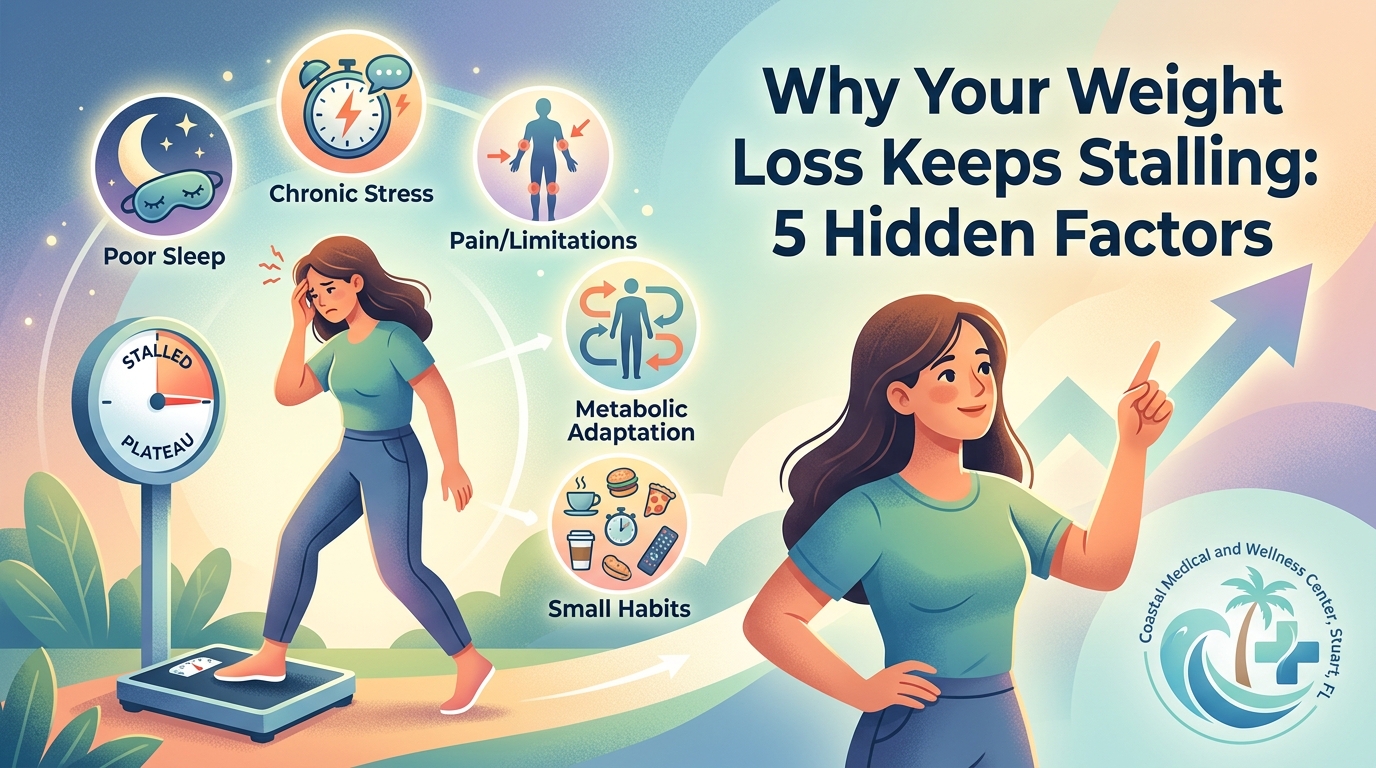
Direct answer: Weight loss often stalls because of hidden factors such as poor sleep, chronic stress, pain that limits movement, metabolic adaptation, and habits that seem small but add up. A more useful next step is to look at the whole picture, not just calories and workouts.
At Coastal Medical and Wellness Center in Stuart, FL, we see this frustration often. Many people come in convinced they have “failed” at weight loss, when what they really need is a more personalized, evidence-based plan. Our role is to help patients look at the roadblocks more clearly and build a realistic path forward with customized care, practical guidance, and attentive service.
Who is this written by, and why should you trust it?
This article is written for prospective patients by a medical content writer based on current guidance from reputable health organizations and peer-reviewed research, and shaped around the clinical focus of Coastal Medical and Wellness Center in Stuart, FL. Our clinic emphasizes personalized weight loss plans, red light therapy, chiropractic adjustments, massage therapy, and shockwave therapy where appropriate, along with a high-touch patient experience designed to make care feel clear, respectful, and well organized.
Is weight loss only about eating less and exercising more?
No. Diet and exercise matter, but they are only part of the picture.
That idea is simple, but human physiology is not. Your body responds to stress, sleep, pain, hormones, activity levels, and long-term calorie restriction in ways that can make progress slower than expected. According to the National Institute of Diabetes and Digestive and Kidney Diseases, weight management is influenced by many biological, behavioral, and environmental factors.
Myth 1: “If the scale stopped moving, I must be doing something wrong”
Fact: A plateau does not always mean failure
Weight naturally fluctuates. Water retention, stress, poor sleep, menstrual cycle changes, reduced muscle glycogen, and even constipation can affect scale readings. A plateau may reflect a temporary pause, not a permanent problem.
In some cases, your body also adapts to lower calorie intake over time. This is often called metabolic adaptation. As body weight changes, the amount of energy your body uses can change too. That is one reason progress may slow after an initial drop.
What matters more than one number on one day:
Waist and clothing fit
Energy levels
Hunger patterns
Sleep quality
Consistency over weeks, not days
Ability to move with less discomfort
Myth 2: “I just need to work out harder”
Fact: Pain, inflammation, and limited movement can quietly reduce progress
This is one of the most overlooked issues. If your knees, hips, back, or feet hurt, you may still be “exercising,” but your total daily movement often drops without you noticing. You may sit more, recover less well, and avoid intensity because it feels uncomfortable.
Research consistently shows that chronic pain can affect activity, sleep, mood, and overall health behaviors. The CDC notes that chronic pain is linked with limitations in daily activities and reduced quality of life.
For some patients in Stuart and surrounding areas, improving movement tolerance is the real first step. That may include:
Chiropractic care or spinal manipulation to improve joint motion where appropriate
Mobility work and movement coaching
Shockwave therapy for certain stubborn soft-tissue pain conditions when clinically indicated
A treatment plan that reduces barriers to regular activity
This does not mean pain care alone causes weight loss. It means that when movement becomes easier and daily life feels less restricted, healthier routines can become more sustainable.
Myth 3: “If I’m eating healthy, sleep doesn’t matter much”
Fact: Poor sleep can make weight loss harder
Sleep is not a luxury. It affects appetite, recovery, food choices, and blood sugar regulation. Short or poor-quality sleep is associated with changes in hormones that influence hunger and fullness, and it can increase cravings for highly palatable foods.
The NIH and Mayo Clinic both describe sleep as a major pillar of health. In weight management, lack of sleep can make healthy choices feel harder even when motivation is high.
Signs sleep may be part of your plateau:
You feel tired but wired at night
You wake unrefreshed
Late-night snacking has increased
Your cravings are stronger on busy days
Your exercise recovery feels poor
A realistic next step is not perfection. It may be improving consistency, reducing screen stimulation before bed, and addressing pain that disrupts sleep.
Myth 4: “Stress only affects my mood, not my weight”
Fact: Chronic stress can affect hunger, habits, and recovery
Stress changes behavior and physiology. When stress is ongoing, many people become less consistent with meals, movement, hydration, and sleep. Some overeat; others under-eat during the day and overeat at night. Both patterns can make progress less predictable.
The Cleveland Clinic explains that stress can contribute to weight gain and make weight management more difficult through hormonal and behavioral pathways.
Stress-related signs that may affect weight loss:
Grazing or snacking when you are not physically hungry
Eating quickly and feeling unsatisfied afterward
Tight neck, shoulder, or back tension
Reduced patience for meal planning or exercise
More frequent “all-or-nothing” thinking
This is where a supportive care environment matters. When people feel heard, informed, and not judged, they are often more able to follow through on small changes that add up.
Myth 5: “If I hit a plateau, I need a more extreme plan”
Fact: Extreme plans often backfire
Very restrictive routines can increase fatigue, rebound eating, frustration, and inconsistency. In many cases, the issue is not that you need a harsher strategy. It is that you need a more accurate one.
According to the World Health Organization, healthy weight management is best approached through sustainable nutrition, movement, and lifestyle habits rather than short-term extremes.
What often works better than extremes:
Looking at sleep, stress, and pain honestly
Tracking patterns for 1 to 2 weeks before changing everything
Building a routine you can repeat during busy weeks
Addressing movement limitations early
Using a personalized plan instead of copying someone else’s
How do I know if this might be my issue?
You do not need to self-diagnose, but a plateau may be more than “diet failure” if you notice several of these patterns:
Your weight has stalled for weeks despite consistent effort
You have recurring back, hip, knee, foot, or shoulder pain
You are sleeping poorly or waking often
Your cravings rise when stress rises
You feel more fatigued than expected from normal activity
You have become less active overall, even if formal workouts are still happening
Your routine works for a few days, then becomes hard to maintain
In other words, if your body feels harder to live in right now, that may be affecting your results more than another round of stricter dieting.
What typically helps, and what doesn’t?
What typically helps
Consistent meals: Regular eating patterns can reduce rebound hunger.
Better sleep hygiene: A steady sleep schedule often supports appetite regulation.
Pain-informed movement: Walking, mobility work, and guided exercise may be more sustainable than pushing through pain.
Stress reduction: Even small daily practices can improve consistency.
Objective tracking: Looking at energy, steps, sleep, and habits can reveal hidden barriers.
Personalized care: Individualized plans tend to work better than generic templates.
What often does not help
Skipping meals all day and overeating later
Trying to “burn off” poor sleep with harder workouts
Ignoring joint or soft-tissue pain for months
Starting a plan that only works under ideal conditions
Comparing your progress to someone with a different health picture
What would a personalized approach look like at Coastal Medical and Wellness Center in Stuart, FL?
At our clinic, we start by asking a better question: What is making healthy change harder than it needs to be for this person?
That means your plan may include some combination of:
A conversation about your daily routine, stress, sleep, and movement barriers
A musculoskeletal assessment to understand how pain or stiffness may be affecting activity
Chiropractic adjustments or spinal manipulation when clinically appropriate
Shockwave therapy or extracorporeal shockwave therapy for certain soft-tissue issues that may be limiting movement
Practical recommendations that fit real life, not an ideal schedule
Follow-up that feels organized, responsive, and supportive
Our approach is personalized and designed around long-term function, not one-size-fits-all advice. We also aim for the kind of thoughtful, detail-oriented experience many patients describe as “Disney-wow” service: clear communication, respect for your time, and a plan you can actually understand.
When should weight struggles or related symptoms be evaluated urgently?
Weight loss plateaus are usually not an emergency, but some symptoms should not wait.
Seek urgent care or emergency attention if you have:
Severe shortness of breath
Chest pain
Stroke symptoms such as facial droop, sudden weakness, confusion, or trouble speaking
A sudden severe headache unlike your usual headaches
Loss of bladder or bowel control
Saddle anesthesia, meaning numbness in the groin or inner thighs
Fever with significant back pain
Severe unexplained weakness
You are currently undergoing cancer treatment and develop concerning new symptoms
If something feels alarming or rapidly worsening, it is safer to get immediate medical evaluation.
Frequently Asked Questions
What causes a weight loss plateau even when I eat healthy?
A plateau can happen because of sleep problems, stress, reduced daily movement, pain, water retention, or your body adapting to a lower calorie intake. It is not always a sign that you are doing something wrong.
Can chronic pain make it harder to lose weight?
Yes. Pain can reduce daily activity, worsen sleep, increase stress, and make exercise less consistent. When movement feels easier, healthy habits are often easier to maintain.
Does poor sleep really affect weight loss?
Yes. Poor sleep can influence hunger, cravings, recovery, and blood sugar regulation. Even motivated people often struggle more with food choices when sleep is off.
Why am I gaining and losing the same few pounds?
That pattern often reflects fluctuations in water, stress, routine, and eating consistency rather than true failure. Looking at trends over several weeks is usually more useful than focusing on day-to-day changes.
Can stress stop weight loss?
Stress can make weight loss harder by affecting appetite, sleep, food decisions, and recovery. It may not “stop” progress by itself, but it can create patterns that slow it down.
What should I do if exercise hurts?
Do not just push through it indefinitely. Pain during movement may need evaluation so you can build a safer, more sustainable plan. In some cases, personalized care, chiropractic treatment, or shockwave therapy may help support better movement tolerance.
Is there a best weight loss plan for everyone?
No. The most effective plan is usually the one that fits your health status, pain levels, schedule, stress load, and consistency. Personalized plans tend to be more realistic and more sustainable.
Where can I get help for a weight loss plateau in Stuart, FL?
If you live in Stuart, FL or nearby surrounding areas, Coastal Medical and Wellness Center may be able to help you identify barriers such as pain, mobility limitations, and lifestyle factors that are making progress harder.
Related reading from our blog
To build on this topic, you may also want to explore:
Unlock Lasting Weight Loss: Combining Quick Results with Root Cause Solutions at Coastal Medical and Wellness Center
Functional Weight Loss & Red Light Therapy | Coastal Medical & Wellness Stuart FL
Integrating Wellness: A Holistic Approach to Chronic Pain Management in Stuart, FL
Key takeaways
If your weight loss has stalled, the answer may not be “try harder.” Hidden factors like poor sleep, chronic stress, pain, movement limitations, and overly restrictive plans can quietly slow progress. A thoughtful, personalized approach often reveals more than another generic reset.
Medical disclaimer: This article is for informational purposes only and is not medical advice. It is not intended to diagnose, treat, or replace care from a qualified healthcare professional. If you have concerning symptoms or questions about your health, seek appropriate medical evaluation.
If you are in Stuart, FL or the surrounding areas and want help understanding what may be getting in the way of progress, Coastal Medical and Wellness Center is here to help you sort through it clearly and practically.
