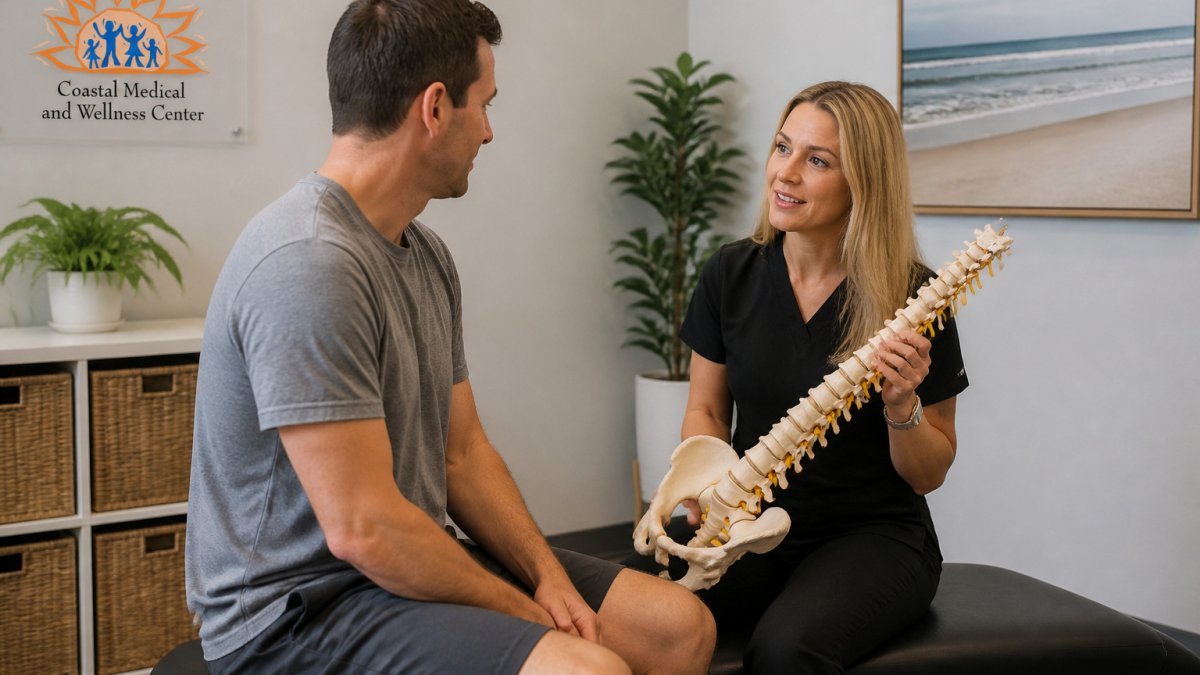
How to Choose a Pain Relief Center in Florida
Quick Summary
A pain relief center is a multidisciplinary clinic that combines services such as hands-on spine care, diagnostic evaluation, rehabilitation, and injections into one plan. Choose one by checking that its services match your symptoms, confirming provider credentials, and asking for a written plan with defined progress checkpoints.
- Match the center's services, such as spinal decompression or shockwave therapy, to where your pain actually sits.
- Confirm licensure and board certification, and ask about fellowship training and procedure volume for injections.
- Ask how progress will be measured and when the plan will be reassessed, so care is not open-ended.
- Verify insurance, referral requirements, and a written estimate for the full course of care before starting.
- Seek prompt medical evaluation if pain spreads, causes weakness, or comes with bowel or bladder changes.
Table of Contents
- What a Pain Relief Center in Florida Actually Offers
- Conditions Pain Relief Centers Commonly Treat
- Treatment Options: Interventional, Nonsurgical and Multimodal Care
- How to Evaluate a Pain Specialist and Chiropractor for Chronic Pain
- Disc Treatment Near Stuart FL: What to Ask Before You Book
- Neuropathy Treatment Near Stuart FL and Pain Management Options
- Booking Your First Consultation at Coastal Medical and Wellness Center
- Frequently Asked Questions
What a Pain Relief Center in Florida Actually Offers
Last Updated: October 31, 2026
If you're searching for a pain relief center in Florida, you're likely dealing with pain that hasn't responded to rest, over-the-counter medication, or a single round of treatment. Knowing what a center like this actually provides helps you judge whether it fits your situation. (Source: the National Institute of Neurological Disorders and Stroke)
A pain relief center is usually a multidisciplinary clinic. Many combine hands-on spine care, diagnostic evaluation, and a plan that may include rehabilitation, injections, or referrals. The exact mix varies from clinic to clinic, so the services listed on a center's website are worth reading closely before you book.
At Coastal Medical and Wellness Center, the services span several areas:
- Chiropractic and Cox spinal decompression for bulging or herniated discs, sciatica, neck and back pain, and whiplash
- Shockwave therapy for knee, shoulder, tendon, and plantar fasciitis pain
- Primary care for preventative care, diagnostics, and chronic condition management
- Therapeutic massage to relieve tension and support recovery
Several of these services may matter to you depending on where your pain sits. A reader with disc-related leg pain has different needs from someone with a stubborn shoulder injury, so match the services to your symptoms rather than choosing a center on reputation alone.
Watch out: Pain that spreads, causes weakness, or comes with bowel or bladder changes needs prompt medical evaluation (the NHS).
Conditions Pain Relief Centers Commonly Treat
Pain relief centers see many problems, but the most common fall into a few groups. Back pain, neck pain, and joint pain account for much of the caseload. Nerve-related pain, such as numbness or burning in the feet, is another frequent reason people seek care.
Disc problems deserve special attention. A bulging or herniated disc can press on nearby nerves and cause pain that travels down the leg. Degenerative disc disease, a gradual wear-and-tear process, often produces similar symptoms. Care plans for these conditions typically focus on reducing pressure on the affected area and restoring movement.
Neuropathy is a different challenge. Burning, tingling, and numbness often develop slowly and can be linked to a range of causes, from diabetes to injury. Pain relief centers generally work to identify the source before choosing a treatment approach.
Joint and soft tissue injuries, including tendonitis and plantar fasciitis, round out the typical list. These problems often respond well to targeted therapies when caught early.
Treatment Options: Interventional, Nonsurgical and Multimodal Care
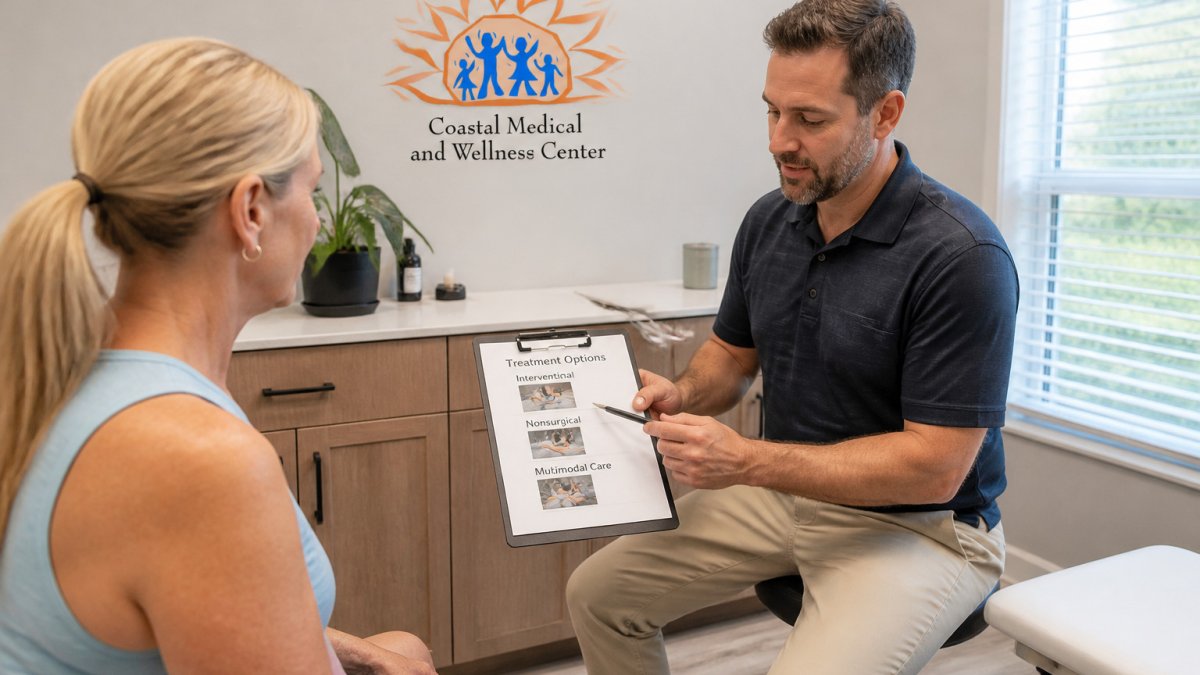
Most pain relief centers organize care into three broad approaches: interventional, nonsurgical, and multimodal. Understanding what each actually involves, and what it does not, helps you ask better questions during a consultation and compare centers on substance rather than marketing language.
Interventional care involves procedures that target a specific pain source, such as image-guided injections (for example, epidural steroid injections or facet joint injections) performed by a physician trained in pain medicine.
Nonsurgical, hands-on care covers therapies such as chiropractic adjustment, spinal decompression, and shockwave treatment. These approaches aim to restore movement, reduce pressure on irritated structures, or stimulate healing in soft tissue.
Multimodal care combines several approaches in one personalized plan. Rather than relying on a single treatment, a plan might pair spinal decompression with therapeutic massage and a home exercise program.
A practical way to compare options is to ask these questions:
| Question | Why It Matters |
|---|---|
| What is the likely source of my pain, and how was that determined? | Determines which treatment type fits and whether the diagnosis is well-supported |
| Which options are nonsurgical, and which are interventional? | Helps you understand the escalation path and avoid unnecessary procedures |
| What are the known risks and typical recovery for each option? | Lets you weigh benefit against disruption to work and daily life |
| How will progress be measured, and when will the plan be reassessed? | Shows whether the plan is working and prevents open-ended care |
| What does the full course cost, and what will insurance cover? | Prevents surprise out-of-pocket costs |
Coastal Medical and Wellness Center describes its approach as personalized, and it offers chiropractic care, Cox spinal decompression, shockwave therapy, primary care, and therapeutic massage under one roof.
How to Evaluate a Pain Specialist and Chiropractor for Chronic Pain
Choosing a provider for chronic pain is a significant decision, and the credentials and approach of the clinician matter more than the look of the waiting room. Most ranking clinic pages list services and credentials without telling you how to weigh them.
**1. Physicians who practice pain medicine may hold board certification from a recognized specialty board; ask which board certifications a provider holds. Board certification is not a guarantee of skill, but it confirms the provider met a standardized training and examination standard (What is ABMS Board Certification?).
2. Ask about fellowship training and procedure volume. For interventional care, ask whether the provider completed a pain medicine fellowship and how many of the relevant procedures they perform in a typical month.
3. Understand the treatment philosophy. A provider who recommends the same treatment for every patient is a warning sign.
4. Ask how progress is measured. Chronic pain plans should include defined reassessment points, for example, a re-examination after a set number of visits, and objective or functional measures (range of motion, walking tolerance, return-to-work status) alongside pain scores.
**5.
6. Evaluate communication and coordination. A good consultation should include a clear explanation of what is causing your pain, what treatment is recommended, and what outcomes are realistic. Be cautious of anyone who promises guaranteed results or claims a treatment works for every condition.
A short consultation with two or three providers is often the fastest way to compare philosophy, communication, and cost. The right fit is the one that explains its reasoning clearly, respects your questions, and gives you a written plan you can evaluate.
Disc Treatment Near Stuart FL: What to Ask Before You Book
Disc-related pain is one of the most common reasons people search for a pain relief center in the Stuart area. For a deeper overview, read the guide to disc related leg pain. Before booking, a few questions can clarify whether a center fits your needs.
Ask whether the center evaluates the disc itself or only treats the symptoms in the back or leg. Ask what nonsurgical options are available, and how each one is chosen. Ask what the realistic timeline for improvement looks like.
Cox spinal decompression is one nonsurgical option that Coastal Medical and Wellness Center offers for bulging and herniated discs. Readers can review the non-surgical spinal decompression service offered in Stuart on that page. Whether it suits your case depends on a proper evaluation, so use your first visit to ask about candidacy, expected sessions, and possible side effects.
If you have previously had back surgery or been told surgery is the only option, mention this at the start. A thorough evaluation should weigh your history alongside your current symptoms. Because outcomes vary, ask for honest expectations rather than promises.
Neuropathy Treatment Near Stuart FL and Pain Management Options
Neuropathy, the burning, numbness, or tingling in the hands and feet, can be difficult to manage. Because it has many possible causes, the most useful first step is identifying the underlying source. Diabetes, vitamin deficiencies, and nerve compression are among the factors a clinician will consider.
Coastal Medical and Wellness Center describes its functional medicine approach as focused on root causes rather than only symptoms. Ask how the center investigates causes and how it measures progress.
Pain management for neuropathy often combines several strategies, including lifestyle changes, physical therapy, and medical monitoring. For nerve-related leg pain, sciatica relief options are also available locally. No single treatment works for everyone, so set realistic goals with your provider. Be sure to continue any prescribed medications unless your doctor advises otherwise.
Many people with neuropathy see several providers. Keeping your primary care provider informed about any new treatment helps avoid conflicts and gives you a complete picture of your care.
Booking Your First Consultation at Coastal Medical and Wellness Center
Your first visit sets the tone for the whole process. Coastal Medical and Wellness Center is located at 3257 SE Salerno Rd #3, Stuart, FL 34997, and you can call 772-286-5277 to schedule. The center offers a New Patient Special, and you can ask about current details when you call.
Prepare for the consultation by writing down your symptoms, when they started, and what has already been tried. Bring any imaging reports, test results, and a list of current medications. Note what activities your pain limits, since this helps the provider set goals.
Come with specific questions. Ask what the provider thinks is causing your pain, which treatment options are recommended, what the expected timeline is, and what the total cost of the plan may be.
Coastal Medical and Wellness Center describes its approach as patient-centered, and the first visit is a good time to decide whether the fit feels right. A pain relief center earns your trust by explaining its reasoning clearly and respecting your questions, and you should expect that from any provider you consider.
Frequently Asked Questions
How do I choose a pain relief center near me?
Start by confirming the providers' credentials, such as board certification or fellowship training in pain medicine, and whether they treat your specific condition. Ask whether the center offers a consultation before committing to a treatment plan, and whether the plan is individualized. Read patient reviews for consistency, not just star ratings, and call to ask about insurance acceptance and out-of-pocket costs. A good center will explain treatment options, expected outcomes and risks in plain language before you agree to anything.
Can chiropractic care help with disc-related pain?
Chiropractic care is one of several nonsurgical options that may help some people with disc-related back or neck pain. Treatment plans often combine adjustments, rehabilitation exercises and other therapies, and outcomes vary by person and by the severity of the disc problem. Imaging and a physical exam help determine whether conservative care is appropriate. Anyone with severe weakness, loss of bladder or bowel control, or pain that is worsening should seek prompt medical evaluation. A qualified provider can tell you whether chiropractic care fits your situation.
What should I ask at my first pain relief appointment?
Ask what the provider believes is causing your pain and what testing is needed to confirm it. Find out which treatments are proposed, what the likely benefits and risks are, and how long a typical course lasts. Ask how progress will be measured, what happens if the first approach does not help, and whether you will be referred to another specialist. Also ask about the total cost, what your insurance covers, and whether payment plans are available. Clear answers to these questions are a good sign of a well-run practice.
How can I compare pain relief centers near Stuart?
Make a simple list of centers and compare them on the same criteria: provider credentials, the conditions they treat, the range of nonsurgical options, insurance acceptance, office hours and travel time. Check whether each center offers a low-cost or no-cost initial consultation, and note how quickly new patients can be seen. Patient reviews can reveal communication and wait-time patterns. Call each office with the same questions and compare how clearly and courteously staff respond.

