Safe and Natural Disc Treatment for Pain Management
Table of Contents
Natural Treatment for Herniated Disc: Conservative Care Options
Professional Non-Surgical Treatments for Safe Disc Pain Relief
Last Updated: October 21, 2026
Understanding Disc Pain and When to Seek Care
Disc pain affects millions each year. A bulging or herniated disc can press on nearby nerves, causing pain, numbness, or weakness.
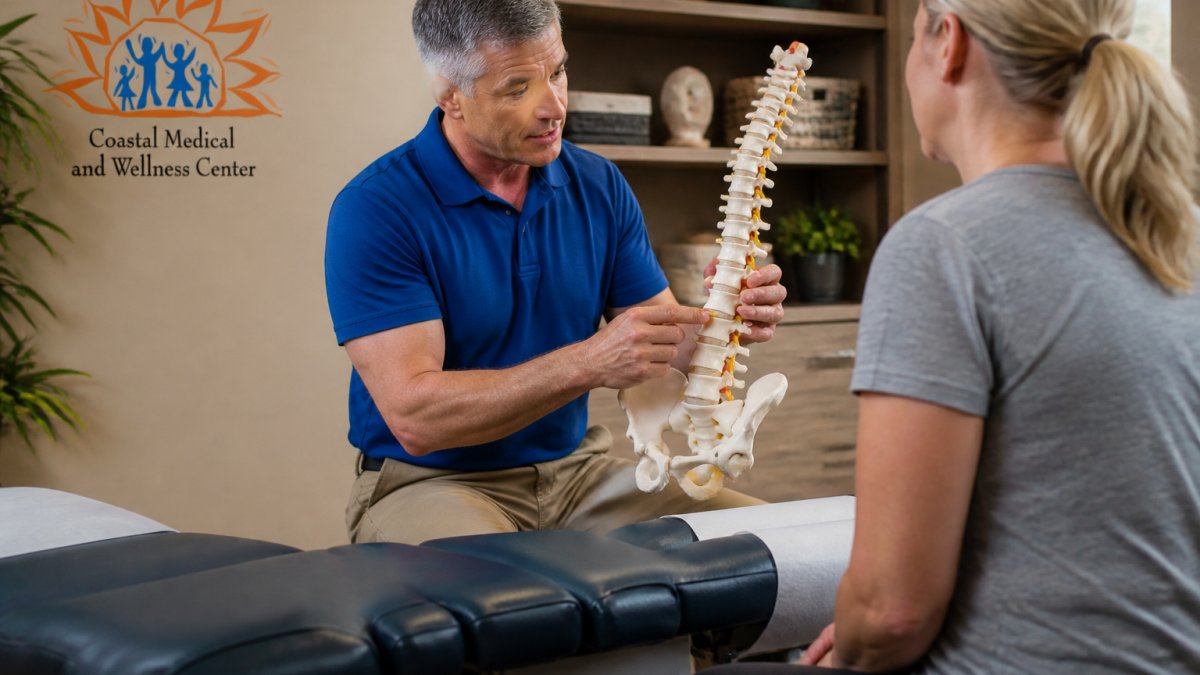
At Coastal Medical and Wellness Center, we help patients understand their disc condition and build treatment plans that address the root cause, combining chiropractic care with functional medicine rather than masking symptoms.
Warning signs that require immediate medical attention
Some disc symptoms need urgent care. Seek immediate medical attention if you experience:
Loss of bladder or bowel control
Severe numbness in your groin or buttocks
Weakness that prevents you from walking or standing
These symptoms may indicate cauda equina syndrome or another serious condition. Call emergency services or visit an urgent care facility right away. For less severe disc pain, schedule a consultation with a qualified healthcare provider to discuss your options for safe and natural disc treatment.
Natural Treatment for Herniated Disc: Conservative Care Options
Most herniated discs respond well to conservative care and often heal within 6 to 12 weeks. The key is reducing inflammation, protecting the disc, and gradually rebuilding strength.
Natural treatment for herniated disc starts with rest and activity modification. Avoid movements that aggravate pain, sleep on a firm surface, and use supportive pillows to reduce disc pressure and allow healing to begin.
Pro TipMany people make the mistake of staying completely still. Instead, move gently and regularly. Light activity promotes blood flow and speeds healing. The goal is to find the balance between rest and movement.
Exercises for Herniated Disc Pain Relief
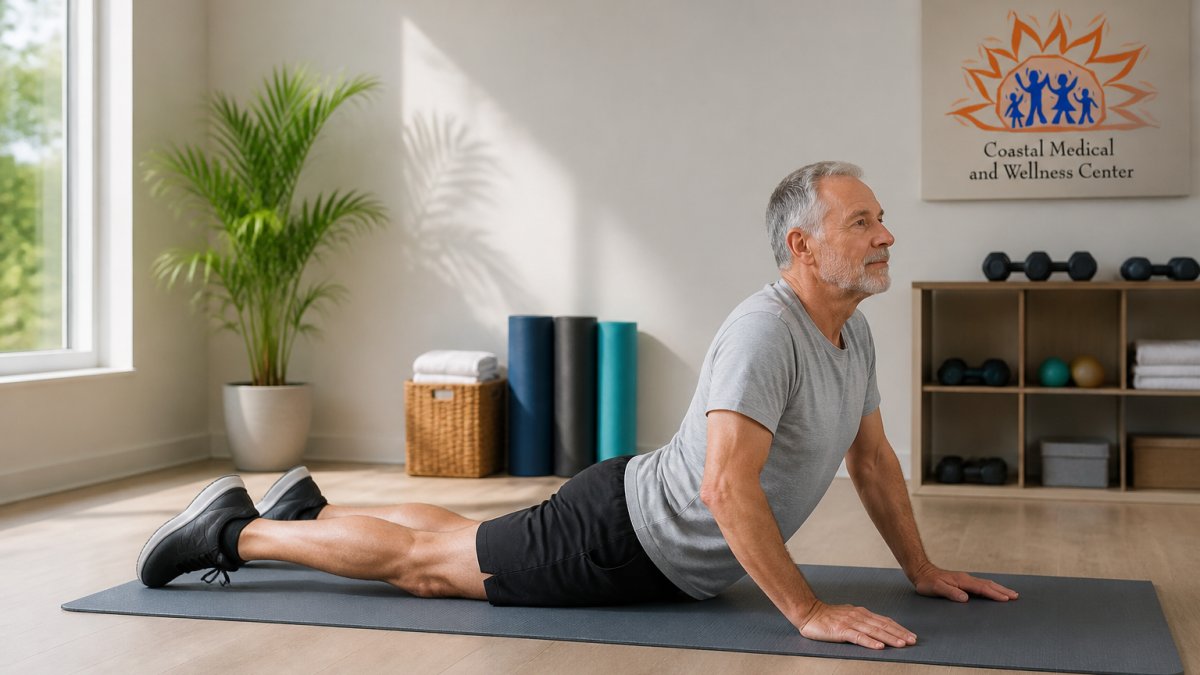
Targeted exercises strengthen the muscles supporting your spine, reducing strain on discs and preventing future injury. Start gently and progress slowly.
Gentle movements to start with
Begin these exercises only if they don't increase your pain. Stop immediately if any movement causes sharp or radiating pain.
Pelvic tilts: Lie on your back with knees bent. Gently tilt your pelvis to flatten your lower back against the floor. Hold for 3 seconds. Repeat 10 times.
Knee-to-chest stretch: Lie on your back. Pull one knee toward your chest gently. Hold for 20 seconds. Switch legs. Do 3 repetitions per side.
Cat-cow stretch: On hands and knees, alternate between arching and rounding your spine. Move slowly and controlled. Do 10 repetitions.
Progressive strengthening exercises
Once gentle movements feel comfortable, add these strengthening exercises. Build strength gradually over 2 to 3 weeks.
Glute bridges: Lie on your back with knees bent. Push through your heels to lift your hips. Hold for 3 seconds. Do 15 repetitions.
Bird dogs: On hands and knees, extend one arm and opposite leg. Hold for 3 seconds. Switch sides. Do 10 repetitions per side.
Planks: Hold a forearm plank position for 10 to 20 seconds. Rest and repeat 3 times.
Supine marching: Lie on your back with knees bent. Lift one knee toward your chest while keeping the other foot on the ground. Alternate slowly. Do 20 repetitions.
Progress to these exercises only when earlier ones feel easy. Consistency matters more than intensity. Perform these exercises 4 to 5 days per week for best results.
Home Remedies for Back Pain and Disc Symptoms
Home remedies provide quick relief while your body heals, and work best combined with exercises and professional care.
Ice, heat, and positioning strategies
Ice reduces inflammation in the first 48 hours after injury. Apply it for 15 minutes every 2 to 3 hours, with a thin cloth between ice and skin to prevent frostbite.
After 48 hours, heat becomes more helpful than ice. Apply a heating pad for 15 to 20 minutes several times daily; warm baths also relax muscles.
Positioning matters for disc pain.
Key TakeawayThe right position reduces disc pressure. Wrong positioning aggravates pain and slows healing. Adjust your sleeping and sitting positions throughout the day.
Lifestyle adjustments and daily habits
Your daily habits affect disc healing. Make these changes to support recovery:
Avoid heavy lifting and bending at the waist
Sit with proper posture and support for your lower back
Take frequent breaks if you sit for work
Wear supportive shoes with good cushioning
These small adjustments compound over time, accelerating recovery and preventing future disc problems.
Professional Non-Surgical Treatments for Safe Disc Pain Relief
When home care and exercises aren't enough, professional treatments offer additional relief. These options address disc pain without surgery, but they are not interchangeable: each has a different evidence base, risk profile, and set of suitable patients. The table below separates established conservative care from treatments with limited or evolving evidence so you can compare benefits, risks, and uncertainty. (Source: the importance of core strength for spinal stability)
Treatment | Evidence quality | Typical benefit | Key risks and contraindications |
|---|---|---|---|
Physical therapy and targeted rehabilitation | Established; consistently recommended in clinical guidelines | Reduced pain and improved function for many people with disc-related symptoms | Soreness after new exercises; avoid if a movement sharply increases radiating pain |
Chiropractic care and spinal adjustments | Moderate; helpful for some, not for all | Temporary relief and improved mobility in selected patients | Avoid with progressive neurologic deficit, suspected fracture, infection, or severe osteoporosis; rare but serious risk with high-velocity manipulation near the neck |
Limited and evolving; studies are small and mixed | Some patients report relief during or shortly after a course of sessions | Not appropriate with severe osteoporosis, prior spinal surgery, spinal fracture, or unstable spine; requires professional screening | |
Regenerative medicine (PRP, stem-cell approaches) | Limited and evolving; largely early-stage | Promising for mild to moderate degeneration in some reports | Injection risks (infection, bleeding, nerve irritation); cost is usually out of pocket; results vary widely |
Physical therapy and targeted rehabilitation
Physical therapists design exercises specific to your condition, teaching proper movement patterns and building strength in weak areas. Most people see improvement within 4 to 6 weeks. Therapy addresses the root cause by evaluating posture, movement patterns, and muscle strength, then targeting the imbalances behind disc injury. Sessions last 30 to 60 minutes, once or twice weekly.
Chiropractic care and spinal adjustments
Chiropractic adjustments reduce nerve compression and improve spinal alignment by restoring normal movement to stuck or misaligned vertebrae, and work best combined with exercises and lifestyle changes. A chiropractor evaluates your spine using physical examination and imaging, then tailors a plan to your disc condition. At Coastal Medical and Wellness Center, our chiropractors use evidence-based techniques; Dr.
Watch Out Spinal manipulation is not appropriate for everyone. Avoid it if you have progressive weakness, saddle numbness, bowel or bladder changes, suspected fracture, infection, or severe osteoporosis. Tell your provider about any blood thinners, recent trauma, or prior spine surgery before any adjustment.
Spinal decompression therapy
Spinal decompression therapy gently stretches the spine using controlled traction, creating space between vertebrae and taking pressure off compressed nerves. Sessions last 20 to 30 minutes, and most plans involve 15 to 30 sessions over several weeks; many people feel relief during or shortly after treatment begins. Cox Spinal Decompression uses a motorized table to stretch the spine while allowing targeted movement, helping restore disc height and reduce nerve compression.
Watch OutSpinal decompression isn't appropriate for everyone. Certain disc conditions, severe osteoporosis, spinal fracture, or previous spine surgery may make it unsuitable. A qualified professional must evaluate your specific situation before starting treatment.
Regenerative medicine approaches
Regenerative medicine stimulates your body's natural healing response through platelet-rich plasma (PRP) and stem-cell approaches. PRP concentrates platelets from a small blood sample and injects them near the damaged disc, where they release growth factors that encourage tissue repair. Stem-cell therapy injects cells that can promote healing and reduce inflammation near a damaged disc.
Key Takeaway Match the treatment to the evidence and to your specific diagnosis. Start with established conservative care, ask your provider to explain the evidence behind any advanced option, and confirm that none of the contraindications apply to you before proceeding.
Who should guide your treatment
A qualified clinician, often a physical therapist, chiropractor, or physiatrist, should confirm your diagnosis before any professional treatment. Ask for imaging results, a clear explanation of what is wrong, and how progress will be measured. If a provider recommends an advanced therapy without screening for red flags and contraindications, seek a second opinion.
How Long Does a Herniated Disc Take to Heal
Most herniated discs improve within 6 to 12 weeks with conservative care; some feel better within 2 to 4 weeks, while others take several months for full recovery.
Several factors affect healing time:
Severity of herniation: Mild bulges heal faster than severe extrusions
Nerve compression: More compression typically means longer recovery
Age and health: Younger, healthier people often heal faster
Treatment compliance: Consistent exercise and lifestyle changes speed recovery
Recovery isn't always linear, pain may improve quickly while function takes longer to return. Patience and consistency matter more than speed.
Key TakeawayMost disc problems improve without surgery when treated properly. Rushing recovery with heavy activity or surgery often leads to longer-term problems.
Creating Your Personalized Safe Disc Treatment Plan
A one-size-fits-all approach doesn't work for disc pain. Your plan must match your diagnosis, symptom pattern, and goals. The sequence below turns a list of therapies into a staged plan you can follow and measure.
Match treatment to your specific diagnosis
Different disc conditions require different approaches: a bulging disc without nerve compression differs from a herniated disc pressing on a nerve, and degenerative disc disease follows a different course than an acute herniation. Ask your provider which category you fall into and how your pain location and nerve symptoms fit that diagnosis.
A staged self-care sequence
Stage 1 (first 1-2 weeks): calm symptoms. Modify activity rather than stopping completely. Avoid heavy lifting, bending at the waist, and prolonged sitting.
Stage 2 (weeks 2-6): restore movement and begin strengthening. Add the gentle movements and progressive strengthening exercises described above, progressing only when earlier exercises feel easy. Perform them 4 to 5 days per week.
Track progress with measurable markers
Monitor progress with specific measurements rather than a general sense of feeling better. Each week, record:
Pain: rate it 0-10 at rest and with activity
Mobility: how far you can walk or sit comfortably
Sleep: hours and quality
Daily function: which activities you can do without help
Review progress every 2 to 4 weeks. If you're not improving, your provider can adjust exercises, try different therapies, or refer you to a specialist.
Know when to escalate care
Seek urgent medical assessment for progressive weakness, saddle numbness, or bowel and bladder changes. For less severe symptoms, schedule a follow-up if pain is not improving after 6 to 12 weeks of consistent conservative care, or sooner if symptoms worsen.
At Coastal Medical and Wellness Center, we take a personalized approach to safe and natural disc treatment.
Frequently Asked Questions
Can a herniated disc heal without surgery?
Yes, many herniated discs respond well to conservative care. Most people improve with non-surgical natural disc treatment including physical therapy, targeted exercises, and professional therapies like spinal decompression. Recovery depends on the severity of the herniation, your commitment to treatment, and the specific approach used. A qualified healthcare provider can assess whether your disc condition is a candidate for non-surgical management.
What are the best home remedies for back pain from a disc issue?
Effective home remedies for back pain include alternating ice and heat therapy, proper posture while sitting and sleeping, gentle stretching, and activity modification. Rest combined with light movement (such as walking) often helps more than complete immobility. Over-the-counter pain relief medications may provide temporary relief. The key is consistency: applying these strategies regularly supports your body's natural healing process and reduces inflammation.
How long does it take for a herniated disc to heal with natural treatment?
Recovery timelines vary widely depending on the disc's severity, your age, overall health, and the treatments you use. Some people experience significant improvement in 4-6 weeks with consistent care, while others may need 3-6 months or longer. Your healthcare provider can give you a more specific timeline after evaluating your individual condition.
What makes natural disc treatment different from just taking pain medication?
Natural disc treatment addresses the root cause of pain, inflammation, nerve compression, and disc degeneration, rather than masking symptoms. While medication manages pain temporarily, approaches like physical therapy, spinal adjustments, and decompression therapy work to improve mobility, reduce pressure on nerves, and support tissue repair. This functional approach aims for lasting relief and recovery, not just symptom suppression.
