9 Sciatica Pain Sensations You Shouldn't Ignore
Quick Summary
Sciatica pain usually starts as a dull ache in the low back, then turns into a sharp, shooting pain that runs down the buttock and into one leg. People often describe it as sharp, burning, electric, or cramping rather than like a sore muscle. It usually affects one side of the body.
- Sciatica pain is nerve-related and follows a path down one leg, unlike a localized muscle strain.
- Sitting for long periods, coughing, sneezing, or bending forward can make sciatica pain worse.
- Pain running down both legs or bladder or bowel changes need immediate medical care.
- Gentle walking often works better than total bed rest for managing sciatica.
- Pain lasting more than a few weeks, or getting worse, warrants an evaluation.
Table of Contents
- What Sciatica Pain Feels Like Day to Day
- Where Sciatica Pain Starts and Where It Travels
- Describing Sciatica Sensations: Sharp, Burning, Electric, or Cramping
- Tingling, Numbness, and Weakness in the Leg or Foot
- Sciatica Symptoms Versus Muscle Strain
- How to Relieve Sciatica Pain at Home
- Choosing a Sleeping Position That Eases Sciatica
- When to Book an Evaluation at Coastal Medical and Wellness Center
- Frequently Asked Questions
What Sciatica Pain Feels Like Day to Day
Last Updated: October 30, 2026
Sciatica pain is not just a backache that stays put. It travels. For many people, it starts as a dull ache in the low back, then turns into a sharp, shooting pain that runs down the buttock and into one leg. Many people describe sciatica in similar terms: "It feels like my leg is on fire, but my back barely hurts." You can read what research shows about chiropractic options for sciatica to see how professional care may help.
Sciatica is pain caused by irritation or pressure on the sciatic nerve, the largest nerve in the body. Its roots come from the lower spine, and it runs through the buttock and down the back of each leg.
Day to day, sciatica can change with the simplest actions:
- Sitting for long periods often makes it worse
- Standing up after sitting can bring a sudden jolt down the leg
- Coughing or sneezing may trigger a quick, sharp pain
- Bending forward or lifting something heavy can spike the pain
- Walking may ease it for some people and aggravate it for others
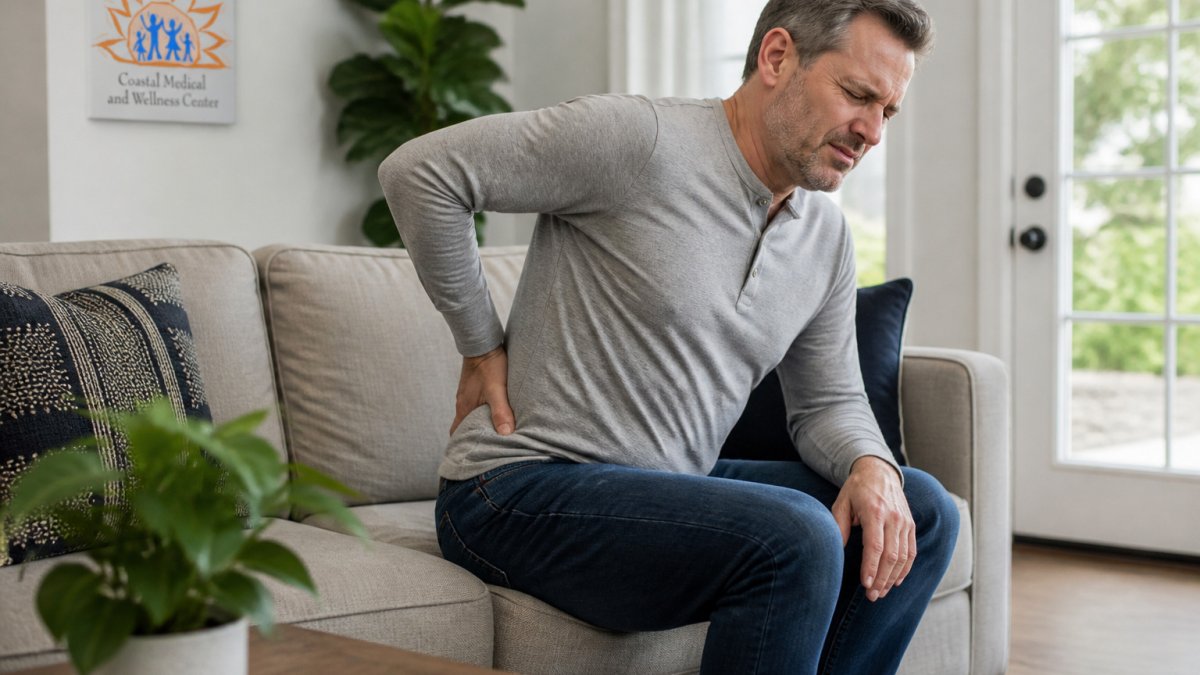
Many people also notice that sciatica comes and goes. A good morning can turn into a painful afternoon after a long drive. Pain intensity can range from a mild ache to a pain that makes it hard to get out of bed.
Where Sciatica Pain Starts and Where It Travels
Sciatica usually begins in the lower back, where nerve roots from the spine join to form the sciatic nerve. From there, the pain can follow a path down the body.
Common patterns include:
- Lower back to buttock: A deep ache or pressure in the rear
- Buttock to thigh: A pain that spreads down the back of the thigh
- Thigh to calf or foot: Shooting or burning pain that reaches the lower leg or foot
Pain usually affects one side of the body, not both. If pain runs down both legs, or comes with bladder or bowel changes, seek medical care right away.
Describing Sciatica Sensations: Sharp, Burning, Electric, or Cramping
People reach for very different words to describe sciatica, and the words matter. The sciatic nerve is a mixed nerve: it carries sensory fibers that report touch, temperature, and pain, and motor fibers that drive the muscles of the leg and foot. When a nerve root is irritated or compressed, the pain can feel sharp, burning, electric, or cramping rather than like a typical sore muscle.
Common descriptions include:
- Sharp or stabbing: A quick, knife-like pain that often spikes with a specific movement, such as standing up from a chair or rolling over in bed.
- Burning: A hot, stinging, or sunburn-like feeling along the back of the thigh, calf, or sole of the foot.
- Electric or shock-like: A sudden jolt that shoots down the leg, sometimes described as a lightning bolt. These jolts often come without warning and can be triggered by coughing, sneezing, or a sudden twist.
- Cramping or tight: A deep, gripping tightness in the calf or hamstring that will not release with stretching.
- Aching or pressure: A dull, deep ache in the buttock or thigh that is present most of the day.
The table below is a general guide, not a self-diagnosis tool. Only a clinician can determine which root, if any, is involved after an exam and, when needed, imaging.
| Sensation pattern | Where it is often felt | What it may suggest |
|---|---|---|
| Sharp pain down the back of the thigh and calf | Buttock, back of thigh, outer calf | Irritation of a lower lumbar root, often at L4-L5 or L5-S1 |
| Burning or tingling on the top of the foot and big toe | Shin, top of foot, big toe | L5 root involvement |
| Numbness or burning on the outer edge of the foot and sole | Calf, heel, outer foot, small toes | S1 root involvement |
| Aching in the front of the thigh with knee weakness | Front of thigh, groin area | Higher lumbar root involvement |
Keeping a simple symptom log for a week can help you organize what you notice. Note the words that best match your pain, where it starts and stops, and what you were doing when it flared.
Saddle-area numbness, new bladder or bowel problems, or rapidly worsening leg weakness are emergency warning signs. Seek immediate medical care rather than waiting for a routine appointment.
Describing your pain clearly can help when you talk with a provider. Try writing down what the pain feels like, where it starts, how far down the leg it reaches, and what makes it better or worse.
Tingling, Numbness, and Weakness in the Leg or Foot
Sciatica often brings more than pain. Many people also feel:
- Tingling or pins and needles
- Numbness in the leg, foot, or toes
- Weakness when lifting the foot or pushing off the ground
Numbness or weakness that gets worse over time deserves prompt attention. A foot that drags or a leg that gives way should be checked by a qualified provider as soon as possible. (Source: Mayo Clinic's detailed explanation of sciatica causes and symptoms)
Sciatica Symptoms Versus Muscle Strain
Sciatica and a muscle strain can feel alike at first, but they behave differently. A muscle strain is an injury to the muscle fibers themselves, usually from lifting, twisting, or a sudden overload. Sciatica is a nerve problem, so its symptoms follow a nerve pattern rather than a muscle pattern. That difference shows up in where the pain goes, what it feels like, and what makes it worse.
Here is a practical comparison of sciatica against the conditions most often confused with it:
| Feature | Sciatica | Muscle strain | Hip problem | Peripheral nerve issue |
|---|---|---|---|---|
| Typical location | Low back or buttock, radiating down one leg | Localized to the back, buttock, or hamstring | Groin, outer hip, or front of thigh | Often in the foot, lower leg, or one specific area |
| Pain quality | Sharp, burning, electric, or cramping | Achy, sore, tight | Achy or sharp with movement | Burning, tingling, or numb |
| Does it travel? | Yes, follows a nerve path down the leg | No, stays local | May refer to the thigh or knee | Yes, but usually in a smaller territory |
| Numbness or tingling | Common | Rare | Rare | Common |
| Worse with | Sitting, coughing, sneezing, bending | Specific movements, pressure on the muscle | Walking, climbing stairs, hip rotation | Pressure, prolonged positions |
| Better with | Changing position, gentle walking | Rest, gentle stretching | Rest, avoiding hip triggers | Position changes, activity modification |
A few practical distinctions are worth remembering:
- Muscle strain pain usually eases over days to a couple of weeks with rest and gentle movement. It does not typically cause numbness, tingling, or weakness in the foot.
- Hip problems such as osteoarthritis or bursitis tend to hurt in the groin or outer hip and are worse with weight-bearing activities like walking or climbing stairs. The pain may refer to the thigh but rarely follows a nerve path to the foot.
- Peripheral nerve issues, such as a pinched nerve at the knee or a nerve problem in the foot, can cause burning and tingling, but the symptoms stay in a smaller territory and do not usually start in the low back.
- Sciatica often comes and goes for weeks, follows a specific path down one leg, and may bring tingling, numbness, or a shock-like feeling. Coughing, sneezing, or sitting for long periods often makes it worse.
If your pain travels down the leg in a line, comes with tingling or numbness, and changes with sitting or coughing, it is more likely nerve-related than a simple muscle strain. A physical exam is the reliable way to tell the difference.
A provider can help sort out the difference with a physical exam. If the pattern is unclear or symptoms are worsening, a provider can advise whether further evaluation is appropriate.
How to Relieve Sciatica Pain at Home
Many people find relief with simple steps at home. Try these:
- Stay active. Gentle walking often works better than total bed rest.
- Use heat or cold. Some people prefer a warm pack; others find a cold pack more soothing.
- Stretch gently. Easy hamstring and hip stretches may help. Stop if the pain sharpens.
- Adjust your sitting. Take breaks every 30 to 60 minutes and avoid slouching.
- Avoid heavy lifting until the pain settles.
Home care is not a substitute for a diagnosis. If pain lasts more than a few weeks, or gets worse, book an evaluation.
Choosing a Sleeping Position That Eases Sciatica
Sleep position can make a real difference. Many people find these options helpful:
- Side sleeping with a pillow between the knees: Keeps the hips and spine aligned
- Back sleeping with a pillow under the knees: Reduces pressure on the lower back
- Avoid stomach sleeping: It can strain the lower back and twist the spine
If one position makes the pain worse, switch. Comfort is a good guide.
When to Book an Evaluation at Coastal Medical and Wellness Center
If sciatica pain keeps coming back, or it disrupts sleep and daily tasks, an evaluation can help find the cause. You can call to schedule a sciatica relief consultation in Stuart with the team at Coastal Medical and Wellness Center. At Coastal Medical and Wellness Center, we take a whole-person approach. We take a whole-person approach to your symptoms.
For a full health review, you can explore our primary care visits in Stuart. For disc-related pain, you can also learn about non-surgical spinal decompression therapy in Stuart, FL.
Seek urgent care if you notice sudden leg weakness, loss of bladder or bowel control, or numbness in the groin area. Those signs need immediate medical attention.
To learn more about the causes and treatment of disc-related leg pain, read our guide to disc related leg pain. For a broader look at your options, our primary care visits in Stuart are designed to make getting seen simple. Call 772-286-5277 to schedule your visit at 3257 SE Salerno Rd #3, Stuart, FL 34997.
Frequently Asked Questions
How do I get my sciatica to go away?
Many people find that sciatica symptoms change over time, and general self-care steps such as staying active within comfortable limits and gentle stretching may help. Symptoms that worsen, persist beyond a few weeks, or come with leg weakness, loss of bladder or bowel control, or numbness in the groin area need prompt medical attention. A qualified provider can evaluate the cause of your symptoms and discuss options suited to your situation.
Can sciatica cause numbness or tingling?
Yes. Sciatica involves irritation or compression of a nerve root in the lower spine, which often produces tingling, pins-and-needles sensations, or numbness that travels down the leg into the foot. These symptoms can come and go depending on posture and activity. Numbness combined with leg weakness or changes in bladder or bowel function is a warning sign that requires immediate medical evaluation.
What is the best sleeping position for sciatica?
Many people with sciatica find relief lying on the side that is not affected, with a pillow between the knees to keep the hips aligned. Lying on the back with a pillow under the knees can also reduce pressure on the lower back. If pain wakes you repeatedly, a provider can recommend changes to your sleep setup and daily routine.
How can I tell if leg pain is sciatica or a muscle strain?
Sciatica usually starts in the lower back or buttock and travels down one leg, often with sharp, shooting, or electric sensations, tingling, or numbness. A muscle strain typically causes localized soreness that worsens with specific movements and improves with rest, without the radiating nerve-type symptoms. Because the two can overlap, a professional physical examination is the most reliable way to tell them apart.

