
Can 5 Neck Exercises Relieve Headaches and Neck Pain?
Last Updated: November 11, 2026
Quick Summary
Five neck exercises can ease neck pain and headaches: chin tucks, upper trapezius and levator stretches, neck rotations, and scapular squeezes. Do them gently and regularly, and stop if pain is sharp. Seek care promptly for sudden severe headaches or neurological symptoms.
- Chin tucks: hold for 5 seconds and repeat 10 times, two to three times daily.
- Stretches should be held for 20 to 30 seconds on each side, once or twice daily.
- Neck rotations and scapular squeezes are done once daily, 5 to 10 turns each way.
- Raise your screen to eye level and take movement breaks every 30 to 45 minutes.
- Seek care right away for a sudden severe headache, weakness, numbness, or vision changes.
Table of Contents
- How Neck Pain and Headaches Are Connected
- Chin Tuck Exercise for Neck Pain
- Neck Stretches for Headaches: Upper Trapezius and Levator Stretch
- Cervicogenic Headache Exercises: Neck Rotation and Scapular Squeeze
- How Often to Do These Neck Exercises
- Common Mistakes to Avoid With Neck Exercises
- When to Seek Care for Neck Pain and Headache
- Booking Your Evaluation at Coastal Medical and Wellness Center
- Frequently Asked Questions
How Neck Pain and Headaches Are Connected
Neck pain and headaches often show up together, and for many people the neck is the source. For more depth, read a practical guide on how neck pain can cause headaches. Cervicogenic headaches begin in the neck and are felt as pain at the back of the head, behind one eye, or around the temples. Muscle tension, poor posture and stiff joints in the upper neck are common triggers.
Posture, sleep, stress and how long you sit at a desk all affect how the neck behaves. Simple, gentle movement can help loosen tight muscles and improve how the joints move.
Many people feel a headache rise after hours of looking down at a phone or screen. Here, the head is held forward, which places extra load on the muscles at the back of the neck. Over time, those muscles can tighten and send pain signals up into the head.
A few exercises can ease that tension when done regularly. If you need faster relief right now, practical steps to relieve a headache from neck tension cover strategies beyond these movements. Below are five movements that many people find helpful, along with the mistakes to avoid and the signs that mean you should get professional care.
Chin Tuck Exercise for Neck Pain
The chin tuck is one of the most common exercises for neck pain. It helps retrain the muscles that hold the head over the shoulders.
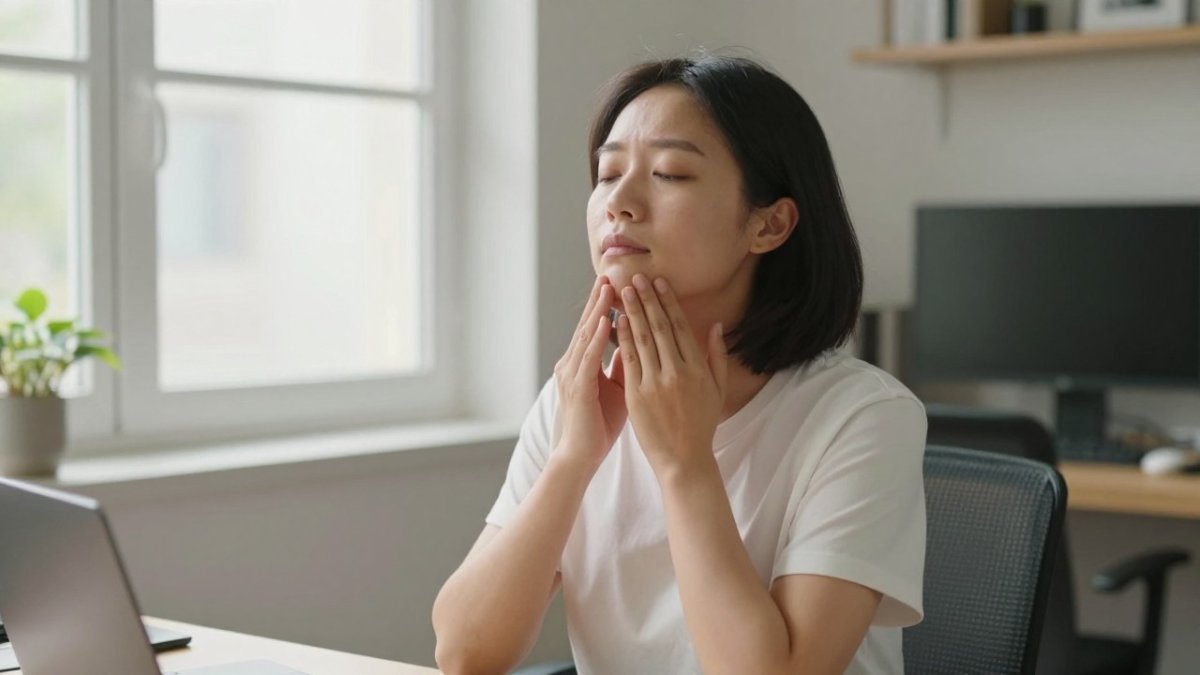
Sit or stand tall with your shoulders relaxed. Gently draw your chin straight back, as if making a small double chin, without tilting your head up or down. Hold for 5 seconds, then release. Repeat 10 times.
- Keep your eyes level and facing forward
- Move slowly, without forcing the motion
- Stop if you feel sharp pain or dizziness
Neck Stretches for Headaches: Upper Trapezius and Levator Stretch
Tight muscles along the top of the shoulders and the side of the neck often contribute to tension headaches. Two gentle stretches can target them.
For the upper trapezius, tilt your head toward one shoulder and let the opposite arm drop down. Hold for 20 to 30 seconds on each side. For the levator scapulae, turn your head about 45 degrees toward one side, then tilt your chin down toward your armpit. Hold for the same time, then switch sides.
Breathe slowly and let the muscles relax into the stretch. The pull should feel mild, never painful.
Cervicogenic Headache Exercises: Neck Rotation and Scapular Squeeze
Movement and strength matter for the neck and upper back. A slow neck rotation and a shoulder blade squeeze can help support better posture.
For neck rotation, sit upright and turn your head slowly to one side, then return to center and repeat on the other side. Do 5 to 10 turns each way. For the scapular squeeze, pull your shoulder blades gently back and down, hold for 5 seconds, then relax. Repeat 10 times.
The squeeze works the muscles that support your upper back, which takes some load off the neck.
How Often to Do These Neck Exercises
Consistency matters more than intensity. Many people do best with short sessions several times a day rather than one long session.
- Chin tucks: 2 to 3 times daily
- Stretches: once or twice daily, holding each for 20 to 30 seconds
- Rotations and scapular squeezes: once daily
Notice how your neck feels over the first few weeks. Gradual improvement is the goal, and it is normal for progress to take time.
Common Mistakes to Avoid With Neck Exercises
A common mistake is pushing too hard. Neck exercises should feel gentle. Pain that is sharp, spreads down the arm, or lasts for hours afterward is a sign to stop.
Another mistake is jerking the head or rolling it in circles. Those motions can strain the neck. Keep every movement slow and controlled.
Many people also skip the posture fix. Exercises help, but a screen set too low or a phone held at chest height can undo the progress. Raise your screen to eye level and take movement breaks every 30 to 45 minutes.
The points below summarise the most common mistakes and how to correct them.
| Mistake | Why it matters | Fix |
|---|---|---|
| Pushing too hard | Pain that is sharp or lasts for hours is a warning sign | Keep movements gentle; stop if pain is sharp |
| Jerking or rolling the head | Those motions can strain the neck | Keep every movement slow and controlled |
| Screen set too low | Holding the head forward loads the neck muscles | Raise the screen to eye level |
| Phone held at chest height | Can undo progress from exercises | Hold the phone at eye level |
| Sitting without breaks | Prolonged posture keeps neck muscles tense | Take movement breaks every 30 to 45 minutes |
When to Seek Care for Neck Pain and Headache
Exercises are useful for mild, everyday tension, but some symptoms need prompt medical attention. Seek care right away if you have a sudden, severe headache, weakness or numbness in the arms or face, trouble speaking, vision changes, fever with a stiff neck, or a headache after a fall or injury.
If your neck pain or headaches persist for more than a few weeks, keep returning, or interfere with daily life, a professional evaluation can identify the cause. A qualified clinician can recommend the right care for your situation. A clinician can discuss non-surgical options with you if neck tension persists. You can also read whether a chiropractor can help with neck pain and headaches to understand what that kind of care involves.
Booking Your Evaluation at Coastal Medical and Wellness Center
If neck pain and headaches are limiting your day, a professional evaluation is a good next step. A good evaluation takes time to understand your symptoms, your daily habits and your goals before recommending a plan. book a neck pain evaluation and our team can help you find the source of your discomfort. You can also learn about our headache care options to see how we approach recurring headaches.
Stuck with neck pain or headaches that keep coming back? Coastal Medical and Wellness Center offers personalized care to help you move better and feel better. Call 772-286-5277 or visit us in Stuart to take the first step.
Frequently Asked Questions
Can neck tension cause headaches?
Yes. Tight muscles at the base of the skull and upper shoulders can refer pain up into the head, a pattern often called a cervicogenic headache. The pain usually starts at the back of the head or neck and may spread toward the temple or eye. Gentle movement, posture changes and stretching often help ease this kind of tension. If headaches are frequent, severe or accompanied by other symptoms, a licensed clinician should evaluate them to rule out other causes.
Should you stretch your neck if you have a headache?
Gentle stretching is often helpful when a headache comes from tight neck muscles, but it should be slow and comfortable. Avoid forcing the head into end range or bouncing into a stretch. If stretching increases pain, causes dizziness, numbness or tingling, stop and do not repeat the movement. Sudden severe headaches, headaches after an injury, or headaches with weakness, confusion or vision changes need urgent medical attention rather than stretching.
How often should you do neck exercises for pain?
Many people do short sessions once or twice a day, several days a week, and build up gradually as tolerated. Each movement is usually held for a few seconds and repeated about five to ten times. Mild muscle fatigue is normal, but sharp pain or pain that lingers for hours means the dose is too high. Track how symptoms respond over one to two weeks and adjust with guidance from a qualified professional.
When should you see a doctor for neck pain and headaches?
See a licensed clinician if neck pain or headaches persist beyond a few weeks, keep returning, or worsen despite home care. Seek prompt care for headache with fever, stiff neck, confusion, weakness, numbness, vision changes, trouble speaking, or pain following a fall or car accident. A professional evaluation can identify the likely source of symptoms and recommend an appropriate plan, which may include chiropractic, primary care or other services.

