
How Do I Relieve a Headache From Neck Tension?
Last Updated: November 5, 2026
Quick Summary
A neck tension headache is a dull, pressing pain that starts at the back of the neck and spreads across the head, usually from tight neck and shoulder muscles. Simple home care often clears it up, starting with posture reset, heat, gentle stretches, and rest.
- Reset your posture first by sitting tall, gently tucking your chin, and relaxing your shoulders down.
- Apply heat to the back of your neck for 10 to 15 minutes to loosen tight muscles.
- Hold each neck and shoulder stretch for 15 to 30 seconds, stopping any that cause sharp pain.
- Rest in a quiet room for 15 to 20 minutes with your eyes closed and away from screens.
- See a provider if pain lasts longer than a week or keeps returning, and seek urgent care for sudden severe headache or vision changes.
Table of Contents
A neck tension headache is a dull, pressing pain that starts in the back of the neck and spreads across the head. Many people feel it as a tight band around the temples or forehead. Most of the time it comes from tight muscles in the neck and shoulders, and it often clears up with simple home care. This guide walks you through what you can do at home today. (Source: National Institute of Neurological Disorders and Stroke (NINDS) on tension-type headaches)
Not every headache that starts in the neck is the same. A tension-type headache is mainly a muscle problem. A cervicogenic headache starts from the joints and nerves of the upper neck, and it often causes pain on one side of the head. Knowing which one you have helps you pick the right relief steps.
- Tension-type headache: Pain on both sides, a band-like squeeze, muscle tenderness at the neck and scalp
- Cervicogenic headache: Pain usually on one side, pain that starts at the back of the neck and moves forward, limited neck motion
- Both can overlap, so treat the neck first and watch how your pain responds
If your headache comes with vision changes, weakness, confusion, or the worst pain you have ever felt, skip this guide and get medical care right away.
Common Causes, Triggers, and Where the Pain Shows Up
Neck tension headaches often build slowly over a day or a week. Small habits add up, and the neck muscles get tired and stiff.
Common triggers include:
- Long hours looking down at a phone or laptop
- Sitting with the head pushed forward
- Stress that makes you clench your jaw or raise your shoulders
- Sleeping on a pillow that is too high or too flat
- Sitting still for hours without a break
Pain often shows up in specific spots. Watch for pressure at the back of the neck, the base of the skull, the temples, or behind the eyes. Shoulder tightness often comes along with it. Tracking when and where the pain starts can point you toward the cause. If your symptoms match a treatable pattern, learn about headache care to see what options are available.
Step-by-Step Timed Relief Routine for a Neck Tension Headache
Follow this routine when a neck tension headache starts. Give each step a few minutes, and notice how you feel after each one.
- Reset your posture (2 minutes). Sit tall, pull your chin back gently, and relax your shoulders down.
- Apply heat (10 to 15 minutes). Use a warm pack or a warm shower on the back of your neck.
- Do gentle stretches (5 minutes). Move through the stretches below, slowly and without pain.
- Try self-massage (5 minutes). Use your fingertips, not your nails, on the muscles at the base of the skull.
- Rest in a quiet room (15 to 20 minutes). Lie down with your eyes closed and avoid screens.
Neck and Shoulder Stretches (Hold 15-30 Seconds)
- Chin tuck: Sit tall and gently draw your chin straight back. Hold 15 to 30 seconds.
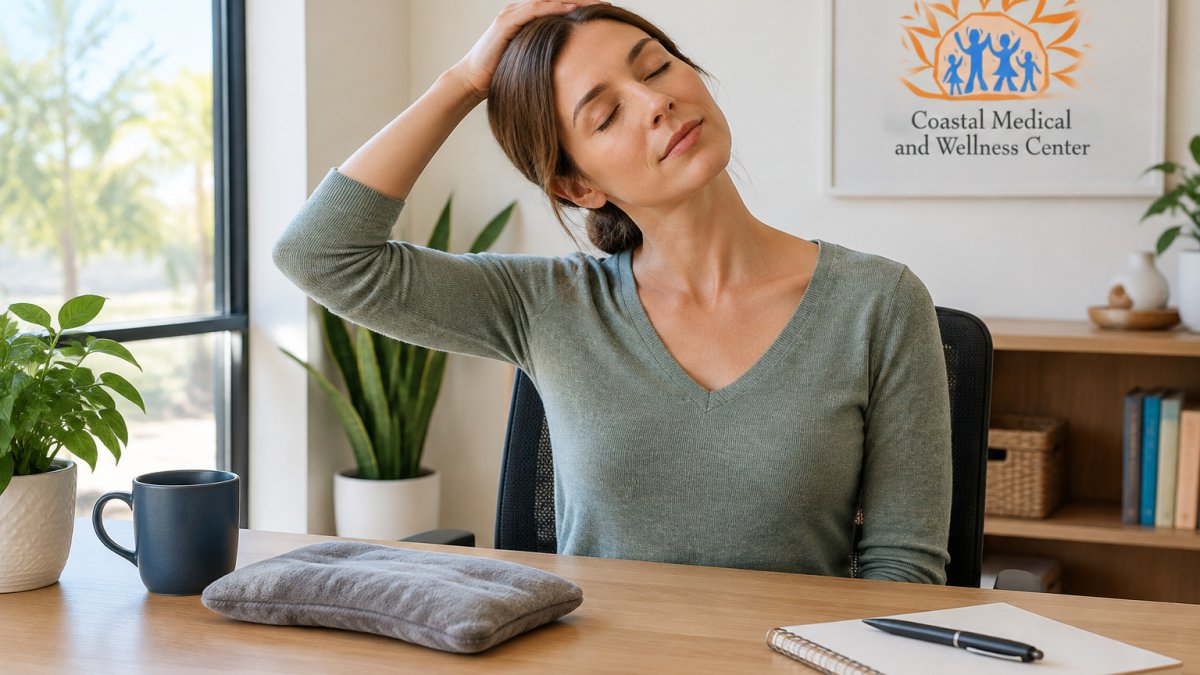
- Side neck stretch: Tilt one ear toward your shoulder. Hold 15 to 30 seconds per side.
- Shoulder roll: Roll your shoulders backward ten times, then forward ten times.
- Upper trap stretch: Reach one hand under your chair and tilt your head away. Hold 15 to 30 seconds per side.
Stop any stretch that sends sharp or shooting pain into your arm or head.
Heat, Cold, and Self-Massage
Heat often works best for tight muscles. A warm pack or warm shower for 10 to 15 minutes can loosen the neck. Cold can help if the pain feels sharp or swollen, so try a cold pack wrapped in a towel for about 10 minutes. For self-massage, press slowly on the muscles at the base of the skull and along the top of the shoulders. A firm, steady pressure feels better than rubbing hard. Compare which neck pain treatments actually give relief for a deeper look at what works.
Cervicogenic Headache Relief: Mobility, Posture, and Pain Relief Options
If your headache is one-sided and linked to neck movement, gentle mobility work often helps most. Slow, controlled movements keep the neck joints moving without strain. Improving your posture during work and screen time also reduces the load on the upper neck. Read the label of any over-the-counter pain reliever, follow the dose, and check with a pharmacist or doctor if you take other medicines (the FDA). Many people also find that low-impact exercise, like walking, helps prevent recurrence.
Some people need professional care. Find out whether a chiropractor can help neck pain and headaches before deciding on hands-on treatment. A licensed provider can evaluate the neck, check nerve function, and suggest hands-on or medical options that fit your situation. Coastal Medical and Wellness Center offers chiropractic care and functional medicine services.
Best Sleeping Position for Cervicogenic Headache and Neck Support
Sleep position can make a big difference. Sleeping on your back with a medium, supportive pillow keeps the neck in a neutral line. Side sleeping works well too, as long as the pillow fills the gap between your head and shoulder. Avoid sleeping on your stomach, since it twists the neck for hours. Replace a pillow that is lumpy, too high, or too flat.
What Helps Neck Pain at the Base of the Skull
Pain at the base of the skull often comes from the small muscles and joints where the head meets the neck. Read how neck pain can drive headaches to see how the two connect. Gentle chin tucks, slow head nods, and self-massage at the skull base can ease this area. Heat before stretching and rest after activity also help. If the pain keeps returning, a provider can check whether a joint or nerve is involved.
Red Flags and When to Book a Visit at Coastal Medical and Wellness Center
Most neck tension headaches improve with home care over a few days. Book a visit if your pain lasts longer than a week, keeps coming back, or is not improving with the steps above. If a neck-related headache is not easing, find neck pain care in Stuart, FL and book a visit right away. Seek urgent care without delay if you notice sudden severe headache, fever with a stiff neck, numbness or weakness, slurred speech, or changes in vision.
For a neck-related headache that is not easing, Coastal Medical and Wellness Center in Stuart may be able to help. Call 772-286-5277 to ask about the New Patient Special, or visit 3257 SE Salerno Rd #3, Stuart, FL 34997 to book your appointment. For current pricing, contact the office directly.
Frequently Asked Questions
How do I get rid of a neck tension headache fast?
Start with a short break from screens, then do gentle chin tucks and slow neck rotations, holding each stretch for 15 to 30 seconds without bouncing. Apply a warm compress to the back of the neck for about 15 minutes, and sip water. Follow the label directions for any over-the-counter pain reliever. If pain persists beyond a day or two, or keeps returning, schedule an evaluation with a qualified provider to identify the cause.
Why does a tight neck cause headaches?
Tight muscles at the base of the skull and upper shoulders can refer pain up toward the temples, forehead, and back of the head. Prolonged forward head posture, stress, and poor sleep position often keep these muscles contracted. In cervicogenic headaches, the pain originates from the upper neck joints and nerves and is usually felt on one side. A clinical exam helps distinguish these patterns.
What is the best sleeping position for cervicogenic headache?
Many people find side or back sleeping with a supportive pillow that keeps the head level with the spine easiest on the neck. Avoid stomach sleeping, which twists the neck for hours. A pillow that is too high or too low can increase strain, so a medium-firm pillow that fills the gap between the head and shoulder is a common starting point. Adjustments that suit your anatomy are best guided by a provider.
When should I seek medical care for a headache with neck pain?
Seek urgent care right away for a sudden, severe headache, a headache with fever and stiff neck, weakness or numbness, slurred speech, vision changes, confusion, or a headache after a fall or injury. These can signal serious conditions. For recurring or long-lasting neck-related headaches that do not improve with home care, book a consultation to get a proper evaluation and a plan tailored to your symptoms.

