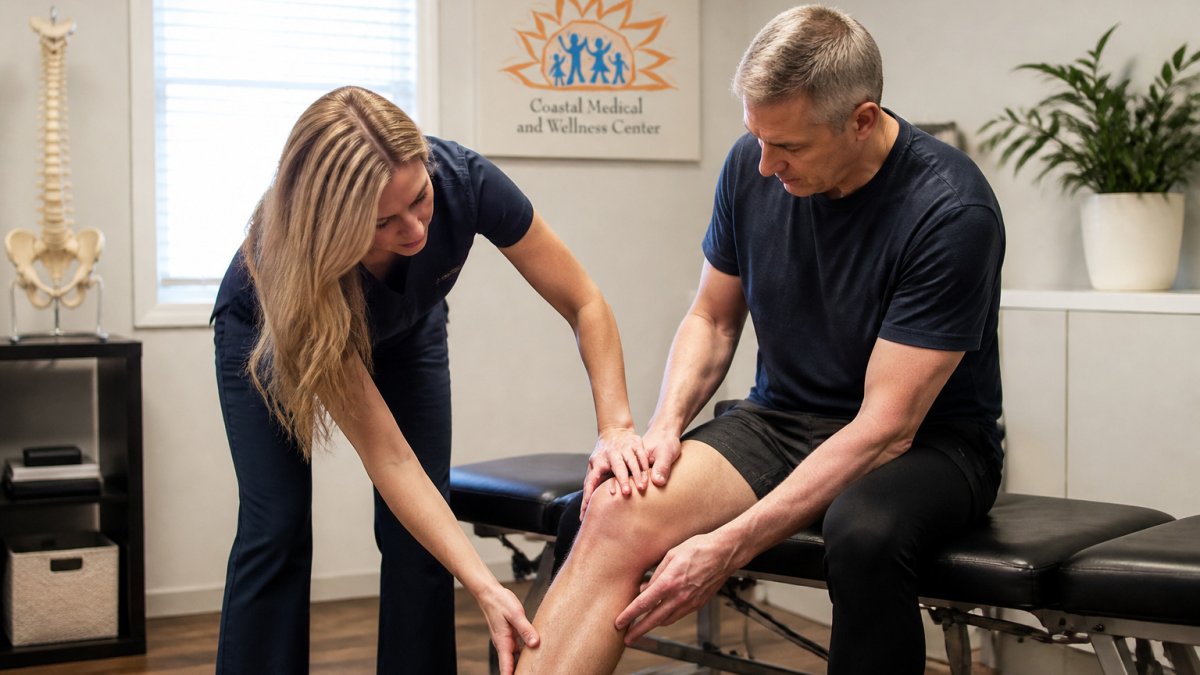
Sciatica Causes and Symptoms in One Leg: A Complete Guide
Last Updated: November 3, 2026
Quick Summary
Sciatica causes and symptoms in one leg usually come from irritation or compression of a single sciatic nerve root, most often by a herniated disc, spinal stenosis, or piriformis muscle irritation. Typical signs are shooting or burning pain from the lower back or buttock down one leg, with possible numbness, tingling, or weakness in the foot.
- Sciatica usually affects only one leg because each nerve root exits the spine on its own side.
- A herniated disc, spinal stenosis, degenerative disc disease, and piriformis irritation are the main causes discussed.
- Pain that starts in the back or buttock and shoots below the knee is the classic sciatic pattern.
- Loss of bladder or bowel control, groin numbness, or pain in both legs requires emergency care.
- See a clinician if one-leg pain lasts more than a few weeks or keeps returning.
Table of Contents
- What Sciatica Is and Why It Usually Affects Only One Leg
- Common Sciatica Symptoms in One Leg
- What Causes Sciatica: Herniated Discs, Stenosis, and Piriformis Irritation
- Differential Diagnosis: Conditions That Mimic Sciatica in One Leg
- Immediate Relief for Sciatica Pain at Home
- Sciatica Stretches and Movements to Try (and Avoid)
- Sciatica Treatment Options Your Doctor May Recommend
- When to See a Doctor Right Away for Leg Pain
- Frequently Asked Questions
Sciatica is a common cause of leg pain, and sciatica causes and symptoms in one leg are often misunderstood. Many people are unsure whether their pain is sciatica at all, or which side of the body the problem is on. This guide explains how sciatica typically presents, why it usually affects only one leg, and what conditions can mimic it.
What Sciatica Is and Why It Usually Affects Only One Leg
Sciatica is pain that travels along the path of the sciatic nerve, which runs from the lower back through the buttock and down the back of each leg.
Because the nerve roots exit the spine on each side separately, a problem on one side usually produces pain in one leg only. A herniated disc pressing on the left-side nerve root, for example, typically causes left-leg symptoms.
Common Sciatica Symptoms in One Leg
The most typical pattern is pain that starts in the lower back or buttock and radiates down one leg, sometimes below the knee. Patients commonly describe it as sharp, shooting, or burning. Other frequently reported sensations include:
- Numbness or pins-and-needles (paresthesia) in the foot or toes
- Weakness when lifting the foot or pushing off with the toes
- Pain that worsens with sitting, coughing, sneezing, or bending forward
- Pain that eases somewhat when lying down or changing position
Sciatica causes and symptoms in one leg that match these sensations are the classic presentation. Symptoms that occur in both legs, or that include loss of bladder or bowel control, numbness in the groin or inner thighs, or rapidly worsening weakness, are medical emergencies and require immediate evaluation.
What Causes Sciatica: Herniated Discs, Stenosis, and Piriformis Irritation
Several conditions can compress or irritate the sciatic nerve roots:
- Herniated disc: The soft inner material of a spinal disc pushes out and presses on a nerve root. This is among the most frequent causes of sciatica.
- Spinal stenosis: The space around the spinal nerves narrows, often with age, creating pressure on the nerves.
- Degenerative disc disease: Discs lose height and hydration over time, which can change how load is distributed and irritate nearby nerves.
- Piriformis irritation: The piriformis muscle in the buttock sits close to the sciatic nerve. When it tightens or spasms, it can irritate the nerve, a condition sometimes called piriformis syndrome.
Identifying the specific cause generally requires a physical examination and, when needed, imaging or nerve testing ordered by a clinician. For more on one common source, read our guide to disc-related leg pain.
Risk Factors That Raise Your Chances
Sciatica becomes more likely with age, prolonged sitting, jobs involving heavy lifting or repeated bending, and a history of back injury. Excess body weight and a sedentary lifestyle are also associated with greater spinal stress. These are general patterns, and individual risk depends on many factors.
Differential Diagnosis: Conditions That Mimic Sciatica in One Leg
Not all one-leg pain is sciatica, and the single most useful thing you can do before an appointment is notice which patterns fit and which do not.
- Hip osteoarthritis and hip bursitis. Hip joint problems usually produce pain in the groin, the outer hip, or the front of the thigh, and the pain worsens with weight-bearing and improves with rest. Sciatica more often radiates down the back of the leg and below the knee. A simple bedside clue: pain that you can reproduce by rotating the hip inward or lying on the affected side points toward the hip, not the nerve root.
- Sacroiliac (SI) joint dysfunction. The SI joint sits where the sacrum meets the pelvis. Dysfunction there typically causes a deep ache in the buttock, sometimes extending into the back of the thigh but rarely below the knee. Pain that is worst when standing on one leg, climbing stairs, or rolling over in bed is a common SI pattern. Sciatica from a disc tends to be sharper, shooting, and more clearly along a nerve path.
- Peripheral artery disease (PAD). PAD causes cramping, aching, or fatigue in the calf or thigh that comes on predictably with walking a certain distance and eases within a few minutes of rest. Sciatica is more often positional and can flare with sitting, coughing, or bending. A clinician may check pulses in the foot and ankle; weak or absent pulses raise suspicion for PAD.
- Deep vein thrombosis (DVT). A blood clot in a leg vein usually causes swelling, warmth, redness, and tenderness in the calf or thigh, sometimes with pain that is constant rather than shooting. DVT is a medical emergency. Sudden one-sided leg swelling with warmth should be evaluated the same day, not treated as sciatica.
- Piriformis syndrome. This is a close cousin of sciatica rather than a true mimic. The piriformis muscle in the buttock can compress the sciatic nerve and produce buttock pain that radiates down the back of the thigh. It often worsens with sitting on a hard surface or with prolonged sitting, and tenderness deep in the buttock is common. Imaging of the spine is often normal, which is why the history matters.
A practical way to use this list: note where the pain starts, where it travels, what makes it worse, and whether it crosses below the knee.
The table below compares the conditions that most often mimic sciatica, so you can see which clues point toward the nerve and which point elsewhere.
| Condition | Typical pain location | Key clue |
|---|---|---|
| Hip osteoarthritis or bursitis | Groin, outer hip, front of thigh | Worse with weight-bearing, improves with rest |
| Sacroiliac joint dysfunction | Deep buttock ache, rarely below knee | Worse standing on one leg or rolling in bed |
| Peripheral artery disease | Calf or thigh | Cramping after predictable walking distance |
| Deep vein thrombosis | Calf or thigh | Swelling, warmth and tenderness; same-day evaluation |
| Piriformis syndrome | Buttock, back of thigh | Worse with prolonged sitting; spine imaging often normal |
| Knee, ankle or foot problems | Local to the joint or sole | Pain never involves buttock or thigh |
Immediate Relief for Sciatica Pain at Home
Practical steps you can take at home are outlined below, including desk and chair adjustments for people working from home. (Source: common causes of sciatica)
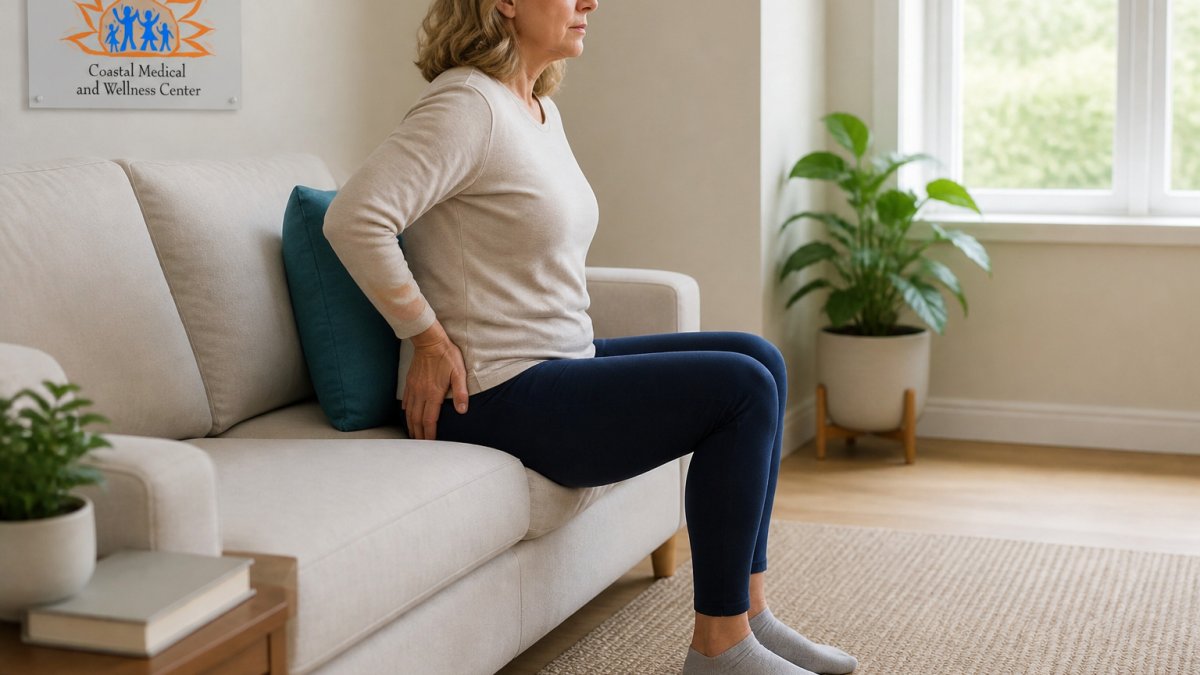
The first 48 to 72 hours. Stay as active as tolerated rather than going to bed.
Desk and chair adjustments for work-from-home days. Sitting is often the worst position for sciatica, and a standard home desk setup makes it worse. Practical changes that many patients find helpful:
- Set the chair height so your hips are level with or slightly higher than your knees, and keep both feet flat on the floor.
- Use a small lumbar roll or rolled towel at the small of your back to support the natural curve.
- Raise the monitor so the top of the screen is at or just below eye level, which reduces forward slumping.
- Stand and move for two to three minutes every 30 to 45 minutes. A timer is more effective than waiting until you notice pain.
- Avoid sitting on a soft couch or a hard stool for long stretches; a firm chair with back support is better.
Watch out: if you feel sharp shooting pain down the leg when you stand up from a chair, do not force through it repeatedly.
What to avoid during a flare-up. Skip deep forward bends toward the toes, heavy lifting, twisting while carrying a load, and long drives without breaks.
Sciatica Stretches and Movements to Try (and Avoid)
Gentle movement is often encouraged, but the right approach depends on the cause. Some patients find relief with gentle walking, pelvic tilts, or knee-to-chest stretches. Others feel worse with certain movements.
Movements to approach with caution include:
- Deep forward bends toward the toes
- Twisting while loaded or lifting
- Sitting for long periods without breaks
- High-impact exercise during acute flare-ups
Clinicians can tailor stretches to your specific condition, so consult a qualified professional before starting a program.
Sciatica Treatment Options Your Doctor May Recommend
Treatment is typically individualized. Many people improve with conservative care, and options commonly discussed include physical therapy, chiropractic care, medications, and, in some cases, injections or surgery.
Coastal Medical and Wellness Center offers Cox Spinal Decompression Therapy, a non-surgical option that may be suitable for some patients with disc-related sciatica. Many patients also ask whether chiropractic care can help sciatica, and what research shows. Schedule a non-invasive sciatica consultation in Stuart, FL to learn whether it fits your situation.
When to See a Doctor Right Away for Leg Pain
Seek prompt medical care if sciatica follows an injury, if pain is severe or steadily worsening, or if you notice significant leg weakness or numbness. Emergency symptoms include loss of bladder or bowel control, numbness in the groin or inner thighs, or pain in both legs.
If one-leg pain lasts more than a few weeks or keeps returning, schedule a consultation so a clinician can determine the cause. To discuss your symptoms with our team, call 772-286-5277.
Frequently Asked Questions
How do I get rid of sciatica in one leg?
Most people with sciatica in one leg improve within several weeks with conservative care. Gentle movement, short walks, over-the-counter pain relievers used as directed, and applying heat or cold can ease symptoms. Avoid prolonged bed rest, since it often slows recovery. If leg pain is severe, worsening, or not improving after a few weeks, schedule an evaluation with a qualified clinician to discuss treatment options that fit your situation.
Can sciatica cause pain in only one leg?
Yes. Sciatica typically affects one side because the sciatic nerve is compressed or irritated on one side of the lower spine. Pain often runs from the low back or buttock down the back of the thigh, calf, and sometimes the foot. Pain that spreads to both legs, or is accompanied by bladder or bowel changes or numbness in the groin, is a medical emergency and needs immediate care.
What can be mistaken for sciatica?
Several conditions can produce leg pain that resembles sciatica, including hip joint problems, piriformis syndrome, peripheral artery disease, deep vein thrombosis, stress fractures, and knee or hip arthritis. Blood clots and vascular problems can cause leg swelling, warmth, or color changes that sciatica does not. Because the causes differ, a clinician should evaluate persistent one-leg pain to identify the correct source before choosing treatment.
What is the worst thing you can do for sciatica?
Lying in bed for many days is one of the most common mistakes, because inactivity can stiffen the spine and slow recovery. Heavy lifting, twisting while under load, and forcing aggressive stretches through sharp pain can aggravate the nerve. Ignoring warning signs such as progressive leg weakness or loss of bladder or bowel control is also dangerous and warrants prompt medical attention.
Which sciatica stretches may help, and which should I avoid?
Gentle stretches such as knee-to-chest holds, pelvic tilts, and walking can help many people with sciatica in one leg. Stop any movement that sends pain or tingling farther down the leg. Avoid deep forward bends or hard stretching when pain is acute. Because the right exercises depend on the cause of your symptoms, ask a qualified clinician or physical therapist to tailor a program to you.
When should I see a doctor for sciatica symptoms?
Seek care promptly if leg pain lasts more than a few weeks without improvement, is severe, or interferes with sleep or daily activity. Get emergency care right away for new loss of bladder or bowel control, numbness in the groin or inner thighs, or rapidly worsening weakness in the leg. A clinician can review your history, perform a neurological exam, and recommend imaging or testing if needed.

