How to Relieve Sciatic Nerve Pain at Home
Last Updated: November 8, 2026
Quick Summary
Simple home steps can ease sciatic nerve pain, including cold packs in the first 24 to 48 hours, heat once the sharp phase passes, changing positions every 30 minutes, and short daily walks. Gentle stretches like the knee-to-chest stretch can help too. Seek prompt medical care for leg weakness, bladder or bowel changes, or numbness in the groin.
- Use cold therapy during the first 24 to 48 hours of a flare-up.
- Switch to heat once the first sharp phase has passed.
- Change positions every 30 minutes instead of sitting for hours.
- Perform the knee-to-chest stretch 2 to 3 times per side, holding 20 to 30 seconds.
- Seek urgent care for bladder or bowel control loss or saddle-area numbness.
Table of Contents
- What Sciatic Nerve Pain Is and What Usually Causes It
- Immediate Relief for Sciatica Pain: Ice, Heat and Positioning
- How to Relieve Sciatica Pain Without Exercise
- Gentle Movement, Stretching and a Simple Home Routine
- Best Sleeping Position for Sciatica and Daily Habits That Help
- Over-the-Counter Medication, Warning Signs and How Long Sciatica Lasts
- Booking a Consultation to Find the Cause of Your Sciatica
- Frequently Asked Questions
Sciatica can turn a normal day into a painful one, with a sharp shooting pain running from the lower back down the back of the leg. Many adults find that simple steps at home ease the pain within days. Coastal Medical and Wellness Center in Stuart, FL, works with patients who want to start with safe, practical self-care. This guide walks through what usually helps, what to avoid, and when sciatica needs a professional look.
What Sciatic Nerve Pain Is and What Usually Causes It
Sciatic nerve pain is pain that follows the path of the sciatic nerve, the largest nerve in the body. For a fuller explanation of sciatica causes and symptoms, read the complete guide to sciatica causes and symptoms.
Most cases come from a problem in the lower spine. Read this guide to disc-related leg pain to understand how disc problems cause leg pain. Common causes include:
- A herniated or bulging disc pressing on a nerve root
- Narrowing of the spinal canal, known as spinal stenosis
- Muscle tightness in the buttock, such as piriformis syndrome
Pain may travel from the low back into the buttock, thigh, calf, or foot. To help judge which sciatica symptoms are serious, see this guide to sciatica pain sensations you shouldn't ignore.
Immediate Relief for Sciatica Pain: Ice, Heat and Positioning
Most people with sciatica start with a simple question: should I use ice or heat? The answer depends on how long the pain has lasted and how the area feels, and a clinician can help decide if you are unsure. Positioning matters too, because the right posture can take pressure off the nerve.
Using Cold Therapy in the First 24 to 48 Hours
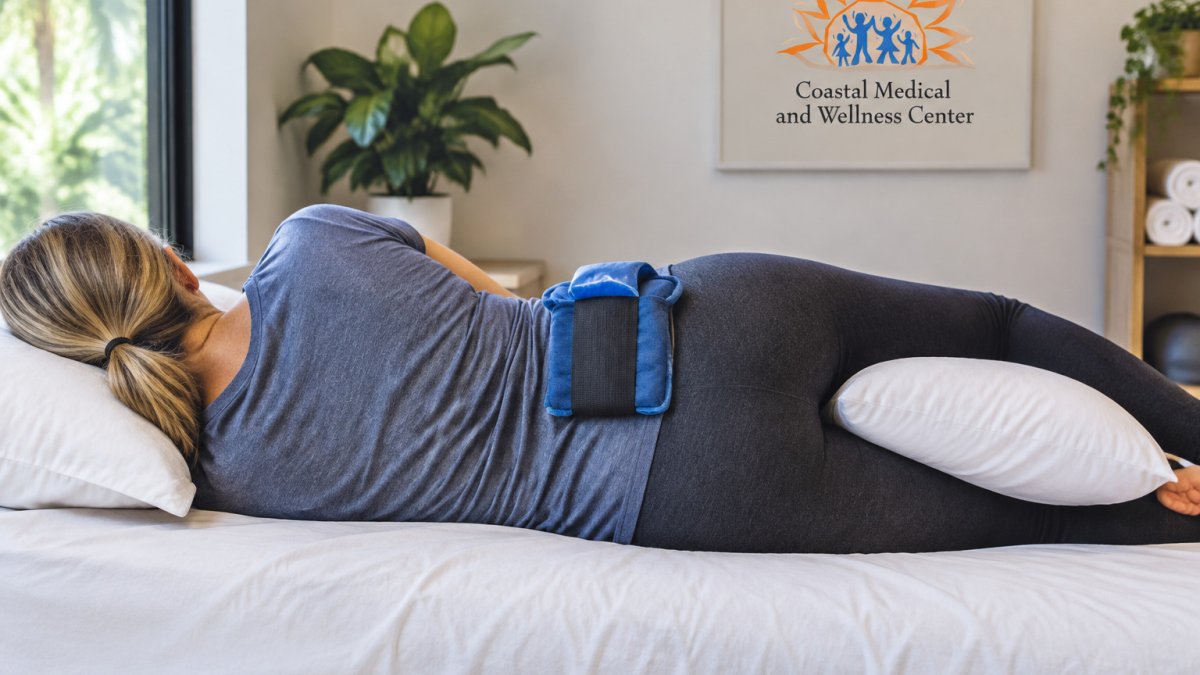
Cold therapy works best during a new flare-up, when the area feels hot or swollen. Wrap a cold pack or a bag of frozen peas in a thin towel and place it on the painful area. Use it for short sessions, several times a day, and never leave it on for long periods.
Watch out: never place ice directly on bare skin, and stop if the area turns numb, pale, or blistered (Ice and heat treatment).
When Heat Therapy Helps More
Heat often feels better once the first sharp phase has passed. A warm bath, a heating pad on a low setting, or a warm shower can relax tight muscles in the lower back and buttock. Keep each session short so the skin does not overheat.
Some people alternate cold and heat. If one option makes the pain worse, switch to the other and stop if pain increases.
How to Relieve Sciatica Pain Without Exercise
Rest is useful for a short time, but long bed rest slows recovery. Staying lightly active is often a helpful approach, though the right level depends on your condition.
Try these approaches without starting a formal workout:
- Change positions every 30 minutes instead of sitting for hours
- Walk short distances around the house several times a day
- Stand and stretch your legs during long periods of sitting
A common mistake is lying flat on the couch for days. Gentle movement keeps the back and legs from stiffening further. If walking increases leg pain, shorten the walks and rest in a comfortable position.
Gentle Movement, Stretching and a Simple Home Routine
Once the sharpest pain begins to ease, a short daily routine can help you stay mobile without aggravating the nerve. The key is to move slowly, stay within a comfortable range, and treat each movement as a test rather than a challenge. A common pattern is to start with gentle mobility, add one or two stretches, and finish with a short walk.
Before you start, keep these ground rules in mind:
- Move slowly and breathe normally; do not bounce or force a stretch.
- Work in a pain-free range. A mild stretch sensation is fine; sharp, shooting, or electric pain is not.
- Start with one set of each movement and see how you feel the next day before adding more.
A Sample Daily Routine
Perform this routine once or twice a day, ideally when your muscles are warm, such as after a short walk or a warm shower.
- Knee-to-chest stretch. Lie on your back with both knees bent and feet flat. Gently pull one knee toward your chest until you feel a mild stretch in the lower back and buttock. Hold for 20 to 30 seconds, then lower the leg slowly. Repeat 2 to 3 times per side. Easier option: pull the knee only partway or use your hands behind the thigh instead of the knee. Stop if you feel sharp pain in the leg or back.
- Piriformis stretch. Lie on your back with both knees bent. Cross one ankle over the opposite knee, then reach through and gently draw the bottom leg toward your chest until you feel a stretch in the buttock. Hold for 20 to 30 seconds, then switch sides. Repeat 2 to 3 times per side. Easier option: keep the bottom foot on the floor and lean forward slightly instead of pulling the leg. Stop if the stretch causes tingling or shooting pain down the leg.
- Pelvic tilt. Lie on your back with knees bent and feet flat. Gently flatten your lower back against the floor by tightening your abdominal muscles, hold for 5 seconds, then relax. Repeat 8 to 10 times. This movement is often gentle, but check with a clinician before starting any new exercise.
- Walking. Aim for a short, easy walk once or twice a day, starting with 5 to 10 minutes and adding a few minutes as comfort allows. Walk on level ground and avoid hills or stairs if they increase leg pain. If walking makes the leg pain worse, shorten the walk and rest in a comfortable position before trying again.
How to Progress Safely
Progress by adding time or repetitions, not by pushing into pain. A reasonable approach is to add one repetition per exercise every few days if symptoms are stable or improving.
Watch out: stop the routine and seek medical advice if you develop new or worsening leg weakness, numbness in the groin or inner thighs, or loss of bladder or bowel control.
The sample routine below lists each movement, how often to repeat it, and the easier option if it causes discomfort.
| Movement | Repetitions | Easier option |
|---|---|---|
| Knee-to-chest stretch | 2-3 times per side, hold 20-30 seconds | Pull knee partway or use hands behind thigh |
| Piriformis stretch | 2-3 times per side, hold 20-30 seconds | Keep bottom foot on floor, lean forward |
| Pelvic tilt | 8-10 times | Check with a clinician first |
| Walking | Once or twice a day, 5-10 minutes | Shorten walk if leg pain increases |
Best Sleeping Position for Sciatica and Daily Habits That Help
Sleep position can affect how the lower back and hips feel at night. Some people find side-lying with a pillow between the knees more comfortable. Lying on your back with a pillow under the knees is another option some people try.
Some people find stomach sleeping uncomfortable for the lower back and prefer other positions.
Daily habits that help include:
- Keeping a neutral posture when sitting, with feet flat on the floor
- Lifting with the legs and keeping objects close to the body
- Taking breaks from driving or sitting for long periods
Over-the-Counter Medication, Warning Signs and How Long Sciatica Lasts
Using Over-the-Counter Pain Relievers Safely
Over-the-counter medicines may ease sciatica pain for some people. They do not address the underlying cause, and they are not right for everyone. Two common options are acetaminophen and nonsteroidal anti-inflammatory drugs (NSAIDs) such as ibuprofen or naproxen.
- Acetaminophen can ease pain, and it is not an anti-inflammatory medicine. Do not exceed the daily limit on the label, and check other medicines you take for hidden acetaminophen, since many cold and flu products contain it (the FDA). People with liver disease or those who drink alcohol heavily should check with a clinician before using it.
- NSAIDs such as ibuprofen and naproxen can reduce pain and inflammation, but they carry risks of stomach irritation, kidney problems, and increased bleeding. They are generally not recommended for people with a history of stomach ulcers, kidney disease, or heart disease without medical advice, and they can interact with blood thinners and some blood pressure medicines.
Read the label, follow the dose directions, and check with a pharmacist or doctor first if you take other medicines, have kidney or stomach problems, have heart disease, or are pregnant.
Warning Signs That Need Prompt Medical Care
Many cases of sciatica improve with self-care, but some symptoms need urgent evaluation. Seek medical care promptly if you notice any of these warning signs:
- Sudden weakness or numbness in one or both legs
- Trouble controlling your bladder or bowels
- Numbness in the groin or inner thighs (sometimes called saddle-area numbness)
Call 911 or go to an emergency room if you have loss of bladder or bowel control, saddle-area numbness, or rapidly worsening leg weakness. These can be signs of a serious condition such as cauda equina syndrome, which requires urgent treatment.
How Long Sciatica May Last
Most people with sciatica improve within a few weeks to a few months with self-care, though recovery times vary widely depending on the cause and severity.
Watch out: do not assume that a new medication is safe just because it is sold without a prescription. Check with a pharmacist if you take prescription medicines, have chronic health conditions, or are pregnant or breastfeeding.
Booking a Consultation to Find the Cause of Your Sciatica
Home care can help many people, but it does not reveal what is causing the nerve pain. If your pain comes from a disc problem, Cox Spinal Decompression Therapy is one non-surgical option the clinic offers, and Functional Medicine is also available. Visit us at 3257 SE Salerno Rd #3, Stuart, FL 34997, or call 772-286-5277 to schedule a consultation. If you are dealing with pain from a disc problem, you can also learn more about non-surgical spinal decompression therapy.
Frequently Asked Questions
How do I get my sciatic nerve to stop hurting fast?
Many people find short-term relief by alternating cold packs and gentle heat in the first few days, wrapping the cold pack in a towel and applying it in short sessions, several times a day. Changing position often, avoiding prolonged sitting, and using over-the-counter pain relievers as label directions allow can also help. Pain that is severe, sudden or accompanied by weakness should not be waited out. Contact a licensed healthcare provider promptly, because a fast, reliable answer depends on the underlying cause, which only an examination can identify.
Can you relieve sciatica pain without exercise?
Yes, many people ease sciatica symptoms without structured exercise. Rest from aggravating activities, a short walk as tolerated, heat or cold packs, supportive sleeping positions and posture changes while sitting can all reduce irritation. Staying lightly active is often a reasonable approach, and complete bed rest is generally not advised for long periods. If pain persists beyond a few weeks, or keeps returning, a healthcare provider can recommend a plan tailored to the cause, which may include guided movement, manual care or other treatment.
How long does a sciatica flare-up usually last?
Recovery times vary, and some sciatica flare-ups improve over several weeks as irritation settles, though recovery time varies widely depending on the cause and severity. Some people notice gradual improvement within days, while others have symptoms that linger longer. Pain that has not improved after several weeks, that worsens, or that comes with numbness, weakness or bowel or bladder changes needs prompt medical evaluation. A clinician can give a more realistic timeline based on your specific situation.
When should I see a doctor for sciatic nerve pain?
Seek medical care promptly if leg pain is severe, sudden, or getting worse, or if you notice leg weakness, numbness in the groin or inner thighs, trouble controlling your bladder or bowels, or pain following a fall or injury. These can signal a serious problem that needs urgent attention. For milder symptoms that do not improve with home care over a few weeks, schedule an appointment with a licensed provider to identify the cause and discuss an individualized plan.

